Quote
"The Jews are those who profess the Law of Moses; have not received baptism; and do not believe in Jesus Christ."
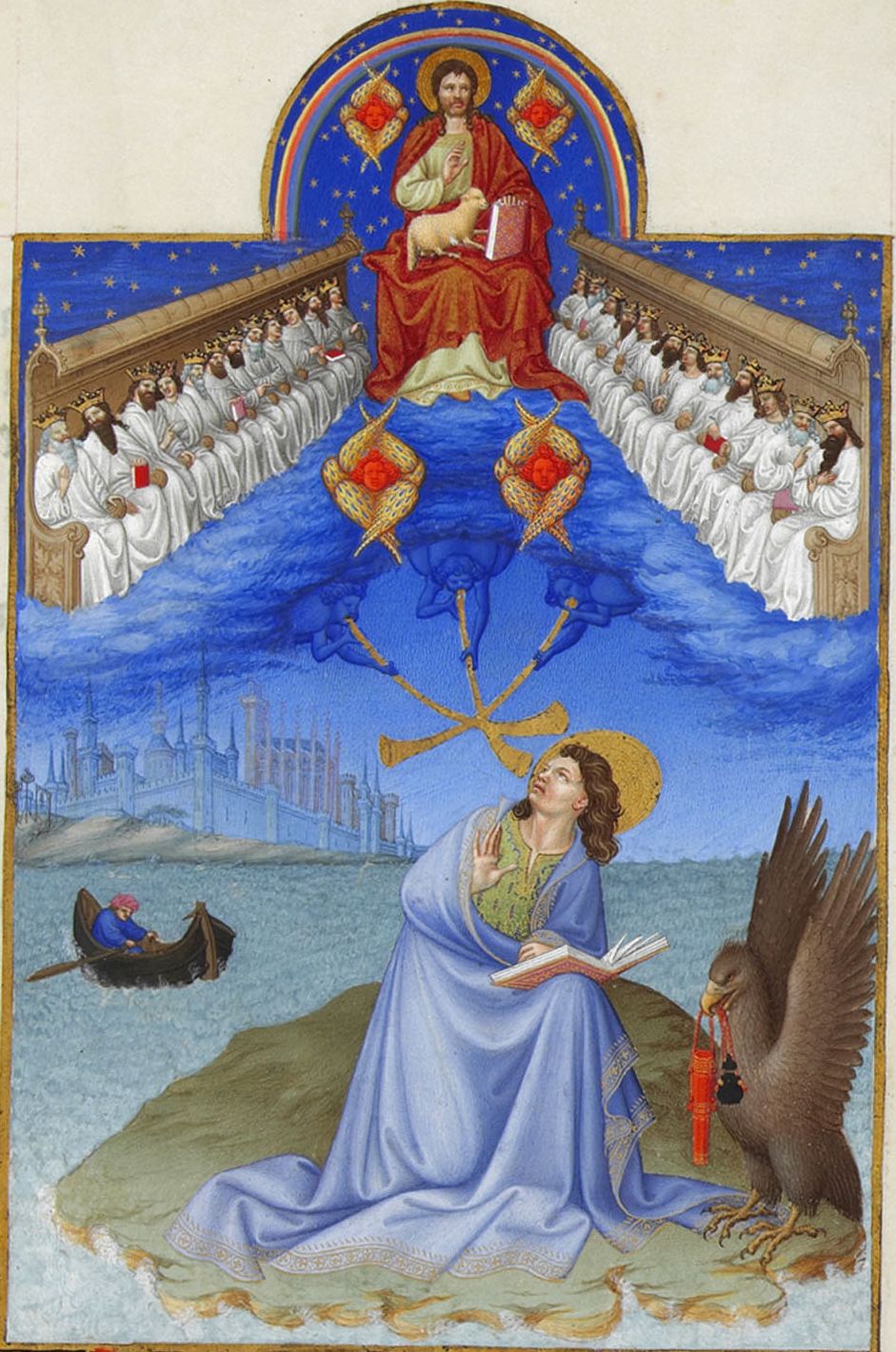 Communion of saints
Communion of saints
The communion of saints, when referred to persons, is the spiritual union of the members of the Christian Church, living and the dead, but excluding the damned. They are all part of a single "mystical body", with Christ as the head, in which each member contributes to the good of all and shares in the welfare of all.
"The Jews are those who profess the Law of Moses; have not received baptism; and do not believe in Jesus Christ."
Communion of saints"Outside the true Church are: Infidels, Jews, heretics, apostates, schismatics, and the excommunicated."
Communion of saints"I believe in God, the Father Almighty, Maker of heaven and earth: And in Jesus Christ, his only Son our Lord: Who was conceived by the Holy Ghost, Born of the Virgin Mary: Suffered under Pontius Pilate, Was crucified, dead, and buried: He descended into hell; The third day he rose again from the dead: He ascended into heaven, And sitteth on the right hand of God the Father Almighty: From thence he shall come to judge the quick and the dead. I believe in the Holy Ghost: The holy Catholic Church; The Communion of Saints: The Forgiveness of sins: The Resurrection of the body: And the Life everlasting."
Communion of saints"I believe in the communion of Saints. And, forasmuch as meat and drink are transmuted in us daily into spiritual substance, I believe in the Miracle of the Mass. And I confess one Baptism of Wisdom, whereby we accomplish the Miracle of Incarnation. And I confess my life one, individual and eternal that was, and is, and is to come."
Communion of saints"The Platonic Socrates was a pattern to subsequent philosophers for many ages... His merits are obvious. He is indifferent to worldly success, so devoid of fear that he remains calm and urbane and humorous to the last moment, caring more for what he believes to be the truth than for anything else whatever. He has, however, some very grave defects. He is dishonest and sophistical in argument, and in his private thinking he uses intellect to prove conclusions that are to him agreeable, rather than in a disinterested search for knowledge. There is something smug and unctuous about him, which reminds one of a bad type of cleric. His courage in the face of death would have been more remarkable if he had not believed that he was going to enjoy eternal bliss in the company of the gods. Unlike some of his predecessors, he was not scientific in his thinking, but was determined to prove the universe agreeable to his ethical standards. This is treachery to truth, and the worst of philosophic sins. As a man, we may believe him admitted to the communion of saints; but as a philosopher he needs a long residence in a scientific purgatory."
Communion of saints




