SHAWORDS
Economic liberalism

Economic liberalism

Economic liberalism

author
9Quotes

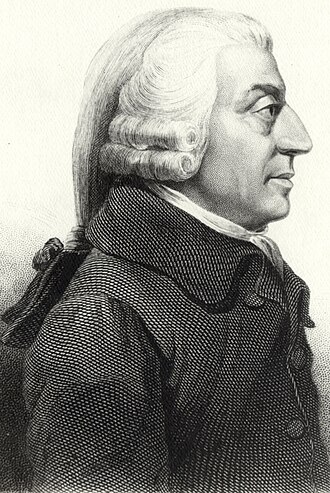
Economic liberalism is a political and economic ideology that supports a market economy based on individualism and private property in the means of production. Adam Smith is considered one of the primary initial writers on economic liberalism, and his writing is generally regarded as representing the economic expression of 19th-century liberalism up until the Great Depression and rise of Keynesian

Popular Quotes

9 total
Quote
"Even the Mercantile System cannot be correctly judged by modern economics since the latter is itself one-sided and as yet burdened with that very system’s premises. Only that view which rises above the opposition of the two systems, which criticises the premises common to both and proceeds from a purely human, universal basis, can assign to both their proper position. It will become evident that the protagonists of free trade are more inveterate monopolists than the old Mercantilists themselves. It will become evident that the sham humanity of the modern economists hides a barbarism of which their predecessors knew nothing; that the older economists’ conceptual confusion is simple and consistent compared with the double-tongued logic of their attackers, and that neither of the two factions can reproach the other with anything which would not recoil upon themselves. This is why modern liberal economics cannot comprehend the restoration of the Mercantile System by List, whilst for us the matter is quite simple. The inconsistency and ambiguity of liberal economics must of necessity dissolve again into its basic components. Just as theology must either regress to blind faith or progress towards free philosophy, free trade must produce the restoration of monopolies on the one hand and the abolition of private property on the other."
Economic liberalismEconomic liberalism
Quote
"The opposite of competition is monopoly. Monopoly was the war-cry of the Mercantilists; competition the battle-cry of the liberal economists. It is easy to see that this antithesis is again a quite hollow antithesis. Every competitor cannot but desire to have the monopoly, be he worker, capitalist or landowner. Each smaller group of competitors cannot but desire to have the monopoly for itself against all others. Competition is based on self-interest, and self-interest in turn breeds monopoly. In short, competition passes over into monopoly. On the other hand, monopoly cannot stem the tide of competition – indeed, it itself breeds competition; just as a prohibition of , for instance, or high positively breed the competition of ."
Economic liberalismEconomic liberalism
Quote
"Bill Clinton and his two treasury secretary enablers, Robert Rubin and Larry Summers, instituted a system of unregulated capitalism that has resulted in financial anarchy. This anarchic form of capitalism, where everything, including human beings and the natural world, is a commodity to exploit until exhaustion or collapse, is justified by identity politics. It is sold as “enlightened liberalism” as opposed to the old pro-union class politics that saw the Democrats heed the voices of the working class. Financial anarchy and short-term plunder have destroyed long-term financial and political stability. It has also pushed the human species, along with most other species, closer and closer towards extinction."
Economic liberalismEconomic liberalism
Quote
"The only positive advance which liberal economics has made is the elaboration of the laws of private property. These are contained in it, at any rate, although not yet fully elaborated and clearly expressed. It follows that on all points where it is a question of deciding which is the shortest road to wealth – i. e., in all strictly economic controversies – the protagonists of free trade have right on their side. That is, needless to say, in controversies with the monopolists – not with the opponents of private property, for the English Socialists have long since proved both practically and theoretically that the latter are in a position to settle economic questions more correctly even from an economic point of view."
Economic liberalismEconomic liberalism
Quote
"A liberal is fundamentally fearful of concentrated power. His objective is to preserve the maximum degree of freedom for each individual separately that is compatible with one mans freedom not interfering with other mens freedom. He believes that this objective requires that power be dispersed. He is suspicious of assigning to government any functions that can be performed through the market, both because this substitutes coercion for voluntary co-operation in the area in question and because, by giving government an increased role, it threatens freedom in other areas."
Economic liberalismEconomic liberalism

Similar Authors & Thinkers