Quote
"Film is not the art of scholars, but illiterates."
F
Film"A message I’ve been telling myself: the cinema is very conservative, and unless you have a story that satisfies you, that is within the unchallenging zone, but you love it, you can’t do it as cinema. Otherwise, you better go do it for television, which is more daring now."
A film, movie, or motion picture is a work of visual art that simulates experiences and otherwise communicates ideas, stories, perceptions, emotions, or atmosphere through the use of moving images that are generally, since the 1930s, synchronized with sound and sometimes using other sensory stimuli.
A film, movie, or motion picture is a work of visual art that simulates experiences and otherwise communicates ideas, stories, perceptions, emotions, or atmosphere through the use of moving images that are generally, since the 1930s, synchronized with sound and sometimes using other sensory stimuli.
View all quotes by Film"Film is not the art of scholars, but illiterates."
"Some 20 years after Lumière’s film, a Harvard psychologist named Hugo Munsterberg challenged researchers to figure out the depth of, and reason for, cinema’s influence: “For the first time the psychologist can observe the starting of an entirely new esthetic development, a new form of true beauty in the turmoil of a technical age, created by its very technique and yet more than any other art destined to overcome outer nature by the free and joyful play of the mind,” Munsterberg wrote in The Photoplay: A Psychological Study, considered by many to be the first important behavioral look at film. But though the research gauntlet had been thrown down, what followed is what one would expect when looking for artistry in a Pauly Shore flick: nothing. Or, at least, very little, says Stuart Fischoff, founder of the Journal of Media Psychology, who in 2003 retired from the psychology department at California State University, Los Angeles. Between 1916, when Munsterberg wrote The Photoplay, and the 1950s, perhaps the most influential psychological research on cinema was L.L. Thurnstone’s 1928 Payne Fund report — a study whose purpose was to indict, not investigate, the role of film on behavior, Fischoff says. In fact, for much of the 20th century, the psychological study of film was considered “lightweight stuff,” says Dolf Zillmann, University of Alabama, one of the field’s pioneers. Film study was approached with a Freudian mindset, and few empirical studies took place. But in the past decade or so, such research has experienced a resurgence — the rare sequel that outperforms the original. “There’s really a new psychology of film in the making,” says Zillmann. Film study from a psychological perspective now takes place in campuses around the country, combining interdisciplinary approaches from several areas, with an increasing focus on the neuroscience of viewer response."
"We know the power of short movies. When they are well done, [they are] greater and more incisive than full-length films. Professionally done trailers are sometimes better than the full movies they announce, being a form of visual art in themselves or even containing self-sufficient micro-stories."
"A film is a boat which is always on the point of sinking - it always tends to break up as you go along and drag you under with it."
"I make films that I would like to have seen when I was a young man."
"Photography is truth. The cinema is truth twenty-four times per second."
"At one point a heated discussion arose over the possible interpretation of Lolita as a grandiose metaphor of the classic Europeans hopeless love for young, seductive, barbaric America. In his afterword to the novel Nabokov himself mentions this as the naive theory of one of the publishers who turned the book down. And although there cant be the slightest doubt that Nabokov did not mean to limit Lolita to that interpretation, there is no reason to exclude it as one of the novels many dimensions. The point, I felt, became obvious when one drew the line between Lolita as a delightfully frivolous story on the verge of pornography and Lolita as a literary masterpiece, the only convincing love story of our century."
 Lolita
"Lovely food, for rabbits, that is."
"One makes mistakes; that is life. But it is never a mistake to have loved."
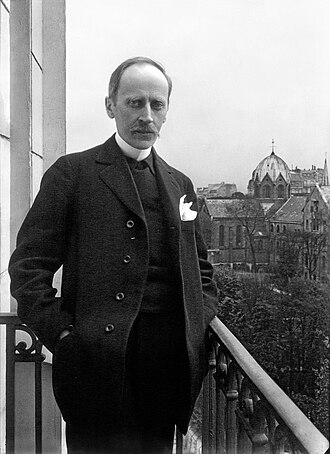 Romain Rolland
"[explaining to Ernie how April apologized to him] She just showed up at the factory, took off her coat, and begged me to take her. We made love in a way that Ive only ever seen in nature films."
 MouseHunt (film)
"Love is always love, come whence it may. A heart that beats at your approach, an eye that weeps when you go away are things so rare, so sweet, so precious that they must never be despised."
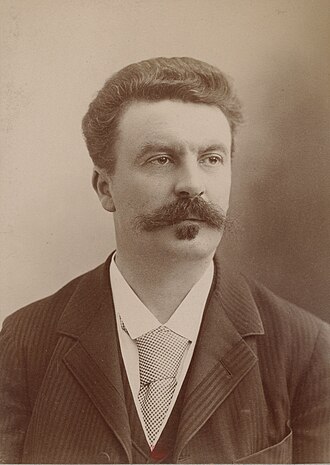 Guy de Maupassant
"He was obeyed, yet he inspired neither love nor fear, nor even respect. He inspired uneasiness. That was it! Uneasiness. Not a definite mistrust — just uneasiness — nothing more. You have no idea how effective such a... a... faculty can be. He had no genius for organizing, for initiative, or for order even. That was evident in such things as the deplorable state of the station. He had no learning, and no intelligence. His position had come to him — why? Perhaps because he was never ill . . . He had served three terms of three years out there . . . Because triumphant health in the general rout of constitutions is a kind of power in itself."