"Machiavelli is not in the least utopian; he simply thinks the conjunctural case of the thing, and goes dietro alla verità effettuale della cosa. He asserts it in concepts which are philosophical and no doubt make him, in his temerity, solitude and scorn for the philosophers of the tradition, the greatest materialist philosopher in history – the equal of Spinoza, who declared him "acutissimus, most acute. Spinoza considered him acutissimus in politics. He would appear not to have suspected that Machiavelli was also most incisive in materialist philosophy."
[Alberto Knox] When things got really tough, Spinoza was even deserted — Baruch Spinoza
"[Alberto Knox] When things got really tough, Spinoza was even deserted by his own family. They tried to disinherit him on the grounds of his heresy. Paradoxically enough, few have spoken out more powerfully in the cause of free speech and religious tolerance than Spinoza. The opposition he was met with on all sides led him to pursue a quiet and secluded life devoted entirely to philosophy. He earned a meager living by polishing lenses, some of which have come into my possession. [...] There is almost something symbolic in the fact that he lived by polishing lenses. A philosopher must help people to see life in a new perspective. One of the pillars of Spinozas philosophy was indeed to see things from the perspective of eternity."
Baruch (de) Spinoza, also known under his Latinized pen name Benedictus de Spinoza, was a philosopher of Portuguese-Jewish origin, who was born and lived in the Dutch Republic. A forerunner of the Age of Enlightenment, Spinoza significantly influenced modern biblical criticism, 17th-century rationalism, and Dutch intellectual culture, establishing himself as one of the most important and radical p
View all quotes by Baruch SpinozaMore by Baruch Spinoza
View all →"Spinoza shows that the history of metaphysics comprehends radical alternatives. Metaphysics, as the highest form of the organization of Modern thought, is not a unitary whole. It comprehends the alternatives that the history of class struggle produces. There exists an "other" history of metaphysics, the blessed history against the damned. And we should not forget that it is still only in the complexity of metaphysics that the Modern age can be read."
"When sending his Short Treatise to his Amsterdam friends he begs of them to be sure that nothing but the good of their neighbours will ever induce them to communicate its doctrines to others."
"Among the many forerunners Hegel wished to assimilate as "moments" into his new system, Spinoza occupies a privileged position, comparable only to that of Aristotle and Kant. Spinozas absolute monism, reviving the early Greek philosophers, provides Hegel with the necessary substrate and beginning of all philosophy. More importantly, Spinoza marks for Hegel the culmination of traditional, object-oriented metaphysics, with its view that the object, the universe in itself, is inherently structured and governed by reason (logos). [...] Whereas Kant saw his German predecessor, Christian Wolff, as "the greatest among all dogmatic philosophers," Hegel reserves this title for Spinoza. "When beginning to philosophize, one must first be a Spinozist," he says in one characteristic statement. In Hegels Science of Logic, it is Spinozas system, duly modified, which brings to a climax the whole march of traditional philosophy, crystallized into "Objective Logic." [...] For Hegel, the absolute is neither a thinglike substance (Spinoza) nor a merely subjective "I think" (Fichte, following Kant), but comprises them both as moments in a higher synthesis called the "Concept." Hegel thereby assigns to Spinoza a position analogous to his own: having brought to its apex the whole history of philosophy prior to the advent of idealism, Spinoza stands at a crucial turning point for metaphysics: from tradition to modernity, from dogmatic objectivism to (Hegels own) dialectical idealism."
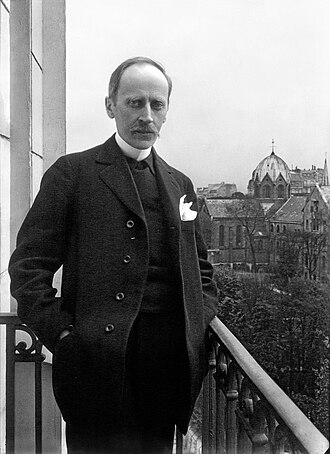
"Although during these years Rollands chief interest was directed towards philosophy, although he was a diligent student of the pre-Socratic philosophers of ancient Greece, of the Cartesians, and of Spinoza,..."
"Spinoza is the originator of speculative philosophy, Schelling its restorer, Hegel its perfecter."
More on Life
View all →"In the life of the mass-order, the culture of the generality tends to conform to the demands of the average human being. Spirituality decays through being diffused among the masses when knowledge is impoverished in every possible way by rationalisation until it becomes accessible to the crude understanding of all."
"The first thing I remember about the world — and I pray that it may be the last — is that I was a stranger in it. This feeling, which everyone has in some degree, and which is, at once, the glory and desolation of homo sapiens, provides the only thread of consistency that I can detect in my life."
"Jewish custom, which traces descent solely from the mother, is more sensible and more discreet. Our own lawgivers cant accept the fact that there are many things in family life that are best kept shrouded in mystery."
"One makes mistakes; that is life. But it is never a mistake to have loved."
"If it fulfills our hopes, this center will be, at once, a symbol and a reflection and a hope. It will symbolize our belief that the world of creation and thought are at the core of all civilization. Only recently in the White House we helped commemorate the 400th anniversary of Shakespeare. The political conflicts and ambitions of his England are known to the scholar and to the specialist. But his plays will forever move men in every corner of the world. The leaders that he wrote about live far more vividly in his words than in the almost forgotten facts of their own rule. Our civilization, too, will largely survive in the works of our creation. There is a quality in art which speaks across the gulf dividing man from man and nation from nation, and century from century. That quality confirms the faith that our common hopes may be more enduring than our conflicting hostilities. Even now men of affairs are struggling to catch up with the insights of great art. The stakes may well be the survival of civilization. The personal preferences of men in government are not important--except to themselves. However, it is important to know that the opportunity we give to the arts is a measure of the quality of our civilization. It is important to be aware that artistic activity can enrich the life of our people, which really is the central object of Government. It is important that our material prosperity liberate and not confine the creative spirit."
"I did not go to join Kurtz there and then. I did not. I remained to dream the nightmare out to the end, and to show my loyalty to Kurtz once more. Destiny. My destiny! Droll thing life is — that mysterious arrangement of merciless logic for a futile purpose. The most you can hope from it is some knowledge of yourself — that comes too late — a crop of unextinguishable regrets. I have wrestled with death. It is the most unexciting contest you can imagine. It takes place in an impalpable grayness, with nothing underfoot, with nothing around, without spectators, without clamor, without glory, without the great desire of victory, without the great fear of defeat, in a sickly atmosphere of tepid skepticism, without much belief in your own right, and still less in that of your adversary. If such is the form of ultimate wisdom, then life is a greater riddle than some of us think it to be. I was within a hairs-breadth of the last opportunity for pronouncement, and I found with humiliation that probably I would have nothing to say. This is the reason why I affirm that Kurtz was a remarkable man. He had something to say. He said it. Since I had peeped over the edge myself, I understand better the meaning of his stare, that could not see the flame of the candle, but was wide enough to embrace the whole universe, piercing enough to penetrate all the hearts that beat in the darkness. He had summed up — he had judged. The horror! He was a remarkable man. After all, this was the expression of some sort of belief; it had candor, it had conviction, it had a vibrating note of revolt in its whisper, it had the appalling face of a glimpsed truth — the strange commingling of desire and hate."