Quote
"Io non so ben ridir com io ventrai, tanto era pien di sonno in su quel punto che la verace via abbandonai;"
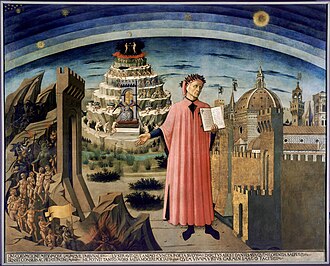 Divine Comedy
"Beatrice am I, who do bid thee go; I come from there, where I would fain return; Love moved me, which compelleth me to speak."
The Divine Comedy is an Italian narrative poem by Dante Alighieri, begun c. 1308 and completed c. 1321, shortly before the author's death. It is widely considered the pre-eminent work in Italian literature and one of the greatest works of Western literature. The poem's imaginative vision of the afterlife is representative of the medieval worldview as it existed in the Western Church by the 14th ce
The Divine Comedy is an Italian narrative poem by Dante Alighieri, begun c. 1308 and completed c. 1321, shortly before the author's death. It is widely considered the pre-eminent work in Italian literature and one of the greatest works of Western literature. The poem's imaginative vision of the afterlife is representative of the medieval worldview as it existed in the Western Church by the 14th ce
View all quotes by Divine Comedy"Io non so ben ridir com io ventrai, tanto era pien di sonno in su quel punto che la verace via abbandonai;"
Divine Comedy"Lo giorno se nandava, e laere bruno toglieva li animai che sono in terra da le fatiche loro."
Divine Comedy"Thou hast my heart so with desire disposed To the adventure, with these words of thine, That to my first intent I have returned. Now go, for one sole will is in us both, Thou Leader, and thou Lord, and Master thou." Thus said I to him; and when he had moved, I entered on the deep and savage way."
Divine Comedy"Pape Satàn, pape Satàn aleppe!"
Divine Comedy"Poca favilla gran fiamma seconda."
Divine Comedy"Necessità l ci nduce, e non diletto."
Divine Comedy"At one point a heated discussion arose over the possible interpretation of Lolita as a grandiose metaphor of the classic Europeans hopeless love for young, seductive, barbaric America. In his afterword to the novel Nabokov himself mentions this as the naive theory of one of the publishers who turned the book down. And although there cant be the slightest doubt that Nabokov did not mean to limit Lolita to that interpretation, there is no reason to exclude it as one of the novels many dimensions. The point, I felt, became obvious when one drew the line between Lolita as a delightfully frivolous story on the verge of pornography and Lolita as a literary masterpiece, the only convincing love story of our century."
 Lolita
"Lovely food, for rabbits, that is."
"One makes mistakes; that is life. But it is never a mistake to have loved."
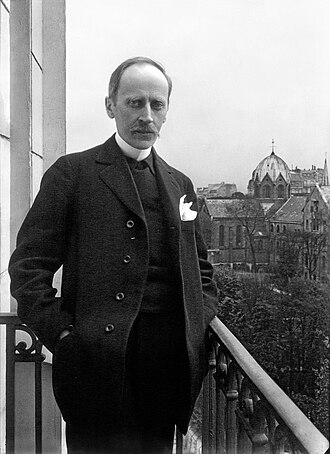 Romain Rolland
"[explaining to Ernie how April apologized to him] She just showed up at the factory, took off her coat, and begged me to take her. We made love in a way that Ive only ever seen in nature films."
 MouseHunt (film)
"Love is always love, come whence it may. A heart that beats at your approach, an eye that weeps when you go away are things so rare, so sweet, so precious that they must never be despised."
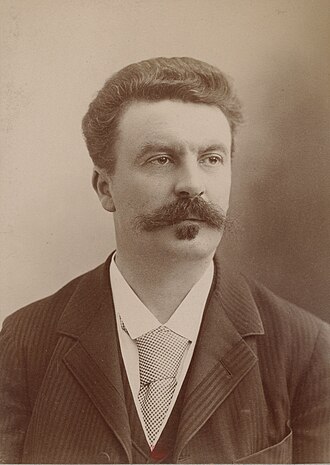 Guy de Maupassant
"He was obeyed, yet he inspired neither love nor fear, nor even respect. He inspired uneasiness. That was it! Uneasiness. Not a definite mistrust — just uneasiness — nothing more. You have no idea how effective such a... a... faculty can be. He had no genius for organizing, for initiative, or for order even. That was evident in such things as the deplorable state of the station. He had no learning, and no intelligence. His position had come to him — why? Perhaps because he was never ill . . . He had served three terms of three years out there . . . Because triumphant health in the general rout of constitutions is a kind of power in itself."