SHAWORDS

Consider, for example, the opening declaration of every Islamic prayer — Aga Khan III

HomeAga Khan IIIQuote
"Consider, for example, the opening declaration of every Islamic prayer: "Allah-o-Akbar". What does that mean? There can be no doubt that the second word of the declaration likens the character of Allah to a matrix which contains all and gives existence to the infinite, to space, to time, to the Universe, to all active and passive forces imaginable, to life and to the soul."
Aga Khan III
Aga Khan III
Aga Khan III
author14 quotes

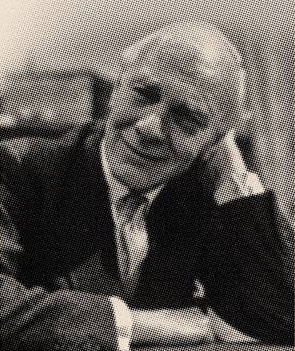
Sir Sultan Muhammad Shah, known as Aga Khan III, was the 48th imam of the Nizari Ism'aili branch of Shia Islam. He is considered one of the founding fathers of Pakistan, and also served as the first permanent president of the All-India Muslim League (AIML).

More by Aga Khan III

View all →
Quote
"Imam Hassan has explained the Islamic doctrine of God and the Universe by analogy with the sun and its reflection in the pool of a fountain; there is certainly a reflection or image of the sun, but with what poverty and with what little reality; how small and pale is the likeness between this impalpable image and the immense, blazing, white-hot glory of the celestial sphere itself. Allah is the sun; and the Universe, as we know it in all its magnitude, and time, with its power, is nothing more than the reflection of the Absolute in the mirror of the fountain."
Aga Khan IIIAga Khan III
Quote
"Islamic doctrine goes further than the other great religions, for it proclaims the presence of the soul, perhaps minute but nevertheless existing in an embryonic state, in all existence — in matter, in animals, trees, and space itself. Every individual, every molecule, every atom has its own spiritual relationship with the All-Powerful Soul of God. But men and women, being more highly developed, are immensely more advanced than the infinite number of other beings known to us."
Aga Khan IIIAga Khan III
Quote
"My grandfather was a most gifted person, and amongst his many qualities, one of them had always particularly impressed me. While the past was a book he had read and re-read may times, the future was just one more literary work of art into which he used to pour himself with deep thought and concentration. Innumerable people since his death have told me how he used to read in the future, and this certainly was one of his very great strengths. As a child I used to listen to him for many hours on end and I think, in fact I am convinced, that it was his inspiration which has created in me such a strong interest in the future, while at the same time, guiding me to learn from the teaching books of the past."
Aga Khan IIIAga Khan III
Quote
"Even a little knowledge of Islam will show that its religion is not only tolerant of other Faiths, but most respectful, and indeed, fully accepts the divine inspiration of all theistic Faiths that came before Islam. It does not only teach tolerance to its followers, but goes a step further and enjoins on them all to create the godly quality of "Hilm" that is, tolerance, forbearance, patience, calmness, and forgiveness. It is due to the spirit of tolerance of Islam that even the smallest Christian and Jewish minorities survived and kept all their doctrines during the thousand years of Muslim rule. Nothing like what happened to Muslims in Spain after the Christian conquest has ever happened to a non-Muslim Faith in any Islamic dominion. How, can Europeans be so ignorant as to have forgotten that in the first century of Islam the Khalifs ordered that all that was best in Greek and Roman cultures should be assimilated; that not only the philosophy, medicine and science of Greece, but its poetry and drama, were carefully translated into Arabic and were generally sought not only by the learned but also by the pious! The Muslim attitude towards the absorption of ideas was based on the principle of Islam which enjoins to acquire knowledge wherever available, and there is a well-known and authentic saying of the Prophet that "his followers should seek learning even if they have to go to China."
Aga Khan IIIAga Khan III

More on Life

View all →
Quote
"If it fulfills our hopes, this center will be, at once, a symbol and a reflection and a hope. It will symbolize our belief that the world of creation and thought are at the core of all civilization. Only recently in the White House we helped commemorate the 400th anniversary of Shakespeare. The political conflicts and ambitions of his England are known to the scholar and to the specialist. But his plays will forever move men in every corner of the world. The leaders that he wrote about live far more vividly in his words than in the almost forgotten facts of their own rule. Our civilization, too, will largely survive in the works of our creation. There is a quality in art which speaks across the gulf dividing man from man and nation from nation, and century from century. That quality confirms the faith that our common hopes may be more enduring than our conflicting hostilities. Even now men of affairs are struggling to catch up with the insights of great art. The stakes may well be the survival of civilization. The personal preferences of men in government are not important--except to themselves. However, it is important to know that the opportunity we give to the arts is a measure of the quality of our civilization. It is important to be aware that artistic activity can enrich the life of our people, which really is the central object of Government. It is important that our material prosperity liberate and not confine the creative spirit."
L
Lyndon B. Johnson
Quote
"I did not go to join Kurtz there and then. I did not. I remained to dream the nightmare out to the end, and to show my loyalty to Kurtz once more. Destiny. My destiny! Droll thing life is — that mysterious arrangement of merciless logic for a futile purpose. The most you can hope from it is some knowledge of yourself — that comes too late — a crop of unextinguishable regrets. I have wrestled with death. It is the most unexciting contest you can imagine. It takes place in an impalpable grayness, with nothing underfoot, with nothing around, without spectators, without clamor, without glory, without the great desire of victory, without the great fear of defeat, in a sickly atmosphere of tepid skepticism, without much belief in your own right, and still less in that of your adversary. If such is the form of ultimate wisdom, then life is a greater riddle than some of us think it to be. I was within a hairs-breadth of the last opportunity for pronouncement, and I found with humiliation that probably I would have nothing to say. This is the reason why I affirm that Kurtz was a remarkable man. He had something to say. He said it. Since I had peeped over the edge myself, I understand better the meaning of his stare, that could not see the flame of the candle, but was wide enough to embrace the whole universe, piercing enough to penetrate all the hearts that beat in the darkness. He had summed up — he had judged. The horror! He was a remarkable man. After all, this was the expression of some sort of belief; it had candor, it had conviction, it had a vibrating note of revolt in its whisper, it had the appalling face of a glimpsed truth — the strange commingling of desire and hate."
H
Heart of Darkness