Quote
"I managed to get a quick PhD — though when I got it I knew almost nothing about physics. But I did learn one big thing: that no one knows everything, and you dont have to."
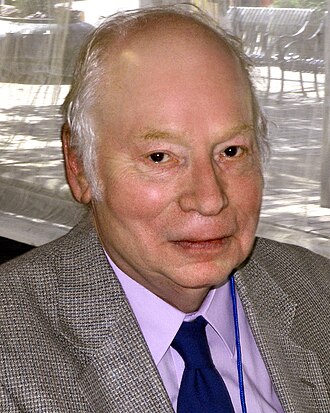 Steven Weinberg
"Consider... [the formula given by special relativity for the magnitude of the ]P \equiv m_0 \sqrt{g_{ij}\frac{dx^i}{d\tau}\frac{dx^j}{d\tau}}...where d\tau^2 = dt^2 - g_{ij} dx^i dx^j. [This holds because in] a locally inertial Cartesian coordinate system, for which g_{ij} = \delta_{ij}, we have d\tau = dt\sqrt{1 - \mathbf {v}^2} where v^i = \frac{dx^i}{dt}... [The P] is evidently invariant under arbitrary changes in the spatial coordinates, so we can evaluate it... in Robertson-Walker coordinates. ...[T]o save work ...adopt a spatial coordinate system in which the particle position is near the origin x^i = 0, where \tilde{g}_{ij} = \delta_{ij} + \mathit0(\mathbf{x}), and we can therefore ignore the purely spatial components of \Gamma_{jk}^i of the . General relativity gives [the momentum]... with a metric g_{ij} = a^2(t)\delta_{ij}...P(t) \propto 1/a(t)... for any non-zero mass, however small... Hence, although for photons both m_0 and d\tau vanish... [the momentum relation] is still valid."
Steven Weinberg was an American theoretical physicist. He shared the 1979 Nobel Prize in Physics with Abdus Salam and Sheldon Glashow "for their contributions to the theory of the unified weak and electromagnetic interaction between elementary particles, including, inter alia, the prediction of the weak neutral current".
"I managed to get a quick PhD — though when I got it I knew almost nothing about physics. But I did learn one big thing: that no one knows everything, and you dont have to."
Steven Weinberg"It doesnt work to build half an accelerator. The particles need to go all the way around."
Steven Weinberg"Either by God you mean something definite or you dont mean something definite. If by God you mean a personality who is concerned about human beings, who did all this out of love for human beings, who watches us and who intervenes, then I would have to say in the first place how do you know, what makes you think so? And in the second place, is that really an explanation? If thats true, what explains that? Why is there such a God? It isnt the end of the chain of whys, it just is another step, and you have to take the step beyond that."
Steven Weinberg"Elementary particles are terribly boring, which is one reason why were so interested in them."
Steven Weinberg"Considering the pervasive importance of quantum mechanics in modern physics, it is odd how rarely one hears of efforts to test quantum mechanics experimentally with high precision.…The trouble is that it is very difficult to find any logically consistent generalization of quantum mechanics. One obvious target for generalization is the linearity of quantum mechanics, but if we arbitrarily add nonlinear terms to the Schrodinger equation, how do we know that the theory we obtain will have a sensible physical interpretation? At least in part, it is the dearth of generalized versions of quantum mechanics that has made it so hard to plan experimental tests of quantum mechanics."
Steven Weinberg"Another lesson to be learned, to continue using my oceanographic metaphor, is that while you are swimming and not sinking you should aim for rough water."
Steven Weinberg"In the life of the mass-order, the culture of the generality tends to conform to the demands of the average human being. Spirituality decays through being diffused among the masses when knowledge is impoverished in every possible way by rationalisation until it becomes accessible to the crude understanding of all."
"I say this to you because we Spaniards are a forgetful people, because we are used to living for the moment, because we do not look back, because we do not know how to see the chain of heroes, because we do not contemplate the sum of sacrifices."
 Francisco Franco
"Sharon Tate was my best friend. Once, we were roommates. She introduced me to my husband. She was the godmother to my baby daughter who is named for her. In the six years time that I knew her, she never said an unkind word about anyone."
"Long time to see. (VS: Tapion)"
"Most mathematicians prove what they can, von Neumann proves what he wants." Once in a discussion about the rapid growth of mathematics in modern times, von Neumann was heard to remark that whereas thirty years ago a mathematician could grasp all of mathematics, that is impossible today. Someone asked him: "What percentage of all mathematics might a person aspire to understand today?" Von Neumann went into one of his five-second thinking trances, and said: "About 28 percent."
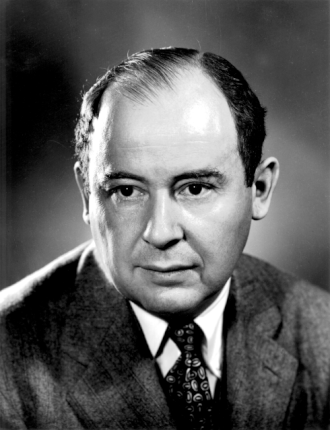 John von Neumann
"Children must be free to think in all directions irrespective of the peculiar ideas of parents who often seal their childrens minds with preconceived prejudices and false concepts of past generations. Unless we are very careful, very careful indeed, and very conscientious, there is still great danger that our children may turn out to be the same kind of people we are."