Quote
"The death rate is the same for us as for anybody...one person, one death, sooner or later."
R
Robert A. Heinlein"Creativity truly cannot be divided. Every film which turns out to be an artistic success (most of them are not, as we all know too well) is invariably the creation of one man—usually the director, often the producer, once in a blue moon the writer. Creative art is never produced by the committee system. Never. Even when it may seem so from outside, even when others, perhaps thousands of others, take part in the work, it is always the genius of one man. In building a cathedral, it is the architect—not the stone cutters."
Robert Anson Heinlein was an American science fiction author, engineer, and naval officer. Sometimes called the "dean of science fiction writers", he was among the first to emphasize scientific accuracy in his fiction and was thus a pioneer of the subgenre of hard science fiction. His published works, both fiction and non-fiction, express admiration for competence and emphasize the value of critic
"The death rate is the same for us as for anybody...one person, one death, sooner or later."
"“So far as I have listened, before a revolution can take place, the population must lose faith in both the police and the courts.” “Elementary. Go on.” “Well…high taxation is important and so is inflation of the currency and the ratio of the productive to those on the public payroll. But that’s old hat; everybody knows that a country is on the skids when its income and outgo get out of balance and stay that way—even though there are always endless attempts to wish it away by legislation.”"
"Now look carefully at what I said. I said that I know that these things are asserted. I did not say that they are true."
"Boats and ships are female because they are beautiful, lovable, expensive—and unpredictable."
"I think the major problem in growing up is to become sophisticated without becoming cynical."
"“If there was anything, anything more at all, after this crazy mix-up we call living, I could feel that there might be some point to the whole frantic business, even if I did not know and could not know the full answer while I was alive.” “And suppose there was not? Suppose that when a man’s body disintegrates, he himself disappears absolutely. I’m bound to say I find it a probable hypothesis.” “Well— It wouldn’t be cheerful knowledge, but it would be better than not knowing. You could plan your life rationally, at least. A man might even be able to get a certain amount of satisfaction in planning things better for the future, after he’s gone. A vicarious pleasure in the anticipation.”"
"What say you? It is useless? Ay, I know But who fights ever hoping for success? I fought for lost cause, and for fruitless quest! You there, who are you! — You are thousands! Ah! I know you now, old enemies of mine! Falsehood! Have at you! Ha! and Compromise! Prejudice, Treachery! … Surrender, I? Parley? No, never! You too, Folly, — you? I know that you will lay me low at last; Let be! Yet I fall fighting, fighting still!"
"Ministers who deal with billions of dollars cannot be paid low salaries without risking a system malfunction. Low salaries will not attract able men who are or can be successful in their professions or business. Low salaries will draw in the hypocrites who sweet talk their way into power in the name of public services, but once in charge will show their true colour, and ruin the country. This has happened in many countries."
"In a Thumbnail Sketch here is [the Multiple Drafts theory of consciousness] so far:There is no single, definitive "stream of consciousness," because there is no central Headquarters, no Cartesian Theatre where "it all comes together" for the perusal of a Central Meaner. Instead of such a single stream (however wide), there are multiple channels in which specialist circuits try, in parallel pandemoniums, to do their various things, creating Multiple Drafts as they go. Most of these fragmentary drafts of "narrative" play short-lived roles in the modulation of current activity but some get promoted to further functional roles, in swift succession, by the activity of a virtual machine in the brain. The seriality of this machine (its "von Neumannesque" character) is not a "hard-wired" design feature, but rather the upshot of a succession of coalitions of these specialists.The basic specialists are part of our animal heritage. They were not developed to perform peculiarly human actions, such as reading and writing, but ducking, predator-avoiding, face-recognizing, grasping, throwing, berry-picking, and other essential tasks. They are often opportunistically enlisted in new roles, for which their talents may more or less suit them. The result is not bedlam only because the trends that are imposed on all this activity are themselves part of the design. Some of this design is innate, and is shared with other animals. But it is augmented, and sometimes even overwhelmed in importance, by microhabits of thought that are developed in the individual, partly idiosyncratic results of self-exploration and partly the predesigned gifts of culture. Thousands of memes, mostly borne by language, but also by wordless "images" and other data structures, take up residence in an individual brain, shaping its tendencies and thereby turning it into a mind."
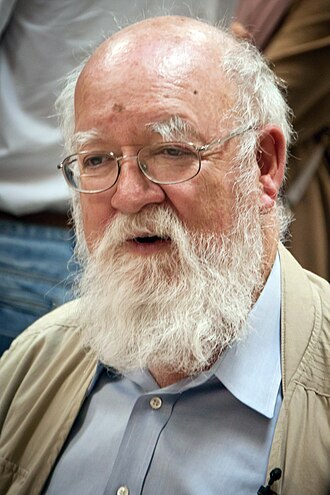 Daniel Dennett
"We recognize that in the reconstruction of most things – national, international, social, political – he is destined to play a commanding part. ... Its looks as if he were fated, despite his reluctance – for he is a modest man and his ambition, whatever it may be, is carefully concealed – to be a Saviour of Society, as well as an Organizer of Victory."
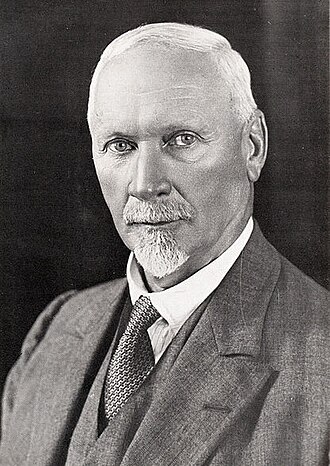 Jan Smuts
"I am speechless about the idea of putting music fans in jail for downloading music. It is wrong to illegally download, but the answer cannot be jail. Here in America we create new opportunities out of adversity, not punitive laws, and we should look to new technologies like Apples new Music Store for solutions. This way, innovation continues to be the hallmark of America. It is the fans that drive the success of the music business."
"We foreign journalists in Moscow used to amuse ourselves, as a matter of fact, by competing with one another as to who could wish upon one of these intelligentsia visitors to the USSR the most outrageous fantasy…One story I floated myself, for which I received considerable acclaim, was that the huge queues outside food shops came about because the Soviet workers were so ardent in building Socialism that they just wouldnt rest, and the only way the government could get them to rest for even two or three hours was organizing a queue for them to stand in. I laugh at it all now, but at the time you can imagine what a shock it was to someone like myself, who had been brought up to regard liberal intellectuals as the samurai, the absolute elite, of the human race, to find that they could be taken in by deceptions which a half-witted boy would see through in an instant…I could never henceforth regard the intelligentsia as other than credulous fools who nonetheless became the medias prophetic voices, their heirs and successors remaining so still."
 Malcolm Muggeridge