Quote
"Whoever loves discipline loves knowledge."
D
Discipline"Discipline is, in a manner, nothing else but the art of inspiring the soldiers with greater fear of their officers than of the enemy. This fear has often the effect of courage: but it cannot prevail against the fierce and obstinate valor of people animated by fanaticism, or warm love of their country."
Discipline is the self-control that is gained by requiring that rules or orders be obeyed, and the ability to keep working at something that is difficult. Disciplinarians believe that such self-control is of the utmost importance and enforce a set of rules that aim to develop such behavior. Such enforcement is sometimes based on punishment, although there is a clear difference between the two. One
"Whoever loves discipline loves knowledge."
"To be disciplined does not mean being silent, abstaining, or doing only what one thinks one may undertake without risk; it is not the art of eluding responsibility; it means acting in compliance with orders received, and therefore finding in ones own mind, by effort and reflection, the possibility to carry out such orders. It also means finding in ones own will the energy to face the risks involved in execution."
"The discipline of piety nourishes the soul with divine thoughts."
"The ascetic Gotama … avoids watching dancing, singing, music and shows. He abstains from using garlands, perfumes, cosmetics, ornaments and adornments. … He refrains from running errands, from buying and selling."
"The Ancients … subjected themselves to a fierce discipline of detachment from public opinion. Although they inevitably had to try to influence political life in their favor, they never seriously thought of themselves as founders or lawgivers. The mixture of unwise power and powerless wisdom, in the ancients’ view, would always end up with power strengthened and wisdom compromised. He who flirts with power, Socrates said, will be compelled to lie with it."
"If you desire ease, forsake learning."
"At one point a heated discussion arose over the possible interpretation of Lolita as a grandiose metaphor of the classic Europeans hopeless love for young, seductive, barbaric America. In his afterword to the novel Nabokov himself mentions this as the naive theory of one of the publishers who turned the book down. And although there cant be the slightest doubt that Nabokov did not mean to limit Lolita to that interpretation, there is no reason to exclude it as one of the novels many dimensions. The point, I felt, became obvious when one drew the line between Lolita as a delightfully frivolous story on the verge of pornography and Lolita as a literary masterpiece, the only convincing love story of our century."
 Lolita
"Lovely food, for rabbits, that is."
"One makes mistakes; that is life. But it is never a mistake to have loved."
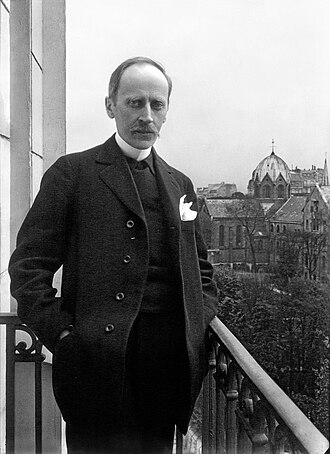 Romain Rolland
"[explaining to Ernie how April apologized to him] She just showed up at the factory, took off her coat, and begged me to take her. We made love in a way that Ive only ever seen in nature films."
 MouseHunt (film)
"Love is always love, come whence it may. A heart that beats at your approach, an eye that weeps when you go away are things so rare, so sweet, so precious that they must never be despised."
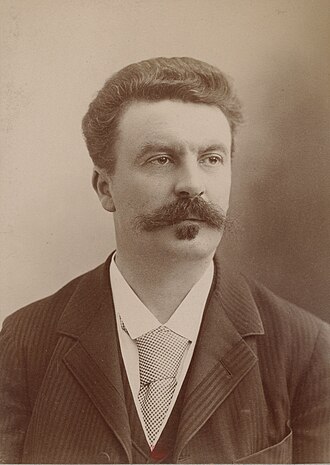 Guy de Maupassant
"He was obeyed, yet he inspired neither love nor fear, nor even respect. He inspired uneasiness. That was it! Uneasiness. Not a definite mistrust — just uneasiness — nothing more. You have no idea how effective such a... a... faculty can be. He had no genius for organizing, for initiative, or for order even. That was evident in such things as the deplorable state of the station. He had no learning, and no intelligence. His position had come to him — why? Perhaps because he was never ill . . . He had served three terms of three years out there . . . Because triumphant health in the general rout of constitutions is a kind of power in itself."