Quote
"All noble enthusiasms pass through a feverish stage, and grow wiser and more serene."
 William Ellery Channing
"Even in evil, that dark cloud which hangs over the creation, we discern rays of light and hope, and gradually come to see in suffering and temptation proofs and instruments of the sublimest purposes of wisdom and love."
William Ellery Channing was the foremost Unitarian preacher in the United States in the early nineteenth century and, along with Andrews Norton (1786–1853), one of Unitarianism's leading theologians. Channing was known for his articulate and impassioned sermons and public speeches, and as a prominent thinker in the liberal theology of the day. His religion and thought were among the chief influenc
"All noble enthusiasms pass through a feverish stage, and grow wiser and more serene."
William Ellery Channing"Let us aspire towards this living confidence, that it is the will of God to unfold and exalt without end the spirit that trusts itself to Him in well-doing as to a faithful Creator."
William Ellery Channing"A man may quarrel with himself alone; that is, by controverting his better instincts and knowledge when brought face to face with temptation."
William Ellery Channing"A religion giving dark views of God, and infusing superstitious fear of innocent enjoyment, instead of aiding sober habits, will, by making men at abject and sad, impair their moral force, and prepare them for intemperance as a refuge from depression or despair."
William Ellery Channing"A friend is he who sets his heart upon us, is happy with us and delights in us; does for us what we want, is willing and fully engaged to do all he can for us, on whom we can rely in all cases."
William Ellery Channing"Real greatness has nothing to do with a mans sphere. It does not lie in the magnitude of his outward agency, in the extent of the effects which he produces. The greatest men may do comparatively little."
William Ellery Channing"At one point a heated discussion arose over the possible interpretation of Lolita as a grandiose metaphor of the classic Europeans hopeless love for young, seductive, barbaric America. In his afterword to the novel Nabokov himself mentions this as the naive theory of one of the publishers who turned the book down. And although there cant be the slightest doubt that Nabokov did not mean to limit Lolita to that interpretation, there is no reason to exclude it as one of the novels many dimensions. The point, I felt, became obvious when one drew the line between Lolita as a delightfully frivolous story on the verge of pornography and Lolita as a literary masterpiece, the only convincing love story of our century."
 Lolita
"Lovely food, for rabbits, that is."
"One makes mistakes; that is life. But it is never a mistake to have loved."
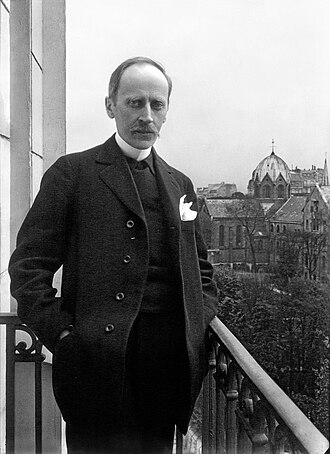 Romain Rolland
"[explaining to Ernie how April apologized to him] She just showed up at the factory, took off her coat, and begged me to take her. We made love in a way that Ive only ever seen in nature films."
 MouseHunt (film)
"Love is always love, come whence it may. A heart that beats at your approach, an eye that weeps when you go away are things so rare, so sweet, so precious that they must never be despised."
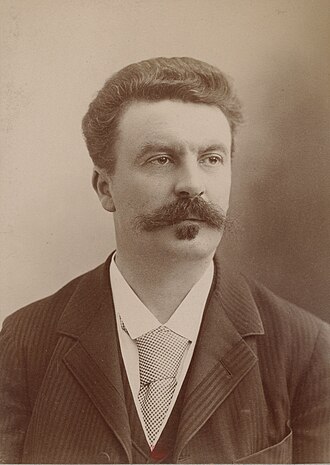 Guy de Maupassant
"He was obeyed, yet he inspired neither love nor fear, nor even respect. He inspired uneasiness. That was it! Uneasiness. Not a definite mistrust — just uneasiness — nothing more. You have no idea how effective such a... a... faculty can be. He had no genius for organizing, for initiative, or for order even. That was evident in such things as the deplorable state of the station. He had no learning, and no intelligence. His position had come to him — why? Perhaps because he was never ill . . . He had served three terms of three years out there . . . Because triumphant health in the general rout of constitutions is a kind of power in itself."