Quote
"Knowledge is, indeed, that which, next to virtue, truly and essentially raises one man above another."
J
Joseph Addison"Every star, and every powr, Look down on this important hour: Lend your protection and defence Every guard of innocence! Help me my Henry to assuage, To gain his love or bear his rage. Mysterious love, uncertain treasure, Hast thou more of pain or pleasure! Chilld with tears, Killd with fears, Endless torments dwell about thee: Yet who would live, and live without thee!"
Joseph Addison was a British writer and politician. He was the eldest son of Lancelot Addison. His name is usually remembered alongside that of his long-standing friend Richard Steele, with whom he founded The Spectator magazine. His simple prose style marked the end of the mannerisms and conventional classical images of the 17th century. Addison is also famous for his play Cato, a Tragedy, writte
Joseph Addison was a British writer and politician. He was the eldest son of Lancelot Addison. His name is usually remembered alongside that of his long-standing friend Richard Steele, with whom he founded The Spectator magazine. His simple prose style marked the end of the mannerisms and conventional classical images of the 17th century. Addison is also famous for his play Cato, a Tragedy, writte
View all quotes by Joseph Addison"Knowledge is, indeed, that which, next to virtue, truly and essentially raises one man above another."
"If we hope for what we are not likely to possess, we act and think in vain, and make life a greater dream and shadow than it really is."
"Tis pride, rank pride, and haughtiness of soul: I think the Romans call it Stoicism."
"So when an angel by divine command With rising tempests shakes a guilty land, Such as of late oer pale Britannia passed, Calm and serene he drives the furious blast; And, pleasd th Almightys orders to perform, Rides in the whirlwind, and directs the storm."
"O Dormer, how can I behold thy fate, And not the wonders of thy youth relate; How can I see the gay, the brave, the young, Fall in the cloud of war, and lie unsung! In joys of conquest he resigns his breath, And, filled with Englands glory, smiles in death."
"The friendships of the world are oft Confederacies in vice, or leagues of pleasure; Ours has severest virtue for its basis, And such a friendship ends not but with life."
"At one point a heated discussion arose over the possible interpretation of Lolita as a grandiose metaphor of the classic Europeans hopeless love for young, seductive, barbaric America. In his afterword to the novel Nabokov himself mentions this as the naive theory of one of the publishers who turned the book down. And although there cant be the slightest doubt that Nabokov did not mean to limit Lolita to that interpretation, there is no reason to exclude it as one of the novels many dimensions. The point, I felt, became obvious when one drew the line between Lolita as a delightfully frivolous story on the verge of pornography and Lolita as a literary masterpiece, the only convincing love story of our century."
 Lolita
"Lovely food, for rabbits, that is."
"One makes mistakes; that is life. But it is never a mistake to have loved."
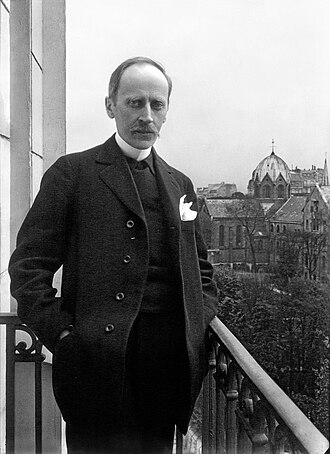 Romain Rolland
"[explaining to Ernie how April apologized to him] She just showed up at the factory, took off her coat, and begged me to take her. We made love in a way that Ive only ever seen in nature films."
 MouseHunt (film)
"Love is always love, come whence it may. A heart that beats at your approach, an eye that weeps when you go away are things so rare, so sweet, so precious that they must never be despised."
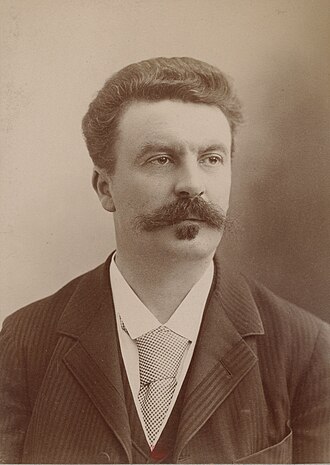 Guy de Maupassant
"He was obeyed, yet he inspired neither love nor fear, nor even respect. He inspired uneasiness. That was it! Uneasiness. Not a definite mistrust — just uneasiness — nothing more. You have no idea how effective such a... a... faculty can be. He had no genius for organizing, for initiative, or for order even. That was evident in such things as the deplorable state of the station. He had no learning, and no intelligence. His position had come to him — why? Perhaps because he was never ill . . . He had served three terms of three years out there . . . Because triumphant health in the general rout of constitutions is a kind of power in itself."