Quote
"Speculations? I have none. I am resting on certainties. I know whom I have believed and am persuaded that he is able to keep that which I have committed unto him against that day."
M
Michael Faraday"Faraday was the first scientist to realise the enormous importance of the electromagnetic field. He saw in it a reality of a new category differing from matter. It was capable of transmitting effects from place to place, and was not to be likened to a mere mathematical fiction such as the gravitational field was then assumed to be. In his opinion, the phenomena of electricity and magnetism should be approached via the field rather than via the charged bodies and currents. In other words, according to Faraday, when a current was flowing along a wire, the most important aspect of the phenomenon lay not in the current itself but in the fields of electric and magnetic force distributed throughout space in the currents vicinity. It is this elevation of the field to a position of preeminence that is often called the pure physics of the field. Faraday was not a mathematician and was unable to co-ordinate the phenomena he foresaw in a mathematical way, and derive the full benefit from his ideas. Before dying, however, he entrusted this task to his colleague Maxwell; and one of the most astonishing theories of science, eclipsed only in recent years by Einsteins theory of relativity, was the outcome."
Michael Faraday was an English chemist and physicist who contributed vastly to the study of electrochemistry and electromagnetism. His main discoveries include the principles underlying electromagnetic induction, diamagnetism, and electrolysis. Although Faraday received little formal education, as a self-made man, he was one of the most influential scientists in history. It was by his research on
"Speculations? I have none. I am resting on certainties. I know whom I have believed and am persuaded that he is able to keep that which I have committed unto him against that day."
"The important thing is to know how to take all things quietly."
"Whereas, according to the declaration of that true man of the world Talleyrand, the use of language is to conceal the thoughts; this is to declare in the present instance, when I say I am not able to bear much talking, it means really, and without any mistake, or equivocation, or oblique meaning, or implication, or subterfuge, or omission, that I am not able; being at present rather weak in the head, and able to work no more."
"To estimate the intensity of Faradays scientific power, we cannot do better than read the first and second series of his Researches and compare them...with the whole course of electro-magnetic science since, which has added no new idea to those set forth, but has only verified the truth and scientific value of every one of them."
"Michael Faraday on the British twenty-pound banknote"
"But still try, for who knows what is possible..."
"Dave Foley: I once shot a man just to watch him die, then I got distracted and missed it. Oh my friends tried to describe it to me, but it just isnt the same."
"I did not go to join Kurtz there and then. I did not. I remained to dream the nightmare out to the end, and to show my loyalty to Kurtz once more. Destiny. My destiny! Droll thing life is — that mysterious arrangement of merciless logic for a futile purpose. The most you can hope from it is some knowledge of yourself — that comes too late — a crop of unextinguishable regrets. I have wrestled with death. It is the most unexciting contest you can imagine. It takes place in an impalpable grayness, with nothing underfoot, with nothing around, without spectators, without clamor, without glory, without the great desire of victory, without the great fear of defeat, in a sickly atmosphere of tepid skepticism, without much belief in your own right, and still less in that of your adversary. If such is the form of ultimate wisdom, then life is a greater riddle than some of us think it to be. I was within a hairs-breadth of the last opportunity for pronouncement, and I found with humiliation that probably I would have nothing to say. This is the reason why I affirm that Kurtz was a remarkable man. He had something to say. He said it. Since I had peeped over the edge myself, I understand better the meaning of his stare, that could not see the flame of the candle, but was wide enough to embrace the whole universe, piercing enough to penetrate all the hearts that beat in the darkness. He had summed up — he had judged. The horror! He was a remarkable man. After all, this was the expression of some sort of belief; it had candor, it had conviction, it had a vibrating note of revolt in its whisper, it had the appalling face of a glimpsed truth — the strange commingling of desire and hate."
"I spoke up about the importance of sex and have been paying the price ever since. I was transphobic, I was a cunt, a bitch, a TERF, I deserved cancelling, punching and death."
"Oh Rama, here I go again! Listen to you, sounding like Death Vader. You people need cigarettes as much as this country needs another C-average President. Plus you look like a human Pez dispenser! Here are your cigarettes, and here is some gum so you can blow bubbles for that WEIRD-ASS HOLE YOU HAVE IN YOUR NECK. And here are some batteries, for your creeping-me-out machine. Now get the park out of my store! I hope I am reincarnated as a turtleneck... I like to tank you for getting that joke!"
"I also know that the shock of Annabels death consolidated the frustration of that nightmare summer, made of it a permanent obstacle to any further romance throughout the cold years of my youth. The spiritual and the physical had been blended in us with a perfection that must remain incomprehensible to the matter-of-fact, crude, standard-brained youngsters of today. Long after her death I felt her thoughts floating through mine. Long before we met we had had the same dreams. We compared notes. We found strange affinities. The same June of the same year (1919) a stray canary had fluttered into her house and mine, in two widely separated countries. Oh, Lolita, had you loved me thus!"
 Lolita
"The groans of the dying and the blanched set faces of the dead ... were enough to drive away all unwholesome feelings of exultation, and to remind one of the grim reality that war is. And even though these were the faces and the sufferings of our enemy, one had ... a deeper sense of the common humanity which knows no racial distinctions."
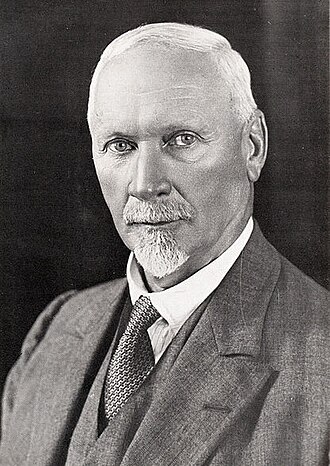 Jan Smuts