SHAWORDS

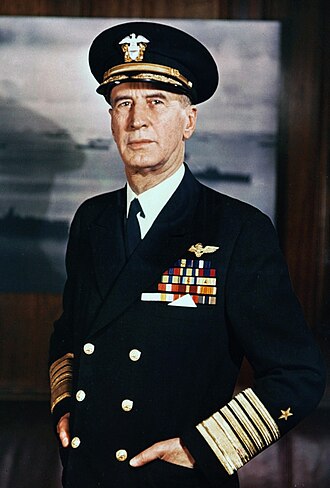
For all his human weaknesses, however, King was a magnificent sailor w — Ernest King

HomeErnest KingQuote
"For all his human weaknesses, however, King was a magnificent sailor who excelled in all branches of seamanship. He had commanded a flotilla of destroyers in World War I with great skill and distinction. He was the hero of a between-wars catastrophe when a U.S. submarine- the S51- went down with all hands, and he and a team of divers had successfully raised it to the surface against all expert prognostications, though too late to save the crew. He was the pioneer of that new branch of the post-World War I Navy, the Air Division Command, had learned to fly a plane and land it on the deck of one of the first American aircraft carriers, which he had successfully commanded. He shared one other quality with Marshall: patience. Like the Army Chief of Staff, he had waited years for promotion, and though his elbow-bending propensities hadnt helped him, he had held in there, enduring and waiting. As he said later, when the top job finally arrived, "If one can only hold on for a little time longer, things will be eased up and in due time the trouble will iron out. That has been my own belief, not to say creed, but it works out for me."
Ernest King
Ernest King
Ernest King
author134 quotes

Ernest Joseph King was a fleet admiral in the United States Navy who served as Commander in Chief, United States Fleet (COMINCH) and Chief of Naval Operations (CNO) during World War II. Franklin Delano Roosevelt appointed King to command global American strategy during World War II and he held supreme naval command in his unprecedented double capacity as COMINCH and CNO. He was the U.S. Navy's sec

More by Ernest King

View all →
Quote
"Historically ... it is traditional and habitual for us to be inadequately prepared. This is the combined result of a number factors, the character of which is only indicated: democracy, which tends to make everyone believe that he knows it all; the preponderance (inherent in democracy) of people whose real interest is in their own welfare as individuals; the glorification of our own victories in war and the corresponding ignorance of our defeats (and disgraces) and of their basic causes; the inability of the average individual (the man in the street) to understand the cause and effect not only in foreign but domestic affairs, as well as his lack of interest in such matters. Added to these elements is the manner in which our representative (republican) form of government has developed as to put a premium on mediocrity and to emphasise the defects of the electorate already mentioned."
Ernest KingErnest King