Quote
"The relationship between the object & the event. Can they 2 be separated? Is one a detail of the other? What is the meeting? Air?"
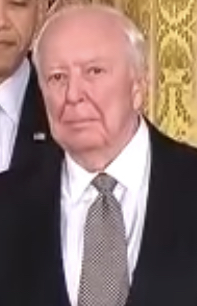 Jasper Johns
"He [Jasper Johns] and I were each others first serious critics. Actually he was the first painter I ever shared ideas with, or had discussions with about painting. No, not the first. Cy Twombly was the first. But Cy and I were not critical. I did my work and he did his. Cys direction was always so personal that you could only discuss it after the fact. But Jasper and I literally traded ideas. He would say, Ive got a terrific idea for you and then Id have to find one for him. [remark on his early cooperative relation with Jasper Johns, to his biographer w:Calvin Tomkins"
Jasper Johns is an American painter, sculptor, draftsman, and printmaker. Considered a central figure in the development of American postwar art, he has been variously associated with abstract expressionism, Neo-Dada, and pop art movements.
Jasper Johns is an American painter, sculptor, draftsman, and printmaker. Considered a central figure in the development of American postwar art, he has been variously associated with abstract expressionism, Neo-Dada, and pop art movements.
View all quotes by Jasper Johns"The relationship between the object & the event. Can they 2 be separated? Is one a detail of the other? What is the meeting? Air?"
Jasper Johns"The Watchman falls "into" the trap of looking. The "spy" is a different person.. ..The spy must be ready to "move", must be aware of his entrances and exits. The watchman leaves his job & takes away no information. The spy must remember & must remember himself & his remembering. The spy designs himself to be overlooked. The watchman "serves" as a warning. Will the spy & the watchman ever meet? In a painting named SPY, will he be present? The spy stations himself to observe the watchman. If the spy is a foreign object, why is the eye not irritated? Is he invisible? When the spy irritates, we try to remove him. "Not spying, just looking" – Watchman. Somewhere here, there is the question of "seeing clearly". Seeing what? According to what?"
Jasper Johns"I made the flags and targets to open mens eyes.. ..[they] were both things - which are seen and not looked at - examined."
Jasper Johns"What is meant by "the representation of space"? What distinguishes one representation from another? Does this mean "how does one see that one thing is not another thing?" What constitutes a change of focus?.. .What about "another way of establishing (?) "thingness"? "Something" can be either one thing or another (without turning the rabbit on its side).."
Jasper Johns"Every artist feels alone and isolated. Friends are very important in terms of all sorts of definitions of oneself. They tell you what you are and what they are aside from the intellectual aspects."
Jasper Johns"As you [Tono] has written, people say that my works are neutral. But if you paint something, it is something, and it cannot be neutral. Being neutral is a mere expression of a form of intention."
Jasper Johns"The only influences in [the painting The sick Child, Munch painted in his elderly home, remembering very accurate the last days of his dying little sister Sophie] The sick Child.. ..were the ones that come from my home.. ..my childhood and my home. Only someone who knew the conditions at home could possibly understand why there can be no conceivable chance of any other place having played a part – my home is to my art as a midwife is to her children.. ..few painters have ever experienced the full grief of their subject as I did in The sick child. It was not just I who was suffering; it was all my nearest and dearest as well."
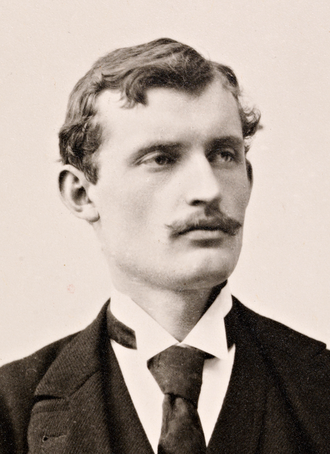 Edvard Munch
"General Franco made it clear that Spain could enter the war only when England was about ready to collapse."
 Francisco Franco
"The Spanish Republic did not find itself free of obligations. For the most part the leaders were Freemasons. Before their duty to their country came their obligations to the Grand Orient. In my opinion, Freemasonry, with all its international influence, is the organization principally responsible for the political ruin of Spain, as well as the murder of Calvo Sotelo, who was executed in accordance with orders from the Grand Secretary of Freemasonry in Geneva."
Francisco Franco"Art was what I originally started out to do and music came second at first. I had a year at art college but I left because it was too much like school. I give all my paintings away to people I like."
 Cat Stevens
"Lady Cannons gone to a matinée at the St. Jamess. We had tickets for the first night, but of course she wouldnt use them then. She preferred to go alone in the afternoon, because she detests the theatre, anyhow, and afternoon performances give her a headache. If she does a thing thats disagreeable to her, she likes to do it in the most painful possible way. She has a beautiful nature."
"At first when I saw The Sick Child [in his imagination] her pallid face and the vivid red hair against the pillow – I saw something that vanished when I tried to paint it. I ended up with a picture on the canvas which, although I was pleased with it, bore little relationship to what I had seen.. ..In the space of that year [1885 – 1886], scratching it out, just letting the paint flow, endlessly I tried to recapture what I had seen for the first time – the pale transparent skin against the linen sheets, the trembling lips, the shaking hands. I repainted the painting numerous times – scratched it out – let it become blurred in the medium – and tried again and again to catch the first impression – the transparent pale skin against the canvas – the trembling mouth – the trembling hands. I had done the chair [in which his sister Sophie had died] with the glass too often. It distracted me from doing the head. – When I saw the picture I could only make out the glass and the surroundings. – Should I remove it completely? – No, it had the effect of giving depth and emphasis to the head. – I scared off half the background and left everything in masses – one could now see past and across the head and the glass.. .I had achieved much of that first impression, the trembling mouth – the transparent skin – the tired eyes – but the picture was not finished in its colour – it was pale grey – the picture was then heavy as lead. [Munch showed the painting on the Autumn Exhibition 18 October 1886; it was criticized severely, even by his bohemian art-friend Jager]"
Edvard Munch