Quote
"The proles were immortal, you could not doubt it when you looked at that valiant figure in the yard."
N
Nineteen Eighty-Four"He knew that sooner or later he would obey OBriens summons. Perhaps tomorrow, perhaps after a long delay — he was not certain. What was happening was only the working-out of a process that had started years ago. The first step had been a secret, involuntary thought, the second had been the opening of the diary. He had moved from thoughts to words, and now from words to actions. The last step was something that would happen in the Ministry of Love. He had accepted it. The end was contained in the beginning. But it was frightening: or, more exactly, it was like a foretaste of death, like being a little less alive. Even while he was speaking to OBrien, when the meaning of the words had sunk in, a chilly shuddering feeling had taken possession of his body. He had the sensation of stepping into the dampness of a grave, and it was not much better because he had always known that the grave was there and waiting for him."
Nineteen Eighty-Four is a dystopian speculative fiction novel by the English writer George Orwell. It was published on 8 June 1949 by Secker & Warburg as Orwell's ninth and final completed book. Thematically, it centres on totalitarianism, mass surveillance and repressive regimentation of people and behaviours. Nineteen Eighty-Four has been often regarded as a classic and has been acknowledged for
"The proles were immortal, you could not doubt it when you looked at that valiant figure in the yard."
"The earth is as old as we are, no older. How could it be older? Nothing exists except through human consciousness."
"The command of the old despotisms was Thou Shalt Not. The command of the totalitarians was Thou Shalt. Our command is Thou Art. No one whom we bring to this place ever stands out against us. Everyone is washed clean."
"Sanity was statistical. It was merely a question of learning to think as they thought."
"Three novels effectively tell the story of Burmas recent history. The link begins with Burmese Days, which chronicles the countrys history under British colonialism. Not long after Burma became independent from Britain in 1948, a military dictator sealed off the country from the outside world, launched The Burmese Way to Socialism, and turned Burma into one of the poorest countries in Asia. The same story is told in Animal Farm. Finally in Nineteen Eighty-Four Orwells description of a horrifying and soulless dystopia paints a chillingly accurate picture of Burma today, a country ruled by one of the worlds most brutal and tenacious dictatorships. In Burma there is a joke that Orwell wrote not just one novel about the country, but three: a trilogy comprised of Burmese Days, Animal Farm and Nineteen Eighty-Four."
"The immediate advantages of falsifying the past were obvious, but the ultimate motive was mysterious."
"At one point a heated discussion arose over the possible interpretation of Lolita as a grandiose metaphor of the classic Europeans hopeless love for young, seductive, barbaric America. In his afterword to the novel Nabokov himself mentions this as the naive theory of one of the publishers who turned the book down. And although there cant be the slightest doubt that Nabokov did not mean to limit Lolita to that interpretation, there is no reason to exclude it as one of the novels many dimensions. The point, I felt, became obvious when one drew the line between Lolita as a delightfully frivolous story on the verge of pornography and Lolita as a literary masterpiece, the only convincing love story of our century."
 Lolita
"Lovely food, for rabbits, that is."
"One makes mistakes; that is life. But it is never a mistake to have loved."
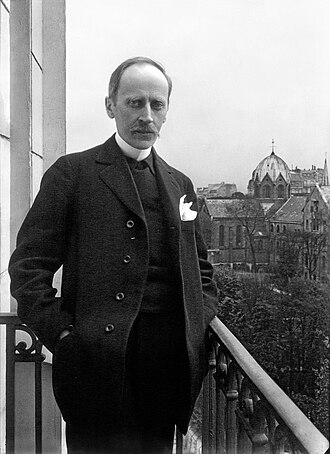 Romain Rolland
"[explaining to Ernie how April apologized to him] She just showed up at the factory, took off her coat, and begged me to take her. We made love in a way that Ive only ever seen in nature films."
 MouseHunt (film)
"Love is always love, come whence it may. A heart that beats at your approach, an eye that weeps when you go away are things so rare, so sweet, so precious that they must never be despised."
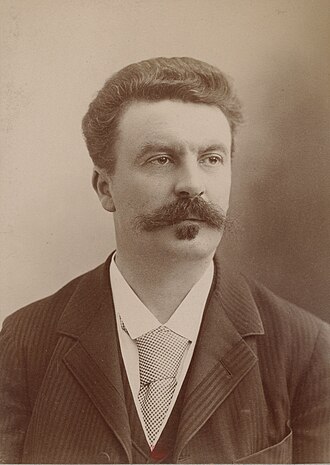 Guy de Maupassant
"He was obeyed, yet he inspired neither love nor fear, nor even respect. He inspired uneasiness. That was it! Uneasiness. Not a definite mistrust — just uneasiness — nothing more. You have no idea how effective such a... a... faculty can be. He had no genius for organizing, for initiative, or for order even. That was evident in such things as the deplorable state of the station. He had no learning, and no intelligence. His position had come to him — why? Perhaps because he was never ill . . . He had served three terms of three years out there . . . Because triumphant health in the general rout of constitutions is a kind of power in itself."