Quote
"Remember this: We be many and they be few. They need us more than we need them."
A
Arundhati Roy"He stepped onto the path that led through the swamp to the History House. He left no ripples in the water. No footprints on the shore. He held his mundu spread above his head to dry. The wind lifted it like a sail. He was suddenly happy.Things will get worse, he thought to himself. Then better. He was walking swiftly now, towards the Heart of Darkness. As lonely as a wolf. The God of Loss. The God of Small Things. Naked but for his nail varnish."
Suzanna Arundhati Roy is an Indian author best known for her novel The God of Small Things (1997), which won the Booker Prize for Fiction in 1997 and became the biggest-selling book by a non-expatriate Indian author. She is also a political activist involved in human rights and environmental causes. She was the winner of the 2024 PEN Pinter Prize, given by English PEN, and she named imprisoned Bri
"Remember this: We be many and they be few. They need us more than we need them."
"May in Ayemenem is a hot, brooding month. The days are long and humid. The river shrinks and black crows gorge on bright mangoes in still, dust green trees. Red bananas ripen. Jackfruits burst. Dissolute bluebottles hum vacuously in the fruity air. Then they stun themselves against clear windowpanes and die, fatly baffled in the sun. The nights are clear, but suffused with sloth and sullen expectation. But by early June the southwest monsoon breaks and there are three months of wind and water with short spells of sharp, glittering sunshine that thrilled children snatch to play with. The countryside turns an immodest green. Boundaries blur as tapioca fences take root and bloom. Brick walls turn moss green. Pepper vines snake up electric poles. Wild creepers burst through laterite banks and spill across the flooded roads. (first lines)"
"Where there is oppression, it will always be challenged by those of us who will challenge it with greater intensity, you know? So thats why I dont believe that there can ever be peace without justice, you know? The two go together. And there cannot be peace in the world with full-spectrum dominance or, you know, nuclear warfare or any of those things. They wont help, because always there will be people who demand dignity, who demand justice, who demand their rights."
"If you are religious, then remember that this bomb is Mans challenge to God. Its worded quite simply: We have the power to destroy everything that You have created. If youre not religious, then look at it this way. This world of ours is 4 600 000 000 years old. It could end in an afternoon."
"Big Dams are to a nations development what nuclear bombs are to its military arsenal. Theyre both weapons of mass destruction. Theyre both weapons governments use to control their own people. Both twentieth-century emblems that mark a point in time when human intelligence has outstripped its own instinct for survival. Theyre both malignant indications of a civilization turning upon itself. They represent the severing of the link, not just the link -- the understanding-- between human beings and the planet they live on. They scramble the intelligence that connects eggs to hens, milk to cows, food to forests, water to rivers, air to life, and the earth to human existence."
"Our strategy should be not only to confront empire, but to lay siege to it. To deprive it of oxygen. To shame it. To mock it. With our art, our music, our literature, our stubbornness, our joy, our brilliance, our sheer relentlessness – and our ability to tell our own stories. Stories that are different from the ones we’re being brainwashed to believe."
"At one point a heated discussion arose over the possible interpretation of Lolita as a grandiose metaphor of the classic Europeans hopeless love for young, seductive, barbaric America. In his afterword to the novel Nabokov himself mentions this as the naive theory of one of the publishers who turned the book down. And although there cant be the slightest doubt that Nabokov did not mean to limit Lolita to that interpretation, there is no reason to exclude it as one of the novels many dimensions. The point, I felt, became obvious when one drew the line between Lolita as a delightfully frivolous story on the verge of pornography and Lolita as a literary masterpiece, the only convincing love story of our century."
 Lolita
"In the life of the mass-order, the culture of the generality tends to conform to the demands of the average human being. Spirituality decays through being diffused among the masses when knowledge is impoverished in every possible way by rationalisation until it becomes accessible to the crude understanding of all."
"The first thing I remember about the world — and I pray that it may be the last — is that I was a stranger in it. This feeling, which everyone has in some degree, and which is, at once, the glory and desolation of homo sapiens, provides the only thread of consistency that I can detect in my life."
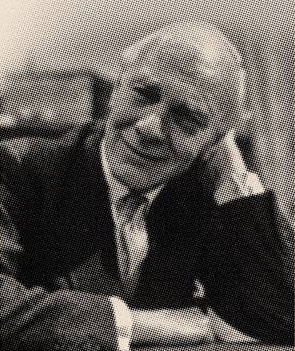 Malcolm Muggeridge
"Jewish custom, which traces descent solely from the mother, is more sensible and more discreet. Our own lawgivers cant accept the fact that there are many things in family life that are best kept shrouded in mystery."
"One makes mistakes; that is life. But it is never a mistake to have loved."
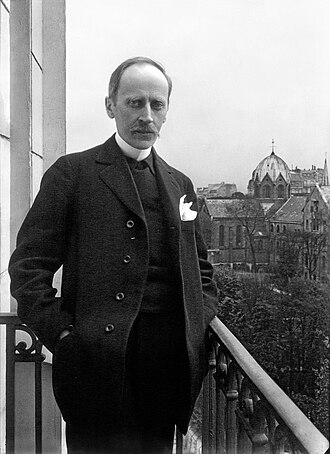 Romain Rolland
"[explaining to Ernie how April apologized to him] She just showed up at the factory, took off her coat, and begged me to take her. We made love in a way that Ive only ever seen in nature films."
 MouseHunt (film)