Quote
"Im as drunk as a fiddlers bitch."
E
Eugene O'Neill"How thick the fog is. I cant see the road. All the people in the world could pass by and I would never know. I wish it was always that way. Its getting dark already. It will soon be night, thank goodness."
Eugene Gladstone O'Neill Sr. was an American playwright. His poetically titled plays were among the first to introduce into the U.S. the drama techniques of realism, earlier associated with Chekhov, Ibsen, and Strindberg. The tragedy Long Day's Journey into Night is often included on lists of the finest American plays in the 20th century, alongside Tennessee Williams's A Streetcar Named Desire and
"Im as drunk as a fiddlers bitch."
"Yes, I remember. I fell in love with James Tyrone and was so happy for a time"
"I havent touched a piano in so many years. I couldnt play with such crippled fingers, even if I wanted to. For a time after my marriage I tried to keep up my music. But it was hopeless. One-night stands, cheap hotels, dirty trains, leaving children, never having a home — [She stares at her hands with fascinated disgust.] See, Cathleen, how ugly they are! So maimed and crippled! You would think theyd been through some horrible accident! [She gives a strange little laugh.] So they have, come to think of it. [She suddenly thrusts her hands behind her back.] I wont look at them. Theyre worse than the foghorn for reminding me — [Then with defiant self-assurance.] But even they cant touch me now. [She brings her hands from behind her back and deliberately stares at them — calmly.] Theyre far away. I see them, but the pain has gone."
"It wasnt the fog I minded, Cathleen. I really love fog. It hides you from the world and the world from you. You feel that everything has changed, and nothing is what it seemed to be. No one can find or touch you any more. Its the foghorn I hate. It wont let you alone. It keeps reminding you, and warning you, and calling you back."
"Is it one wid this youd be, Yank — black smoke from the funnels smudging the sea, smudging the decks — the bloody engines pounding and throbbing and shaking — wid divil a sight of sun or a breath of clean air — choking our lungs wid coal dust — breaking our backs and hearts in the hell of the stokehole — feeding the bloody furnace — feeding our lives along wid the coal, Im thinking — caged in by steel from a sight of the sky like bloody apes in the Zoo!"
"Dont cry. The damned dont cry."
"I say this to you because we Spaniards are a forgetful people, because we are used to living for the moment, because we do not look back, because we do not know how to see the chain of heroes, because we do not contemplate the sum of sacrifices."
 Francisco Franco
"If it fulfills our hopes, this center will be, at once, a symbol and a reflection and a hope. It will symbolize our belief that the world of creation and thought are at the core of all civilization. Only recently in the White House we helped commemorate the 400th anniversary of Shakespeare. The political conflicts and ambitions of his England are known to the scholar and to the specialist. But his plays will forever move men in every corner of the world. The leaders that he wrote about live far more vividly in his words than in the almost forgotten facts of their own rule. Our civilization, too, will largely survive in the works of our creation. There is a quality in art which speaks across the gulf dividing man from man and nation from nation, and century from century. That quality confirms the faith that our common hopes may be more enduring than our conflicting hostilities. Even now men of affairs are struggling to catch up with the insights of great art. The stakes may well be the survival of civilization. The personal preferences of men in government are not important--except to themselves. However, it is important to know that the opportunity we give to the arts is a measure of the quality of our civilization. It is important to be aware that artistic activity can enrich the life of our people, which really is the central object of Government. It is important that our material prosperity liberate and not confine the creative spirit."
"There was a man and he had eight sons. Apart from that, he was nothing more than a comma on the page of History. Its sad, but thats all you can say about some people."
"Children must be free to think in all directions irrespective of the peculiar ideas of parents who often seal their childrens minds with preconceived prejudices and false concepts of past generations. Unless we are very careful, very careful indeed, and very conscientious, there is still great danger that our children may turn out to be the same kind of people we are."
"I hear people say I swing at bad pitches. What is a bad pitch? If I can hit it, its not a bad pitch."
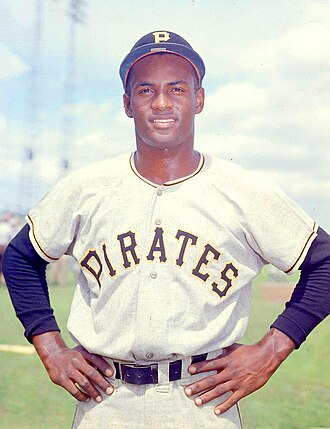 Roberto Clemente
"A free people will always refuse to put up with preventable poverty. If freedom is to be saved and enlarged, poverty must be ended. There is no other solution. The problem of how to prevent these three forces from coming into head-on collision is the principal study of the more politically conscious Conservative leaders. How can wealth persuade poverty to use its political freedom to keep wealth in power? Here lies the whole art of Conservative politics in the twentieth century."