Quote
"I know there is a God, and that He hates injustice and slavery. I see the storm coming, and I know that His hand is in it. If he has a place and work for me—and I think He has—I believe I am ready."
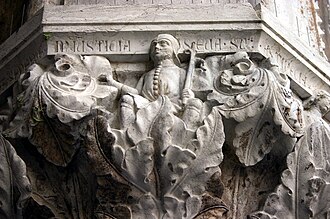 Injustice
"How unjust is Nemesis? How often does good come from evil and evil from good? Does not deceit often lead one to the pinnacle of success, while the reward for honesty and sober living is sometimes nothing but failure and despair?"
Injustice is a quality relating to unfairness or undeserved outcomes. The term may be applied in reference to a particular event or situation, or to a larger status quo. In Western philosophy and jurisprudence, injustice is very commonly—but not always—defined as either the absence or the opposite of justice.
"I know there is a God, and that He hates injustice and slavery. I see the storm coming, and I know that His hand is in it. If he has a place and work for me—and I think He has—I believe I am ready."
Injustice"…abolishing unjust systems does not automatically abolish injustice. Because injustice is not only a matter of law. It is a matter of how bureaucrats interpret the law, how officials use their power, how institutions treat the people they are meant to serve."
Injustice"Like a boil that can never be cured so long as it is covered up but must be opened with all its ugliness to the natural medicines of air and light, injustice must be exposed, with all the tension its exposure creates, to the light of human conscience and the air of national opinion before it can be cured."
Injustice"Feeling that the world is wrong does not necessarily mean that we have a picture of a utopia to put in its place. Nor does is necessarily mean a romantic, some-day-my-prince-will-come idea that, although things are wrong now, one day we shall come to a true world, a promised land, a happy ending. We need no promise of a happy ending to justify our rejection of a world we feel to be wrong."
Injustice"…as Habermas would remind us, peace cannot be pursued in isolation from justice. It must be grounded in the ethical treatment of all citizens, including those who belong to spiritual minorities. … A society cannot credibly advocate for peace while tolerating injustice. It cannot build bridges with the world while burning bridges with its citizens. And it cannot claim moral leadership while denying moral redress."
Injustice"According to Honneth, social struggles emerge when disrespect is experienced as a moral injustice rather than as mere misfortune. In this sense, Tai Ji Men’s resistance can be understood as a claim to dignity and to recognition as legitimate bearers of a form of life within the social order."
Injustice