Quote
"She said we werent being taught enough."
 Kazuo Ishiguro
"I keep thinking about this river somewhere, with the water moving really fast. And these two people in the water, trying to hold onto each other, holding on as hard as they can, but in the end its just too much. The currents too strong. Theyve got to let go, drift apart. Thats how it is with us. Its a shame, Kath, because weve loved each other all our lives. But in the end, we cant stay together forever."
Sir Kazuo Ishiguro is a Japanese-born British novelist, screenwriter, musician, and short-story writer. He is one of the most critically acclaimed contemporary fiction authors writing in English, having been awarded several major literary prizes, including the 2017 Nobel Prize in Literature. In its citation, the Swedish Academy described Ishiguro as a writer "who, in novels of great emotional for
"She said we werent being taught enough."
Kazuo Ishiguro"Her general drift was clear enough: we were all very special, being Hailsham students, and so it was all the more disappointing when we behaved badly."
Kazuo Ishiguro"More fundamentally, Im interested in memory because its a filter through which we see our lives, and because its foggy and obscure, the opportunities for self-deception are there. In the end, as a writer, Im more interested in what people tell themselves happened rather than what actually happened."
Kazuo Ishiguro"If you go to Tokyo, I think it becomes very obvious that theres this almost seamless mixture of popular culture and Japanese traditional culture."
Kazuo Ishiguro"I have a sense of having just left without saying goodbye, and of this whole other world just kind of fading away. … I have the feeling of this completely alternative person I should have become. There was another life that I might have had, but I am having this one."
Kazuo Ishiguro"Maybe she sells them. Outside, out there."
Kazuo Ishiguro"At one point a heated discussion arose over the possible interpretation of Lolita as a grandiose metaphor of the classic Europeans hopeless love for young, seductive, barbaric America. In his afterword to the novel Nabokov himself mentions this as the naive theory of one of the publishers who turned the book down. And although there cant be the slightest doubt that Nabokov did not mean to limit Lolita to that interpretation, there is no reason to exclude it as one of the novels many dimensions. The point, I felt, became obvious when one drew the line between Lolita as a delightfully frivolous story on the verge of pornography and Lolita as a literary masterpiece, the only convincing love story of our century."
 Lolita
"Lovely food, for rabbits, that is."
"One makes mistakes; that is life. But it is never a mistake to have loved."
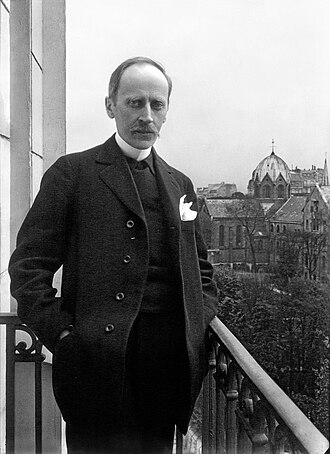 Romain Rolland
"[explaining to Ernie how April apologized to him] She just showed up at the factory, took off her coat, and begged me to take her. We made love in a way that Ive only ever seen in nature films."
 MouseHunt (film)
"Love is always love, come whence it may. A heart that beats at your approach, an eye that weeps when you go away are things so rare, so sweet, so precious that they must never be despised."
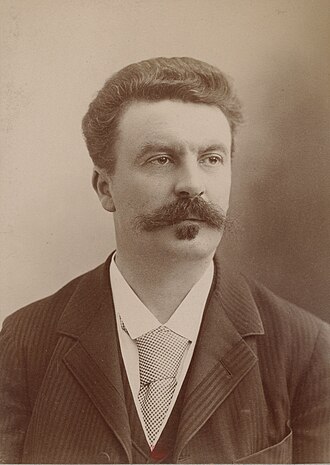 Guy de Maupassant
"He was obeyed, yet he inspired neither love nor fear, nor even respect. He inspired uneasiness. That was it! Uneasiness. Not a definite mistrust — just uneasiness — nothing more. You have no idea how effective such a... a... faculty can be. He had no genius for organizing, for initiative, or for order even. That was evident in such things as the deplorable state of the station. He had no learning, and no intelligence. His position had come to him — why? Perhaps because he was never ill . . . He had served three terms of three years out there . . . Because triumphant health in the general rout of constitutions is a kind of power in itself."