Quote
"We might have a chance now to rebuild it all with what we have left. We might have learned that we can exist only as a part of nature, not apart from nature."
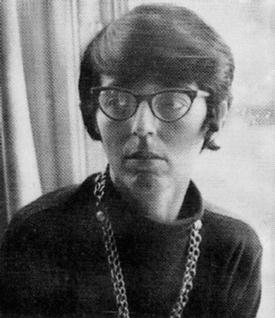 Jane Roberts
"I may say that Buddhism does indeed come closer in essence to reality than other religions. However, the Buddhist either have not gone far enough, or have gone too far, according to your viewpoint. If they have gone too far, then they have been so concerned with inner reality that they have become too tolerant of physical disease and disasters. If they have no gone far enough, then they have not followed through sufficiently so that these physical disasters could truly be suffered without pain."
Dorothy Jane Roberts was an American author and poet, who claimed to be psychic and a spirit medium channeling a personality who called himself "Seth." Her publication of the Seth texts, known as the Seth Material, established her as one of the preeminent figures in the world of paranormal phenomena.
"We might have a chance now to rebuild it all with what we have left. We might have learned that we can exist only as a part of nature, not apart from nature."
Jane Roberts"There were three men whose lives became confused in history and merged, and whose composite history became known as the life of Christ . . . Each was highly gifted psychically, knew of his role, and accepted it willingly. The three men were a part of one entity, gaining physical existence in one time. They were not born on the same date, however. There are reasons why the entity did not return as one person. For one thing, the full consciousness would be too strong for one physical vehicle. For another, the entity wanted a more diversified environment than could otherwise be provided."
Jane Roberts"You do not need to feel guilty over the creation of any probable selves. They come into reality with problems, but all of you come into reality with challenges that you have set ahead of time. You have given them the gift of existence. They will learn how to use it and develop their own abilities in their own way. You have also given them individuality, which means that they are not yourselves, but variations on yourselves."
Jane Roberts"I mentioned the caffeine. I should also note that if coffee does not prevent or inhibit sleep, it will stimulate dream projections, and also aid you in bringing the critical faculties into the dream state."
Jane Roberts"Q. Can you give us more information concerning the name Ruburt? A. That was Janes name long ago as yours was Joseph. Both represented high points for your entities, images in the mental genes, blueprints for the spirit to follow. Joseph and Ruburt represent the full scope of your earthly personalities, towards which you must grow. But in another sense, you are already Joseph and Ruburt, since the blueprint exists. Through each life the individual tries to follow his. The pattern is not imposed, but is the entitys own outline."
Jane Roberts"A mind is a psychic pattern through which you interpret and form reality. You have physical limbs that you can see. You have minds that are invisible. Each one can organize reality in a different fashion. Each one deals with its own kind of knowledge. These minds all work together to keep you alive through the physical structure of the brain. When you use all of these minds, then and only then do you become fully aware of your surroundings: You perceive reality more clearly than you do now, more sharply, brilliantly and concisely. At the same time, however, you comprehend it directly."
Jane Roberts"The only influences in [the painting The sick Child, Munch painted in his elderly home, remembering very accurate the last days of his dying little sister Sophie] The sick Child.. ..were the ones that come from my home.. ..my childhood and my home. Only someone who knew the conditions at home could possibly understand why there can be no conceivable chance of any other place having played a part – my home is to my art as a midwife is to her children.. ..few painters have ever experienced the full grief of their subject as I did in The sick child. It was not just I who was suffering; it was all my nearest and dearest as well."
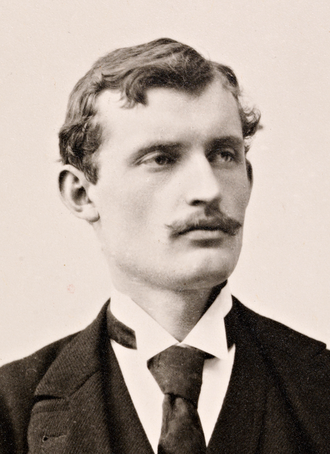 Edvard Munch
"General Franco made it clear that Spain could enter the war only when England was about ready to collapse."
 Francisco Franco
"The Spanish Republic did not find itself free of obligations. For the most part the leaders were Freemasons. Before their duty to their country came their obligations to the Grand Orient. In my opinion, Freemasonry, with all its international influence, is the organization principally responsible for the political ruin of Spain, as well as the murder of Calvo Sotelo, who was executed in accordance with orders from the Grand Secretary of Freemasonry in Geneva."
Francisco Franco"Art was what I originally started out to do and music came second at first. I had a year at art college but I left because it was too much like school. I give all my paintings away to people I like."
 Cat Stevens
"Lady Cannons gone to a matinée at the St. Jamess. We had tickets for the first night, but of course she wouldnt use them then. She preferred to go alone in the afternoon, because she detests the theatre, anyhow, and afternoon performances give her a headache. If she does a thing thats disagreeable to her, she likes to do it in the most painful possible way. She has a beautiful nature."
"At first when I saw The Sick Child [in his imagination] her pallid face and the vivid red hair against the pillow – I saw something that vanished when I tried to paint it. I ended up with a picture on the canvas which, although I was pleased with it, bore little relationship to what I had seen.. ..In the space of that year [1885 – 1886], scratching it out, just letting the paint flow, endlessly I tried to recapture what I had seen for the first time – the pale transparent skin against the linen sheets, the trembling lips, the shaking hands. I repainted the painting numerous times – scratched it out – let it become blurred in the medium – and tried again and again to catch the first impression – the transparent pale skin against the canvas – the trembling mouth – the trembling hands. I had done the chair [in which his sister Sophie had died] with the glass too often. It distracted me from doing the head. – When I saw the picture I could only make out the glass and the surroundings. – Should I remove it completely? – No, it had the effect of giving depth and emphasis to the head. – I scared off half the background and left everything in masses – one could now see past and across the head and the glass.. .I had achieved much of that first impression, the trembling mouth – the transparent skin – the tired eyes – but the picture was not finished in its colour – it was pale grey – the picture was then heavy as lead. [Munch showed the painting on the Autumn Exhibition 18 October 1886; it was criticized severely, even by his bohemian art-friend Jager]"
Edvard Munch