SHAWORDS

I prostrate in front of the memory of Mircea, my unforgettable friend. — Mircea Eliade

"I prostrate in front of the memory of Mircea, my unforgettable friend. I am, in my moments of sadness, obliged to those who have permitted me to say that we have loved him, admired him, respected him and that once more he, Mircea, does never cease to be missed spiritually and emotionally, by all of us. But his work, so rich, so immense, still exists."
I prostrate in front of the memory of Mircea, my unforgettable friend. I am, in my moments of sadness, obliged to those
M
Mircea Eliade
Mircea Eliade
author33 quotes

Mircea Eliade was a Romanian historian of religion, fiction writer, philosopher, and professor at the University of Chicago. One of the most influential scholars of religion of the 20th century and interpreter of religious experience, he established paradigms in religious studies. His theory that hierophanies form the basis of religion, splitting the human experience of reality into sacred and pro

About Mircea Eliade

Mircea Eliade was a Romanian historian of religion, fiction writer, philosopher, and professor at the University of Chicago. One of the most influential scholars of religion of the 20th century and interpreter of religious experience, he established paradigms in religious studies. His theory that hierophanies form the basis of religion, splitting the human experience of reality into sacred and pro

View all quotes by Mircea Eliade

More by Mircea Eliade

View all →
Quote
"The worldly man lives in society, marries, establishes a family; Yoga prescribes absolute solitude and chastity The worldly man is “possessed” by his own life; the yogin refuses to “let himself live”; to continual movement, he opposes his static posture, the immobility of aasana; to agitated, unrhythmical, changing respiration, he opposes praanaayaama, and even dreams of holding his breath indefinitely; to the chaotic flux of psychomental life, he replies by “fixing thought on a single point,” the first step to that final withdrawal from the phenomenal world which he will obtain through pratyaahaara All of the yogic techniques invite to one and the same gesture—to do exactly the opposite of what human nature forces one to do From solitude and chastity to samyama, there is no solution of continuity The orientation always remains the same—to react against the “normal,” “secular,” and finally “human” inclination"
M
Mircea Eliade
More on Sad

View all →
Quote
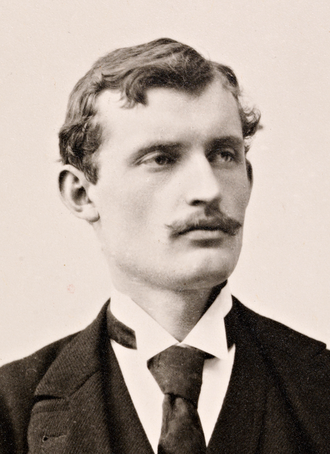
"The only influences in [the painting The sick Child, Munch painted in his elderly home, remembering very accurate the last days of his dying little sister Sophie] The sick Child.. ..were the ones that come from my home.. ..my childhood and my home. Only someone who knew the conditions at home could possibly understand why there can be no conceivable chance of any other place having played a part – my home is to my art as a midwife is to her children.. ..few painters have ever experienced the full grief of their subject as I did in The sick child. It was not just I who was suffering; it was all my nearest and dearest as well."
Edvard MunchEdvard Munch
Quote
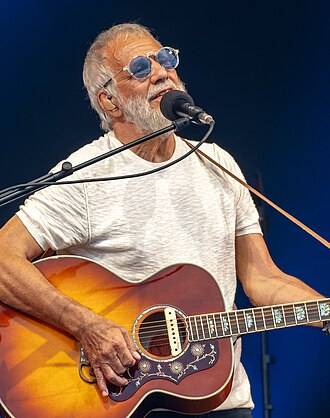
"Im very sad that this seems to be the No. 1 question people want to discuss. I had nothing to do with the issue other than what the media created. I was innocently drawn into the whole controversy. So, after many years, Im glad at least now that I have been given the opportunity to explain to the public and fans my side of the story in my own words. At a lecture, back in 1989, I was asked a question about blasphemy according to Islamic Law, I simply repeated the legal view according to my limited knowledge of the Scriptural texts, based directly on historical commentaries of the Quran. The next day the newspaper headlines read, "Cat Says, Kill Rushdie." I was abhorred, but what could I do? I was a new Muslim. If you ask a Bible student to quote the legal punishment of a person who commits blasphemy in the Bible, he would be dishonest if he didnt mention Leviticus 24:16."
Cat StevensCat Stevens
Quote
"Rhymer, brawler, and musician, Famed for his lunar expedition, And the unnumbered duels he fought, — And lover also, — by interposition! — Here lies Hercule Savinien De Cyrano de Bergerac, Who was everything, yet was naught. I cry you pardon, but I may not stay; See, the moon-ray that comes to call me hence! I would not bid you mourn less faithfully That good, brave Christian: I would only ask That when my body shall be cold in clay You wear those sable mourning weeds for two, And mourn awhile for me, in mourning him."
E
Edmond Rostand