Quote
"You want forgiveness? Get religion."
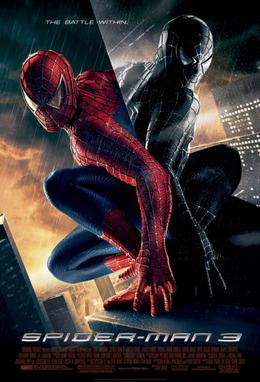 Spider-Man 3
"I think that Topher’s character is ultimately a very tragic character because when he hurls himself back just before the explosion I loved the way that he did that. It just gave me goose bumps. Topher just manages to capture in that one kind of flash of performance that this guy has nothing else. He’s only existed in the movie by superficiality and duplicity and then of course embraces the black suit and turns into Venom, but whenever he’s torn apart that’s all he has. He has no other choice, but to really commit himself suicidally because he just has nothing else. He has no other path. I find that to be resolute in it’s tragedy with it’s character. I think that my character certainly starts off in a place emotionally which addresses the worst fear of any parent, the possibility that you’ll lose your greatest gift which is your child. I’m a father and Sam is a father and Laura and Alvin are parents, Avi is a parent, everyone involved – early on that’s what we wanted the anchoring of the character to be. It was that kind of impending tragedy with the character. You’re right though, he’s sympathetic and certainly some clicks beyond Eddie Brock and Venom, but I think that as Avi has said before there are no bad guys in these movies. They’re just people that this far into the series, I think, come into these movies with a value system in tact that’s corrupted by ambition or lust. In the case of Sandman he’s really corrupted by the ferocity of his own good intentions. You’ve got to pretty much figure that whenever I become a sand tornado and I’m spinning through the streets of Manhattan and flipping over cars some people probably got f**ked up. That’s probably a drag and they don’t care if my daughter is dying because their car got turned upside down, their Hyundai Excel. They don’t even see the hidden benefit that insurance pays and they get another car."
Spider-Man 3 is a 2007 American superhero film based on the Marvel Comics character Spider-Man. Produced by Columbia Pictures, Marvel Entertainment, and Laura Ziskin Productions, and distributed by Sony Pictures Releasing, it was directed by Sam Raimi from a screenplay he co-wrote with his brother Ivan and Alvin Sargent. It is the final film in Raimi's Spider-Man trilogy (2002–2007). The film star
Spider-Man 3 is a 2007 American superhero film based on the Marvel Comics character Spider-Man. Produced by Columbia Pictures, Marvel Entertainment, and Laura Ziskin Productions, and distributed by Sony Pictures Releasing, it was directed by Sam Raimi from a screenplay he co-wrote with his brother Ivan and Alvin Sargent. It is the final film in Raimi's Spider-Man trilogy (2002–2007). The film star
2002–2007
View all quotes by Spider-Man 3"You want forgiveness? Get religion."
Spider-Man 3"I protected you in high school. Now Im gonna kick your little ass."
Spider-Man 3"Tell it to my father. Raise him from the dead."
Spider-Man 3"Everybody needs help sometimes, Peter. Even Spider-Man."
Spider-Man 3"[after seeing Sandman wiped out in the sewer] Good riddance."
Spider-Man 3"You knew this was coming, Pete."
Spider-Man 3"At one point a heated discussion arose over the possible interpretation of Lolita as a grandiose metaphor of the classic Europeans hopeless love for young, seductive, barbaric America. In his afterword to the novel Nabokov himself mentions this as the naive theory of one of the publishers who turned the book down. And although there cant be the slightest doubt that Nabokov did not mean to limit Lolita to that interpretation, there is no reason to exclude it as one of the novels many dimensions. The point, I felt, became obvious when one drew the line between Lolita as a delightfully frivolous story on the verge of pornography and Lolita as a literary masterpiece, the only convincing love story of our century."
 Lolita
"Lovely food, for rabbits, that is."
"One makes mistakes; that is life. But it is never a mistake to have loved."
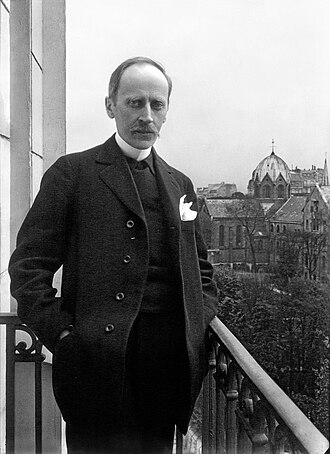 Romain Rolland
"[explaining to Ernie how April apologized to him] She just showed up at the factory, took off her coat, and begged me to take her. We made love in a way that Ive only ever seen in nature films."
 MouseHunt (film)
"Love is always love, come whence it may. A heart that beats at your approach, an eye that weeps when you go away are things so rare, so sweet, so precious that they must never be despised."
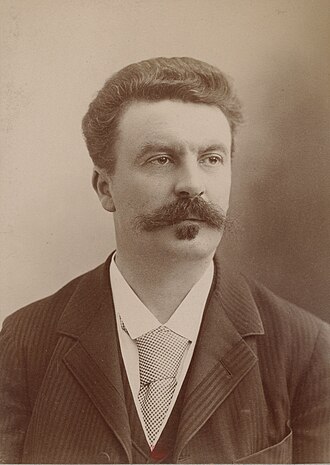 Guy de Maupassant
"He was obeyed, yet he inspired neither love nor fear, nor even respect. He inspired uneasiness. That was it! Uneasiness. Not a definite mistrust — just uneasiness — nothing more. You have no idea how effective such a... a... faculty can be. He had no genius for organizing, for initiative, or for order even. That was evident in such things as the deplorable state of the station. He had no learning, and no intelligence. His position had come to him — why? Perhaps because he was never ill . . . He had served three terms of three years out there . . . Because triumphant health in the general rout of constitutions is a kind of power in itself."