Quote
"Humility is not thinking less of yourself, its thinking of yourself less."
C
C. S. Lewis"If there is equality, it is in His love, not in us."
Clive Staples Lewis was a British author, literary scholar and Anglican lay theologian. He held academic positions in English literature at both Magdalen College, Oxford (1925–1954), and Magdalene College, Cambridge (1954–1963). He is best known as the author of The Chronicles of Narnia, but he is also noted for his other works of fiction, such as The Screwtape Letters and The Space Trilogy, and f
"Humility is not thinking less of yourself, its thinking of yourself less."
"The devil...the prowde spirit...cannot endure to be mocked."
"Then those people are right who say that Heaven and Hell are only states of mind?" "Hush," he said sternly. "Do not blaspheme. Hell is a state of mind — ye never said a truer word. And every state of mind, left to itself, every shutting up of the creature within the dungeon of its own mind — is, in the end, Hell. But Heaven is not a state of mind. Heaven is reality itself. All that is fully real is Heavenly."
"There is something which unites magic and applied science while separating both from the wisdom of earlier ages. For the wise men of old the cardinal problem had been how to conform the soul to reality, and the solution had been knowledge, self-discipline, and virtue. For magic and applied science alike the problem is how to subdue reality to the wishes of men."
"It comes, it comes! they sang. Sleepers awake! It comes, it comes, it comes. One dreadful glance over my shoulder I essayed — not long enough to see (or did I see?) the rim of the sunrise that shoots Time dead with golden arrows and puts to flight all phantasmal shapes. Screaming, I buried my face in the fold of the Teachers robe. The morning! The morning! I cried. I am caught by the morning and I am a ghost."
"Suppose I think, after doing my accounts, that I have a large balance at the bank. And suppose you want to find out whether this belief of mine is “wishful thinking.” You can never come to any conclusion by examining my psychological condition. Your only chance of finding out is to sit down and work through the sum yourself. When you have checked my figures, then, and then only, will you know whether I have that balance or not. If you find my arithmetic correct, then no amount of vapouring about my psychological condition can be anything but a waste of time. If you find my arithmetic wrong, then it may be relevant to explain psychologically how I came to be so bad at my arithmetic, and the doctrine of the concealed wish will become relevant—but only after you have yourself done the sum and discovered me to be wrong on purely arithmetical grounds. It is the same with all thinking and all systems of thought. If you try to find out which are tainted by speculating about the wishes of the thinkers, you are merely making a fool of yourself. You must first find out on purely logical grounds which of them do, in fact, break down as arguments. Afterwards, if you like, go on and discover the psychological causes of the error."
"At one point a heated discussion arose over the possible interpretation of Lolita as a grandiose metaphor of the classic Europeans hopeless love for young, seductive, barbaric America. In his afterword to the novel Nabokov himself mentions this as the naive theory of one of the publishers who turned the book down. And although there cant be the slightest doubt that Nabokov did not mean to limit Lolita to that interpretation, there is no reason to exclude it as one of the novels many dimensions. The point, I felt, became obvious when one drew the line between Lolita as a delightfully frivolous story on the verge of pornography and Lolita as a literary masterpiece, the only convincing love story of our century."
 Lolita
"Lovely food, for rabbits, that is."
"One makes mistakes; that is life. But it is never a mistake to have loved."
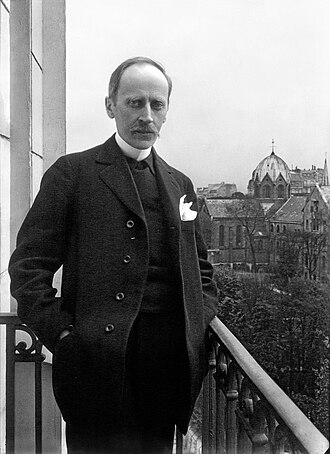 Romain Rolland
"[explaining to Ernie how April apologized to him] She just showed up at the factory, took off her coat, and begged me to take her. We made love in a way that Ive only ever seen in nature films."
 MouseHunt (film)
"Love is always love, come whence it may. A heart that beats at your approach, an eye that weeps when you go away are things so rare, so sweet, so precious that they must never be despised."
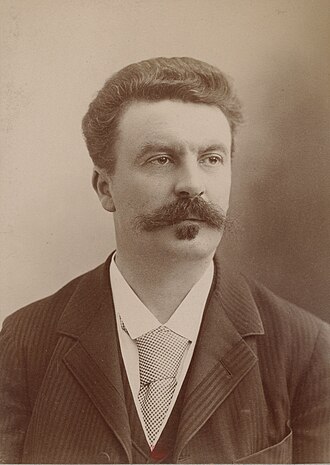 Guy de Maupassant
"He was obeyed, yet he inspired neither love nor fear, nor even respect. He inspired uneasiness. That was it! Uneasiness. Not a definite mistrust — just uneasiness — nothing more. You have no idea how effective such a... a... faculty can be. He had no genius for organizing, for initiative, or for order even. That was evident in such things as the deplorable state of the station. He had no learning, and no intelligence. His position had come to him — why? Perhaps because he was never ill . . . He had served three terms of three years out there . . . Because triumphant health in the general rout of constitutions is a kind of power in itself."