SHAWORDS

In looking back, with our present experience, we are driven to the mel — William Edward Hartpole Lecky

"In looking back, with our present experience, we are driven to the melancholy conclusion that, instead of diminishing the number of wars, ecclesiastical influence has actually and very seriously increased it. We may look in vain for any period since Constantine, in which the clergy, as a body, exerted themselves to repress the military spirit, or to prevent or abridge a particular war, with an energy at all comparable to that which they displayed in stimulating the fanaticism of the crusaders, in producing the atrocious massacre of the Albigenses, in embittering the religious contests that followed the Reformation."
In looking back, with our present experience, we are driven to the melancholy conclusion that, instead of diminishing th
William Edward Hartpole Lecky
author11 quotes

William Edward Hartpole Lecky, was an Irish historian, essayist, and political theorist with Whig proclivities. His major work was an eight-volume History of England during the Eighteenth Century.

About William Edward Hartpole Lecky

William Edward Hartpole Lecky, was an Irish historian, essayist, and political theorist with Whig proclivities. His major work was an eight-volume History of England during the Eighteenth Century.

View all quotes by William Edward Hartpole Lecky

More by William Edward Hartpole Lecky

View all →
Quote
"There can indeed be little doubt that for nearly two hundred years after its establishment in Europe, the Christian community exhibited a moral purity which, if it has been equaled, has never for any long period been surpassed. Completely separated from the Roman world that was around them, abstaining alike from political life, from appeals to the tribunals, and from military occupations; looking forward continually to the immediate advent of their Master, and the destruction of the Empire in which they dwelt, and animated by all the fervor of a young religion, the Christiana found within themselves a whole order of ideas and feelings sufficiently powerful to guard them from the contamination of their age."
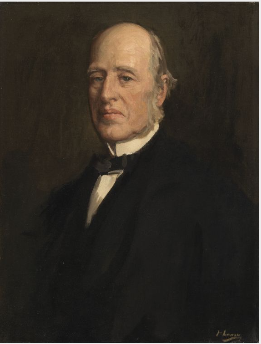
William Edward Hartpole LeckyWilliam Edward Hartpole Lecky
Quote
"Under these circumstances, there has arisen in society a figure which is certainly the most mournful, and in some respects the most awful, upon which the eye of the moralist can dwell. That unhappy being whose very name is a shame to speak; who counterfeits with a cold heart the transports of affection, and submits herself as the passive instrument of lust; who is scorned and insulted as the vilest of her sex, and doomed, for the most part, to disease and abject wretchedness and an early death, appears in every age as the perpetual symbol of the degradation and sinfulness of man. Herself the supreme type of vice, she is ultimately the most efficient guardian of virtue. But for her, the unchallenged purity of countless happy homes would be polluted, and not a few who, in the pride of their untempted chastity, think of her with an indignant shudder, would have known the agony of remorse and of despair. On that one degraded and ignoble form are concentrated the passions that might have filled the world with shame. She remains, while creeds and civilisations rise and fall, the eternal priestess of humanity, blasted for the sins of the people."
William Edward Hartpole LeckyWilliam Edward Hartpole Lecky

More on Sad

View all →
Quote
"The only influences in [the painting The sick Child, Munch painted in his elderly home, remembering very accurate the last days of his dying little sister Sophie] The sick Child.. ..were the ones that come from my home.. ..my childhood and my home. Only someone who knew the conditions at home could possibly understand why there can be no conceivable chance of any other place having played a part – my home is to my art as a midwife is to her children.. ..few painters have ever experienced the full grief of their subject as I did in The sick child. It was not just I who was suffering; it was all my nearest and dearest as well."
Edvard MunchEdvard Munch
Quote
"Im very sad that this seems to be the No. 1 question people want to discuss. I had nothing to do with the issue other than what the media created. I was innocently drawn into the whole controversy. So, after many years, Im glad at least now that I have been given the opportunity to explain to the public and fans my side of the story in my own words. At a lecture, back in 1989, I was asked a question about blasphemy according to Islamic Law, I simply repeated the legal view according to my limited knowledge of the Scriptural texts, based directly on historical commentaries of the Quran. The next day the newspaper headlines read, "Cat Says, Kill Rushdie." I was abhorred, but what could I do? I was a new Muslim. If you ask a Bible student to quote the legal punishment of a person who commits blasphemy in the Bible, he would be dishonest if he didnt mention Leviticus 24:16."
Cat StevensCat Stevens
Quote
"Rhymer, brawler, and musician, Famed for his lunar expedition, And the unnumbered duels he fought, — And lover also, — by interposition! — Here lies Hercule Savinien De Cyrano de Bergerac, Who was everything, yet was naught. I cry you pardon, but I may not stay; See, the moon-ray that comes to call me hence! I would not bid you mourn less faithfully That good, brave Christian: I would only ask That when my body shall be cold in clay You wear those sable mourning weeds for two, And mourn awhile for me, in mourning him."
E
Edmond Rostand