SHAWORDS

Inasmuch as it is so often impossible to punish wrongs done in the pas — Theodore Roosevelt

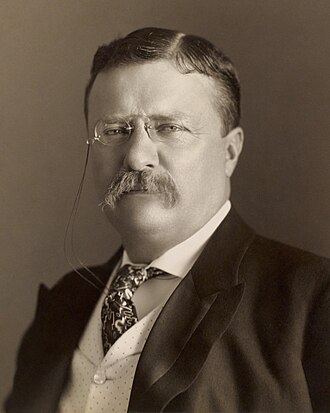
"Inasmuch as it is so often impossible to punish wrongs done in the past, and to prevent the consequences of the wrongs thus committed being felt by one innocent class, without shifting the burden to the shoulders of another innocent class, we ought to provide that hereafter business shall be carried on from its inception in such a way as to prevent swindling. Incidentally, this will also tend to prevent that excessive profit by one man, which may not be swindling, under existing laws, but which nevertheless is against the interest of the commonwealth. To know all the facts is of as much interest to the investor and the wage-worker as to the shipper, the producer, the consumer. Full knowledge of the past helps us in dealing with the future. If we find that high rates are due to overcapitalization in the past, or to any kind of sharp practice in the past, then, whether or not it is possible to take action which will partly remedy the wrong, we are certainly in a better position to prevent a repetition of the wrong."
Theodore Roosevelt
Theodore Roosevelt
Theodore Roosevelt
author353 quotes

Theodore Roosevelt Jr. was the 26th president of the United States, serving from 1901 to 1909. Previously serving six months as vice president under William McKinley, Roosevelt became president after McKinley's assassination in 1901. He was 42 years old upon his first inauguration, making him the youngest person to hold the office.

More by Theodore Roosevelt

View all →
Quote
"Justice Bowling in his speech has described the excellent fourth degree of your order, of how in it you dwell upon duties rather than rights, upon the great duties of patriotism and of national spirit. It is a fine thing to have a society that holds up such a standard of duty. I ask you to make a special effort to deal with Americanization, the fusing into one nation, a nation necessarily different from all other nations, of all who come to our shores. Pay heed to the three principal essentials: (i) the need of a common language, with a minimum amount of illiteracy; (2) the need of a common civil standard, similar ideals, beliefs, and customs symbolized by the oath of allegiance to America; and (3) the need of a high standard of living, of reasonable equality of opportunity and of social and industrial justice. In every great crisis in our history, in the Revolution and in the Civil War, and in the lesser crises, like the Spanish war, all factions and races have been forgotten in the common spirit of Americanism. Protestant and Catholic, men of English or of French, of Irish or of German, descent have joined with a single-minded purpose to secure for the country what only can be achieved by the resultant union of all patriotic citizens. You of this organization have done a great service by your insistence that citizens should pay heed first of all to their duties. Hitherto undue prominence has been given to the question of rights. Your organization is a splendid engine for giving to the stranger within our gates a high conception of American citizenship. Strive for unity. We suffer at present from a lack of leadership in these matters."
Theodore RooseveltTheodore Roosevelt

More on Time

View all →
Quote
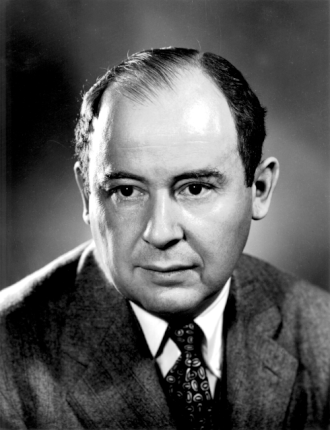
"Most mathematicians prove what they can, von Neumann proves what he wants." Once in a discussion about the rapid growth of mathematics in modern times, von Neumann was heard to remark that whereas thirty years ago a mathematician could grasp all of mathematics, that is impossible today. Someone asked him: "What percentage of all mathematics might a person aspire to understand today?" Von Neumann went into one of his five-second thinking trances, and said: "About 28 percent."
John von NeumannJohn von Neumann