Quote
"Character is the result of a system of stereotyped principles."
D
David Hume"It is a very comfortable reflection to the lovers of liberty, that this peculiar privilege of Britain is of a kind that cannot easily be wrested from us, but must last as long as our government remains, in any degree, free and independent. It is seldom, that liberty of any kind is lost all at once. Slavery has so frightful an aspect to men accustomed to freedom, that it must steal upon them by degrees, and must disguise itself in a thousand shapes, in order to be received. But, if the liberty of the press ever be lost, it must be lost at once. The general laws against sedition and libelling are at present as strong as they possibly can be made. Nothing can impose a farther restraint, but either the clapping an Imprimatur upon the press, or the giving to the court very large discretionary powers to punish whatever displeases them. But these concessions would be such a bare-faced violation of liberty, that they will probably be the last efforts of a despotic government. We may conclude, that the liberty of Britain is gone for ever when these attempts shall succeed."
David Hume was a Scottish philosopher, historian, economist and essayist who is known for his highly influential system of empiricism, philosophical scepticism and metaphysical naturalism. Beginning with A Treatise of Human Nature (1739–40), Hume strove to create a naturalistic science of man that examined the psychological basis of human nature. Hume followed John Locke in rejecting the existence
"Character is the result of a system of stereotyped principles."
"Truth springs from argument amongst friends."
"I say, then, that belief is nothing but a more vivid, lively, forcible, firm, steady conception of an object, than what the imagination alone is ever able to attain"
"In every page of David Hume, there is more to be learned than from Hegels, Herbarts and Schleiermachers complete philosophical works."
"Tis certainly a kind of indignity to philosophy, whose sovereign authority ought every where to be acknowledgd, to oblige her on every occasion to make apologies for her conclusions, and justify herself to every particular art and science, which may be offended at her."
"The great end of all human industry, is the attainment of happiness. For this were arts invented, sciences cultivated, laws ordained, and societies modelled, by the most profound wisdom of patriots and legislators."
"At one point a heated discussion arose over the possible interpretation of Lolita as a grandiose metaphor of the classic Europeans hopeless love for young, seductive, barbaric America. In his afterword to the novel Nabokov himself mentions this as the naive theory of one of the publishers who turned the book down. And although there cant be the slightest doubt that Nabokov did not mean to limit Lolita to that interpretation, there is no reason to exclude it as one of the novels many dimensions. The point, I felt, became obvious when one drew the line between Lolita as a delightfully frivolous story on the verge of pornography and Lolita as a literary masterpiece, the only convincing love story of our century."
 Lolita
"Lovely food, for rabbits, that is."
"One makes mistakes; that is life. But it is never a mistake to have loved."
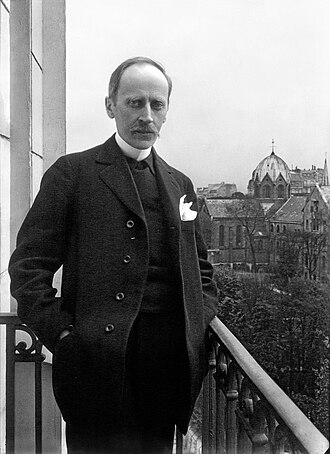 Romain Rolland
"[explaining to Ernie how April apologized to him] She just showed up at the factory, took off her coat, and begged me to take her. We made love in a way that Ive only ever seen in nature films."
 MouseHunt (film)
"Love is always love, come whence it may. A heart that beats at your approach, an eye that weeps when you go away are things so rare, so sweet, so precious that they must never be despised."
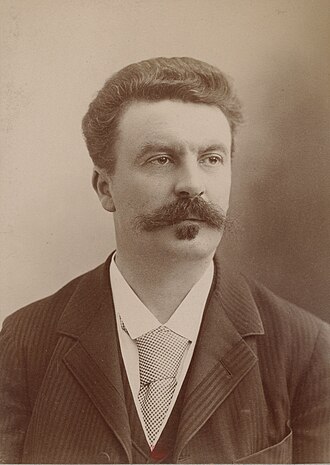 Guy de Maupassant
"He was obeyed, yet he inspired neither love nor fear, nor even respect. He inspired uneasiness. That was it! Uneasiness. Not a definite mistrust — just uneasiness — nothing more. You have no idea how effective such a... a... faculty can be. He had no genius for organizing, for initiative, or for order even. That was evident in such things as the deplorable state of the station. He had no learning, and no intelligence. His position had come to him — why? Perhaps because he was never ill . . . He had served three terms of three years out there . . . Because triumphant health in the general rout of constitutions is a kind of power in itself."