SHAWORDS

It is not easy to fall into any absurdity, unless it be by the length — Thomas Hobbes

"It is not easy to fall into any absurdity, unless it be by the length of an account; wherein he may perhaps forget what went before. For all men by nature reason alike, and well, when they have good principles. For who is so stupid as both to mistake in geometry, and also to persist in it, when another detects his error to him? By this it appears that reason is not, as sense and memory, born with us; nor gotten by experience only, as prudence is; but attained by industry: first in apt imposing of names; and secondly by getting a good and orderly method in proceeding from the elements, which are names, to assertions made by connexion of one of them to another; and so to syllogisms, which are the connexions of one assertion to another, till we come to a knowledge of all the consequences of names appertaining to the subject in hand; and that is it, men call science. And whereas sense and memory are but knowledge of fact, which is a thing past and irrevocable, science is the knowledge of consequences, and dependence of one fact upon another; by which, out of that we can presently do, we know how to do something else when we will, or the like, another time: because when we see how anything comes about, upon what causes, and by what manner; when the like causes come into our power, we see how to make it produce the like effects. Children therefore are not endued with reason at all, till they have attained the use of speech, but are called reasonable creatures for the possibility apparent of having the use of reason in time to come."
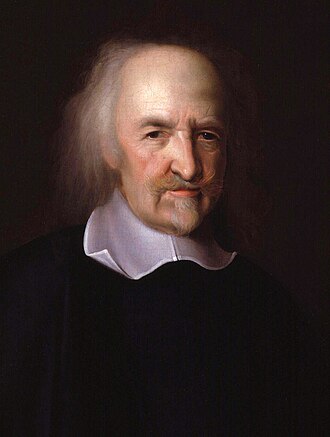
Thomas Hobbes
Thomas Hobbes
Thomas Hobbes
author114 quotes

Thomas Hobbes was an English philosopher and political theorist, best known for his 1651 book Leviathan, in which he expounds an influential formulation of social contract theory. He is considered to be one of the founders of modern political philosophy.

More by Thomas Hobbes

View all →
Quote
"The study of politics is a form of natural history. Thomas Hobbes loathed Aristotle’s politics, and in Leviathan followed Plato in modeling politics on geometry; but he admired Aristotle’s biology. One consequence of that “biological” style is important, not only because it was at odds with Hobbes’s—and Plato’s—hankering after political geometry. Aristotle claimed that political analysis should aim only “at as much precision as the subject matter permits.” Political wisdom cannot aspire to the precision of geometry, and must not pretend to. Aboriculture suggests an analogy: most trees grow best in firm soil with a moderate water supply; a few thrive with their roots in mud and water."
Thomas HobbesThomas Hobbes
Quote
"In Leviathan, Thomas Hobbes described the life of man as “solitary, poor, nasty, brutish, and short.” For most animals, especially those who have the misfortune of being tasty, this much seems true. However, for many human animals in the modern era, Hobbes’s depiction of life simply does not apply. Sadly, despite the cosmic luck that has afforded this luxurious and uniquely human lifestyle, many among us have lost our appreciation for the rarity of this phenomenon, both in the immediate sense and in the deep sense of cosmological time."
Thomas HobbesThomas Hobbes

More on Time

View all →
Quote
"Most mathematicians prove what they can, von Neumann proves what he wants." Once in a discussion about the rapid growth of mathematics in modern times, von Neumann was heard to remark that whereas thirty years ago a mathematician could grasp all of mathematics, that is impossible today. Someone asked him: "What percentage of all mathematics might a person aspire to understand today?" Von Neumann went into one of his five-second thinking trances, and said: "About 28 percent."
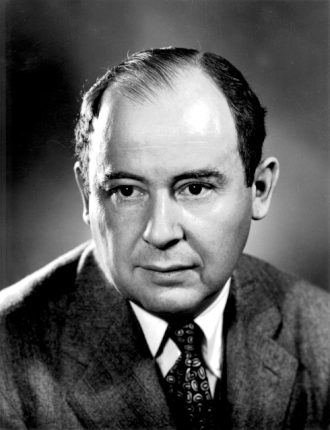
John von NeumannJohn von Neumann