Quote
"Non-alignment" provided a way in which the leaders of "third world" states could tilt without toppling: the idea was to commit to neither side in the Cold War, but to leave open the possibility of such commitment. That way, if pressure from one superpower became too great, a smaller power could defend itself by threatening to align with the other superpower. Yugoslavia—not a "third world" state—pioneered the process. Tito had not sought Stalins condemnation in 1948: he was, and remained, a dedicated communist. But he was determined not to sacrifice sovereignty for the sake of ideological solidarity, and unlike most other East European leaders at the time, he had no need to do so. Noting how quickly the Americans offered him economic assistance after his break with Stalin, Tito saw the possibility of a lifeline: would the Russians risk using force against the Yugoslavs if this might lead to war with the Americans? With the United States Sixth Fleet operating just off the long Yugoslav coast, there were good reasons for Stalin to think twice about attempting an invasion, and there is evidence that he did so, contenting himself instead with assassination plots—all of them unsuccessful."
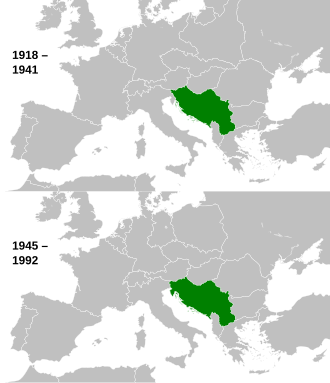 Yugoslavia