Quote
"I will probably die singing."
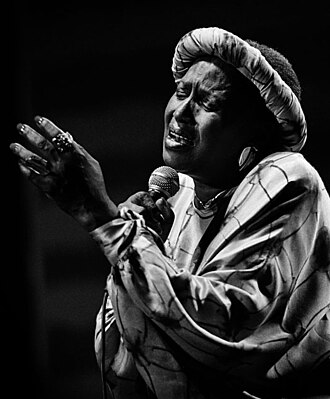 Miriam Makeba
"It was not a ban from the government. It was a cancellation by people who felt I should not be with Stokely because he was a rebel to them. I didnt care about that. He was somebody I loved, who loved me, and it was my life."
Zenzile Miriam Makeba, nicknamed Mama Africa, was a South African singer, songwriter, actress, and civil rights activist. Associated with musical genres including Afropop, jazz, and world music, she was an advocate against apartheid and white-minority government in South Africa.
"I will probably die singing."
Miriam Makeba"I didn’t have much, but I was always happy to share what I did have. It seemed like every African that came to New York City would show up at my apartment door at dinnertime, and I couldn’t turn them away. I wasn’t much older than any of them, but they started calling me ‘Mama Africa’ and the name stuck."
Miriam Makeba"In those years, when I came to the States, people were always asking me why I didn’t sing anymore. I’d tell them, ‘I sing all around the world—Asia, Africa, Europe—but if you don’t sing in the US, then you haven’t really made it.’ That’s why I’ll always be grateful to Paul Simon. He allowed me to bring my music back to my friends in this country."
Miriam Makeba"The tragedy of civil wars in countries like Angola and Mozambique is that they left many civilians maimed. Poverty is the reason HIV/AIDS spread so rapidly in the African townships and slums. Poverty is the real killer."
Miriam Makeba"In New York I heard A Piece of Ground, written by a white South African, Jeremy Taylor. I modified it a little and sang it myself. That song is very special to me because it deals with the land question in southern Africa. We were dispossessed of our land."
Miriam Makeba"African music, though very old, is always being rediscovered in the West."
Miriam Makeba"At one point a heated discussion arose over the possible interpretation of Lolita as a grandiose metaphor of the classic Europeans hopeless love for young, seductive, barbaric America. In his afterword to the novel Nabokov himself mentions this as the naive theory of one of the publishers who turned the book down. And although there cant be the slightest doubt that Nabokov did not mean to limit Lolita to that interpretation, there is no reason to exclude it as one of the novels many dimensions. The point, I felt, became obvious when one drew the line between Lolita as a delightfully frivolous story on the verge of pornography and Lolita as a literary masterpiece, the only convincing love story of our century."
 Lolita
"Lovely food, for rabbits, that is."
"One makes mistakes; that is life. But it is never a mistake to have loved."
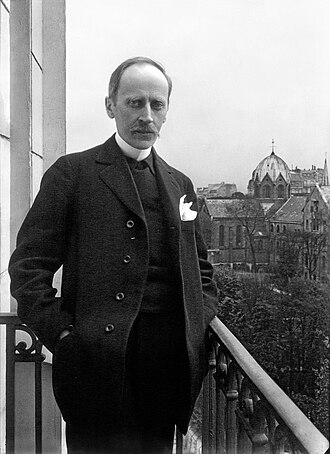 Romain Rolland
"[explaining to Ernie how April apologized to him] She just showed up at the factory, took off her coat, and begged me to take her. We made love in a way that Ive only ever seen in nature films."
 MouseHunt (film)
"Love is always love, come whence it may. A heart that beats at your approach, an eye that weeps when you go away are things so rare, so sweet, so precious that they must never be despised."
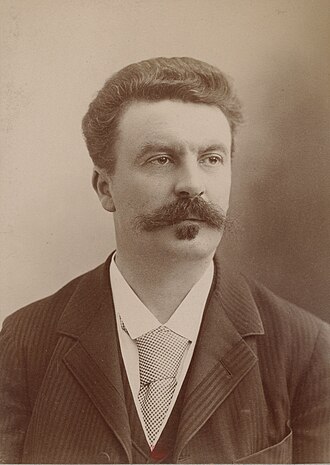 Guy de Maupassant
"He was obeyed, yet he inspired neither love nor fear, nor even respect. He inspired uneasiness. That was it! Uneasiness. Not a definite mistrust — just uneasiness — nothing more. You have no idea how effective such a... a... faculty can be. He had no genius for organizing, for initiative, or for order even. That was evident in such things as the deplorable state of the station. He had no learning, and no intelligence. His position had come to him — why? Perhaps because he was never ill . . . He had served three terms of three years out there . . . Because triumphant health in the general rout of constitutions is a kind of power in itself."