Quote
"A writer who says that there are no truths, or that all truth is merely relative, is asking you not to believe him. So dont."
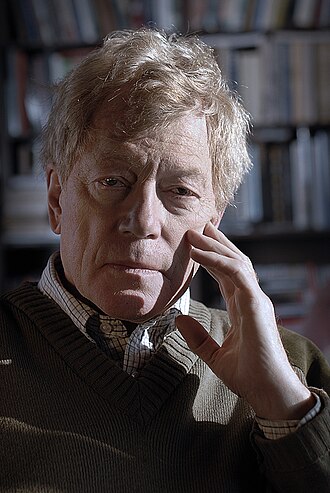 Roger Scruton
"Ive never been an optimist but thats fine because pessimists have the possibility of being agreeably surprised, and thats a reason for being pessimistic, but Ive always defended a certain kind of pessimism because what is known as optimism is really a collection of illusions and I think one must recognise what all religious people know, which is that human beings are imperfect and fallen and theres no way in which they can alone surmount the problems which they themselves create."
Sir Roger Vernon Scruton was an English philosopher, writer, and social critic who specialised in aesthetics and political philosophy, particularly in the furtherance of conservative views. The founding-editor of The Salisbury Review, a conservative political journal, Scruton wrote over 50 books on architecture, art, philosophy, politics, religion, among other topics. Scruton was also Chairman of
Sir Roger Vernon Scruton was an English philosopher, writer, and social critic who specialised in aesthetics and political philosophy, particularly in the furtherance of conservative views. The founding-editor of The Salisbury Review, a conservative political journal, Scruton wrote over 50 books on architecture, art, philosophy, politics, religion, among other topics. Scruton was also Chairman of
View all quotes by Roger Scruton"A writer who says that there are no truths, or that all truth is merely relative, is asking you not to believe him. So dont."
Roger Scruton"An international socialism is the stated ideal of most socialists; an international liberalism is the unstated tendency of the liberal. To neither system is it thinkable that men live, not by universal aspirations but by local attachments; not by a “solidarity” that stretches across the globe from end to end, but by obligations that are understood in terms which separate men from most of their fellows—in terms such as national history, religion, language, and the customs that provide the basis of legitimacy."
Roger Scruton"Yes, I am in favor of censorship, but it has to be conducted by people like me. And thats the difficulty (laughs). Im in favor of encouraging every possible form of self-restraint and parental control. And I certainly dont think that pornography should be protected under the American Constitution."
Roger Scruton"The modern world gives proof at every point that it is far easier to destroy institutions than to create them. Nevertheless, few people seem to understand this truth."
Roger Scruton"Kants position is extremely subtle — so subtle, indeed, that no commentator seems to agree with any other as to what it is."
Roger Scruton"This "knowing what to do"… is a matter of having the right purpose, the purpose appropriate to the situation in hand... The one who "knows what to do" is the one on whom you can rely to make the best shot at success, whenever success is possible."
Roger Scruton"I say this to you because we Spaniards are a forgetful people, because we are used to living for the moment, because we do not look back, because we do not know how to see the chain of heroes, because we do not contemplate the sum of sacrifices."
 Francisco Franco
"If it fulfills our hopes, this center will be, at once, a symbol and a reflection and a hope. It will symbolize our belief that the world of creation and thought are at the core of all civilization. Only recently in the White House we helped commemorate the 400th anniversary of Shakespeare. The political conflicts and ambitions of his England are known to the scholar and to the specialist. But his plays will forever move men in every corner of the world. The leaders that he wrote about live far more vividly in his words than in the almost forgotten facts of their own rule. Our civilization, too, will largely survive in the works of our creation. There is a quality in art which speaks across the gulf dividing man from man and nation from nation, and century from century. That quality confirms the faith that our common hopes may be more enduring than our conflicting hostilities. Even now men of affairs are struggling to catch up with the insights of great art. The stakes may well be the survival of civilization. The personal preferences of men in government are not important--except to themselves. However, it is important to know that the opportunity we give to the arts is a measure of the quality of our civilization. It is important to be aware that artistic activity can enrich the life of our people, which really is the central object of Government. It is important that our material prosperity liberate and not confine the creative spirit."
"There was a man and he had eight sons. Apart from that, he was nothing more than a comma on the page of History. Its sad, but thats all you can say about some people."
"Children must be free to think in all directions irrespective of the peculiar ideas of parents who often seal their childrens minds with preconceived prejudices and false concepts of past generations. Unless we are very careful, very careful indeed, and very conscientious, there is still great danger that our children may turn out to be the same kind of people we are."
"I hear people say I swing at bad pitches. What is a bad pitch? If I can hit it, its not a bad pitch."
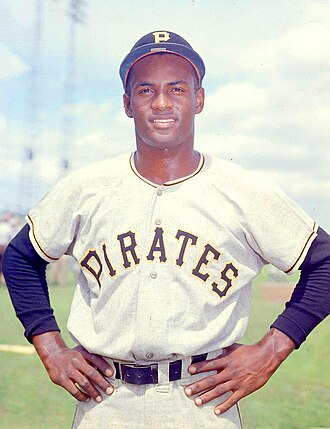 Roberto Clemente
"A free people will always refuse to put up with preventable poverty. If freedom is to be saved and enlarged, poverty must be ended. There is no other solution. The problem of how to prevent these three forces from coming into head-on collision is the principal study of the more politically conscious Conservative leaders. How can wealth persuade poverty to use its political freedom to keep wealth in power? Here lies the whole art of Conservative politics in the twentieth century."