Quote
"Let none find fault with others; let none see the omissions and commissions of others. But let one see one’s own acts, done and undone. (Verse 50)"
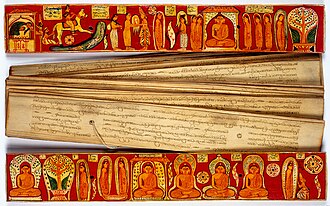 Dhammapada
"Looking for the maker of this tabernacle, I shall have to run through a course of many births, so long as I do not find (him); and painful is birth again and again. But now, maker of the tabernacle, thou hast been seen; thou shalt not make up this tabernacle again. All thy rafters are broken, thy ridge-pole is sundered; the mind, approaching the Eternal (visankhara, nirvana), has attained to the extinction of all desires. (Verses 153-154)"
The Dhammapada is a collection of sayings of the Buddha in verse form and one of the most widely read and best known Buddhist scriptures The original version of the Dhammapada is in the Khuddaka Nikaaya, a division of the Paali Canon of Theravaada Buddhism
"Let none find fault with others; let none see the omissions and commissions of others. But let one see one’s own acts, done and undone. (Verse 50)"
Dhammapada"His mind becomes calm. His word and deed are calm. Such is the state of tranquillity of one who has attained to deliverance through the realization of truth. (Verse 96)"
Dhammapada"Just as a fletcher straightens an arrow shaft, even so the discerning man straightens his mind — so fickle and unsteady, so difficult to guard. (Verse 33)"
Dhammapada"Let us live happily then, not hating those who hate us! among men who hate us let us dwell free from hatred! (Verse 197)"
Dhammapada"As kinsmen welcome a dear one on arrival, even so his own good deeds will welcome the doer of good who has gone from this world to the next. (Verse 220)"
Dhammapada"Should a person do good, let him do it again and again. Let him find pleasure therein, for blissful is the accumulation of good. (Verse 118)"
Dhammapada"The only influences in [the painting The sick Child, Munch painted in his elderly home, remembering very accurate the last days of his dying little sister Sophie] The sick Child.. ..were the ones that come from my home.. ..my childhood and my home. Only someone who knew the conditions at home could possibly understand why there can be no conceivable chance of any other place having played a part – my home is to my art as a midwife is to her children.. ..few painters have ever experienced the full grief of their subject as I did in The sick child. It was not just I who was suffering; it was all my nearest and dearest as well."
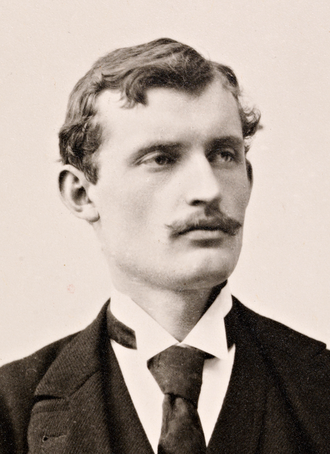 Edvard Munch
"General Franco made it clear that Spain could enter the war only when England was about ready to collapse."
 Francisco Franco
"The Spanish Republic did not find itself free of obligations. For the most part the leaders were Freemasons. Before their duty to their country came their obligations to the Grand Orient. In my opinion, Freemasonry, with all its international influence, is the organization principally responsible for the political ruin of Spain, as well as the murder of Calvo Sotelo, who was executed in accordance with orders from the Grand Secretary of Freemasonry in Geneva."
Francisco Franco"Art was what I originally started out to do and music came second at first. I had a year at art college but I left because it was too much like school. I give all my paintings away to people I like."
 Cat Stevens
"Lady Cannons gone to a matinée at the St. Jamess. We had tickets for the first night, but of course she wouldnt use them then. She preferred to go alone in the afternoon, because she detests the theatre, anyhow, and afternoon performances give her a headache. If she does a thing thats disagreeable to her, she likes to do it in the most painful possible way. She has a beautiful nature."
"At first when I saw The Sick Child [in his imagination] her pallid face and the vivid red hair against the pillow – I saw something that vanished when I tried to paint it. I ended up with a picture on the canvas which, although I was pleased with it, bore little relationship to what I had seen.. ..In the space of that year [1885 – 1886], scratching it out, just letting the paint flow, endlessly I tried to recapture what I had seen for the first time – the pale transparent skin against the linen sheets, the trembling lips, the shaking hands. I repainted the painting numerous times – scratched it out – let it become blurred in the medium – and tried again and again to catch the first impression – the transparent pale skin against the canvas – the trembling mouth – the trembling hands. I had done the chair [in which his sister Sophie had died] with the glass too often. It distracted me from doing the head. – When I saw the picture I could only make out the glass and the surroundings. – Should I remove it completely? – No, it had the effect of giving depth and emphasis to the head. – I scared off half the background and left everything in masses – one could now see past and across the head and the glass.. .I had achieved much of that first impression, the trembling mouth – the transparent skin – the tired eyes – but the picture was not finished in its colour – it was pale grey – the picture was then heavy as lead. [Munch showed the painting on the Autumn Exhibition 18 October 1886; it was criticized severely, even by his bohemian art-friend Jager]"
Edvard Munch