Quote
"Could I have but a line a century hence crediting a contribution to the advance of peace, I would gladly yield every honor which has been accorded me in war."
D
Douglas MacArthur"MacArthur described Eisenhower to Wilkinson as "the ablest officer he has ever known at absorbing 30 minutes detailed description of an idea (or plan or strategic conception?) and getting the whole thing out on paper- orders, arrangements etc etc- in 10 minutes." According to Wilkinsons journal, MacArthur said that Eisenhower was "ambitious, clever, hard-working (an excellent bridge player)... a brilliant executive of someone elses thought but not- as far as MacA knows- in any way an original mind- and no fighting experience.... Eisenhower in turn had no illusions about MacArthur but acknowledged the power of the mans personality and his capacity for leadership. When Eisenhower took command in the European theater, an off-the-record dinner was arranged for him in London to meet a group of American correspondents, who quizzed him about MacArthur. Eisenhower described the now-familiar characteristics- the ego, the love of the limelight, the self-dramatization, the unstable temperament- and then added: "Yet, if that door opened at this moment, and General MacArthur was standing there, and he said Ike, follow me, Id get up and follow him." Of Eisenhowers respect for Marshall there can be no doubt; he told Beetle Smith that he wouldnt trade Marshall for fifty MacArthurs. ("My God," the thought came to him, "that would be a lousy deal. What would I do with fifty MacArthurs?")"
Douglas MacArthur was an American general who served as a top commander during World War II and the Korean War, achieving the rank of General of the Army. He served with distinction in World War I; as chief of staff of the United States Army from 1930 to 1935; as Supreme Commander, Southwest Pacific Area, from 1942 to 1945; as Supreme Commander for the Allied Powers overseeing the occupation of Ja
"Could I have but a line a century hence crediting a contribution to the advance of peace, I would gladly yield every honor which has been accorded me in war."
"In preparing this record, penned by my own hand, of my life and my participation in our great struggles for national existence, human liberty and political equality, I make no pretence to literary merit. The motive that induces me is not authorship. The import of the subject matter of my narrative is my only claim to attention. The statements of facts are a matter of documentary evidence. The comments are my own and show how I saw the matters treated of, whether others saw them in the same light or not. Respectfully dedicating this work to the millions of armed men and devoted women who participated in the great wars of this country, I leave it as a heritage to my wife and son."
"The best and the worst things you hear about him are both true."
"So Weinberger reported to MacArthurs headquarters in Brisbane, where he was a very junior officer on the staff of the legendary general. Nonetheless, he saw enough to have a full appreciation of MacArthurs brilliance. "I saw the plans for the invasion of Japan," Weinberger says. "The breadth and scope of MacArthurs brilliance. With very few troops, a couple of understrength divisions, and some Australian militia forces, he accomplished an enormous amount in the Pacific." The young intelligence officer also learned directly from MacArthur about judgment and decision making. Weinberger was on duty one night as American forces were moving on a small island, lightly occupied by the Japanese, to take it for a radio base. Suddenly, there were reports of a Japanese ship and Japanese aircraft in the vicinity. Weinberger thought hed better take this information directly to MacArthur. "So I walked two blocks to his hotel," Weinberger remembers. "I got through the various security and gave him the message He came out in his bathrobe, looking just as erect and imposing as he did in full uniform, that magnificent posture, deep voice. He looked the message over carefully and said, Well, Lieutenant, what do you think? I said, General, I think its a coincidence that theyre there. They dont seem to have hostile intent. I would go ahead with the landing. General MacArthur said, Thats what I think, too. Good night." Weinberger walked back through the night to his post "in fear and trembling — to see if I was wrong or not. Fortunately, it worked out."
"The days of the frontal attack are over. Modern infantry weapons are too deadly, and frontal assault is only for mediocre commanders. Good commanders do not turn in heavy losses."
"Bitterly disappointed by his defeat at the hands of the Chinese, MacArthur pressured the administration to accept his own war aims. Marshaling heroic rhetoric- "There is no substitute for victory"- the general conducted a political campaign to open Communist China to direct attack by his own forces and the Chinese Nationalists. He continued to hint darkly about the use of nuclear weapons, an option Truman never seriously considered. Incident mounted after incident: Indiscreet press conferences, unauthorized contacts with Chiang Kai-shek, inappropriate challenges to the Communists, provocative correspondence with veterans groups and Republican congressional leaders, dark hints of treason by the UN allies, especially Britain. With the full approval of Acheson, the new Secretary of Defense George C. Marshall, and the JCS, Truman finally relieved MacArthur and ordered him home in April 1951. Buoyed by his enthusiastic public reception and bathed in martyrdom, MacArthur took his case to Congress."
"At one point a heated discussion arose over the possible interpretation of Lolita as a grandiose metaphor of the classic Europeans hopeless love for young, seductive, barbaric America. In his afterword to the novel Nabokov himself mentions this as the naive theory of one of the publishers who turned the book down. And although there cant be the slightest doubt that Nabokov did not mean to limit Lolita to that interpretation, there is no reason to exclude it as one of the novels many dimensions. The point, I felt, became obvious when one drew the line between Lolita as a delightfully frivolous story on the verge of pornography and Lolita as a literary masterpiece, the only convincing love story of our century."
 Lolita
"Lovely food, for rabbits, that is."
"One makes mistakes; that is life. But it is never a mistake to have loved."
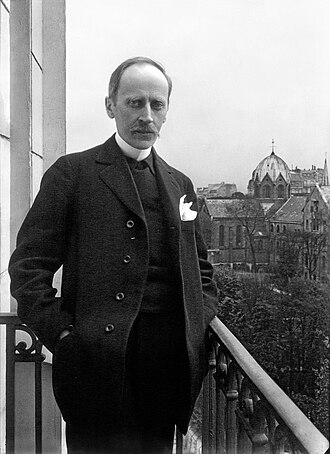 Romain Rolland
"[explaining to Ernie how April apologized to him] She just showed up at the factory, took off her coat, and begged me to take her. We made love in a way that Ive only ever seen in nature films."
 MouseHunt (film)
"Love is always love, come whence it may. A heart that beats at your approach, an eye that weeps when you go away are things so rare, so sweet, so precious that they must never be despised."
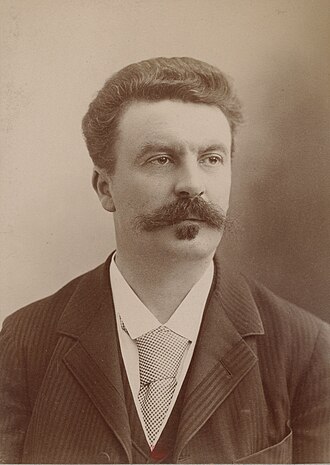 Guy de Maupassant
"He was obeyed, yet he inspired neither love nor fear, nor even respect. He inspired uneasiness. That was it! Uneasiness. Not a definite mistrust — just uneasiness — nothing more. You have no idea how effective such a... a... faculty can be. He had no genius for organizing, for initiative, or for order even. That was evident in such things as the deplorable state of the station. He had no learning, and no intelligence. His position had come to him — why? Perhaps because he was never ill . . . He had served three terms of three years out there . . . Because triumphant health in the general rout of constitutions is a kind of power in itself."