SHAWORDS

Man, inclined to... a mathematical view.., has... applied this bias to — L. E. J. Brouwer

"Man, inclined to... a mathematical view.., has... applied this bias to mathematical language, and in former centuries exclusively to the language of logical reasonings: the science arising from this... is theoretical logic."
Man, inclined to... a mathematical view.., has... applied this bias to mathematical language, and in former centuries ex
L. E. J. Brouwer
L. E. J. Brouwer
L. E. J. Brouwer
author16 quotes

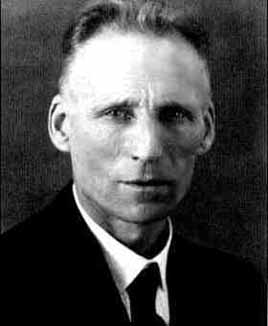
Luitzen Egbertus Jan "Bertus" Brouwer was a Dutch mathematician and philosopher who worked in topology, set theory, measure theory and complex analysis. Regarded as one of the greatest mathematicians of the 20th century, he is known as one of the founders of modern topology, particularly for establishing his fixed-point theorem and the topological invariance of dimension.

About L. E. J. Brouwer

Luitzen Egbertus Jan "Bertus" Brouwer was a Dutch mathematician and philosopher who worked in topology, set theory, measure theory and complex analysis. Regarded as one of the greatest mathematicians of the 20th century, he is known as one of the founders of modern topology, particularly for establishing his fixed-point theorem and the topological invariance of dimension.

View all quotes by L. E. J. Brouwer

More by L. E. J. Brouwer

View all →
Quote
"The viewpoint of the formalist must lead to the conviction that if other symbolic formulas should be substituted for the ones that now represent the fundamental mathematical relations and the mathematical-logical laws, the absence of the sensation of delight, called "consciousness of legitimacy," which might be the result of such substitution would not in the least invalidate its mathematical exactness. To the philosopher or to the anthropologist, but not to the mathematician, belongs the task of investigating why certain systems of symbolic logic rather than others may be effectively projected upon nature. Not to the mathematician, but to the psychologist, belongs the task of explaining why we believe in certain systems of symbolic logic and not in others, in particular why we are averse to the so-called contradictory systems in which the negative as well as the positive of certain propositions are valid."
L. E. J. BrouwerL. E. J. Brouwer