Quote
"The beginnings and endings of all human undertakings are untidy, the building of a house, the writing of a novel, the demolition of a bridge, and, eminently, the finish of a voyage."
J
John Galsworthy"Men fall, roughly speaking, into two flocks: Those whose intelligence is uninquiring in the face of Art, and does not demand to be appeased before their emotions can be stirred; and those who, having a speculative bent of mind, must first be satisfied by an enlightening quality in a work of Art, before that work of Art can awaken in them feeling. The audience of the realist is drawn from this latter type of man; the much larger audience of the romantic artist from the former; together with, in both cases, those fastidious few for whom all Art is style and only style, and who welcome either kind, so long as it is good enough."
John Galsworthy was an English novelist and playwright. He is best known for his trilogy of novels collectively called The Forsyte Saga, and two later trilogies, A Modern Comedy and End of the Chapter. He was awarded the 1932 Nobel Prize in Literature.
"The beginnings and endings of all human undertakings are untidy, the building of a house, the writing of a novel, the demolition of a bridge, and, eminently, the finish of a voyage."
"Everything known before it happens; and headlines twice the size of the events."
"A man of action forced into a state of thought is unhappy until he can get out of it."
"The Forsytes were resentful of something, not individually, but as a family; this resentment expressed itself in an added perfection of raiment, an exuberance of family cordiality, an exaggeration of family importance, and — the sniff. Danger — so indispensable in bringing out the fundamental quality of any society, group, or individual — was what the Forsytes scented; the premonition of danger put a burnish on their armour. For the first time, as a family, they appeared to have an instinct of being in contact, with some strange and unsafe thing."
"To take life," went on the old man in a voice which, though charged with strong emotion, seemed to be speaking to itself, "was the chief mark of the insensate barbarism still prevailing in those days. It sprang from that most irreligious fetish, the belief in the permanence of the individual ego after death. From the worship of that fetish had come all the sorrows of the human race. … They did not stop to love each other in this life; they were so sure they had all eternity to do it in. The doctrine was an invention to enable men to act like dogs with clear consciences. Love could never come to full fruition till it was destroyed."
"When Man evolved Pity, he did a queer thing — deprived himself of the power of living life as it is without wishing it to become something different."
"The absolute requisites for the study of this work... are a knowledge of algebra to the binomial at least, plane and solid geometry, plane trigonometry, and the most simple part of the usual applications of algebra to geometry. ...A. De Morgan. London July 1, 1836"
"Captain Littlepage had overset his mind with too much reading."
"Ive been taking a closer look at these graduates. They are actually taller, stronger, smarter than we were, smart enough maybe to take our mistakes as their messages, to make our weaknesses their lessons, and to make our example — good and not so good — part of their education."
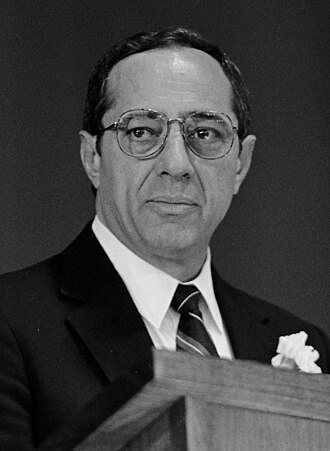 Mario Cuomo
"In short, it is not merely that Johnny cant read, or even that Johnny cant think. Johnny doesnt know what thinking is, because thinking is so often confused with feeling in many public schools. [emphasis in the original]"
"Bigotry is the disease of ignorance, of morbid minds; enthusiasm of the free and buoyant. Education & free discussion are the antidotes of both."
 Thomas Jefferson
"Im very sad that this seems to be the No. 1 question people want to discuss. I had nothing to do with the issue other than what the media created. I was innocently drawn into the whole controversy. So, after many years, Im glad at least now that I have been given the opportunity to explain to the public and fans my side of the story in my own words. At a lecture, back in 1989, I was asked a question about blasphemy according to Islamic Law, I simply repeated the legal view according to my limited knowledge of the Scriptural texts, based directly on historical commentaries of the Quran. The next day the newspaper headlines read, "Cat Says, Kill Rushdie." I was abhorred, but what could I do? I was a new Muslim. If you ask a Bible student to quote the legal punishment of a person who commits blasphemy in the Bible, he would be dishonest if he didnt mention Leviticus 24:16."
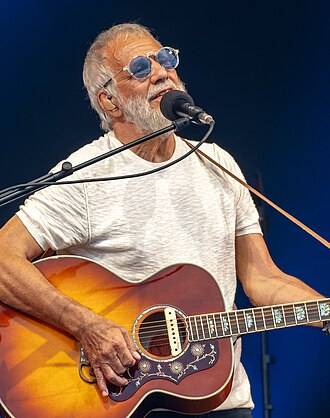 Cat Stevens