Quote
"I started in to cry and call his name, Asking forgiveness of his tongueless head. ... I dreamt the past was never past redeeming: But whether this was false or honest dreaming I beg deaths pardon now. And mourn the dead."
R
Richard Wilbur"My dog lay dead five days without a grave In the thick of summer, hid in a clump of pine And a jungle of grass and honey-suckle vine. I who had loved him while he kept alive Went only close enough to where he was To sniff the heavy honeysuckle-smell Twined with another odor heavier still And hear the flies intolerable buzz."
Richard Purdy Wilbur was an American poet and literary translator, and one of the foremost poets of the World War II generation. Wilbur's work, often employing rhyme, and composed primarily in traditional forms, was marked by its wit, charm, and gentlemanly elegance. He was acclaimed in his youth as the heir to Robert Frost, translated the verse dramas of Moliere, Corneille, and Racine into rhymed
Richard Purdy Wilbur was an American poet and literary translator, and one of the foremost poets of the World War II generation. Wilbur's work, often employing rhyme, and composed primarily in traditional forms, was marked by its wit, charm, and gentlemanly elegance. He was acclaimed in his youth as the heir to Robert Frost, translated the verse dramas of Moliere, Corneille, and Racine into rhymed
View all quotes by Richard Wilbur"I started in to cry and call his name, Asking forgiveness of his tongueless head. ... I dreamt the past was never past redeeming: But whether this was false or honest dreaming I beg deaths pardon now. And mourn the dead."
"Last night I saw the grass Slowly divide (it was the same scene But now it glowed a fierce and mortal green) And saw the dog emerging."
"The soul shrinks From all that it is about to remember, From the punctual rape of every blessed day, And cries, "Oh, let there be nothing on earth but laundry, Nothing but rosy hands in the rising steam And clear dances done in the sight of heaven."
"It is true that the poet does not directly address his neighbors; but he does address a great congress of persons who dwell at the back of his mind, a congress of all those who have taught him and whom he has admired; that constitute his ideal audience and his better self. To this congress the poet speaks not of peculiar and personal things, but of what in himself is most common, most anonymous, most fundamental, most true of all men. And he speaks not in private grunts and mutterings but in the public language of the dictionary, of literary tradition, and of the street. Writing poetry is talking to oneself; yet it is a mode of talking to oneself in which the self disappears; and the products something that, though it may not be for everybody, is about everybody."
"In each art the difficulty of the form is a substitution for the difficulty of direct apprehension and expression of the object. The first difficulty may be more or less overcome, but the second is insuperable; thus every poem begins, or ought to, by a disorderly retreat to defensible positions. Or, rather, by a perception of the hopelessness of direct combat, and a resort to the warfare of spells, effigies, and prophecies. The relation between the artist and reality is an oblique one, and indeed there is no good art which is not consciously oblique. If you respect the reality of the world, you know that you can approach that reality only by indirect means."
"The soul descends once more in bitter love To accept the waking body"
"At one point a heated discussion arose over the possible interpretation of Lolita as a grandiose metaphor of the classic Europeans hopeless love for young, seductive, barbaric America. In his afterword to the novel Nabokov himself mentions this as the naive theory of one of the publishers who turned the book down. And although there cant be the slightest doubt that Nabokov did not mean to limit Lolita to that interpretation, there is no reason to exclude it as one of the novels many dimensions. The point, I felt, became obvious when one drew the line between Lolita as a delightfully frivolous story on the verge of pornography and Lolita as a literary masterpiece, the only convincing love story of our century."
 Lolita
"Lovely food, for rabbits, that is."
"One makes mistakes; that is life. But it is never a mistake to have loved."
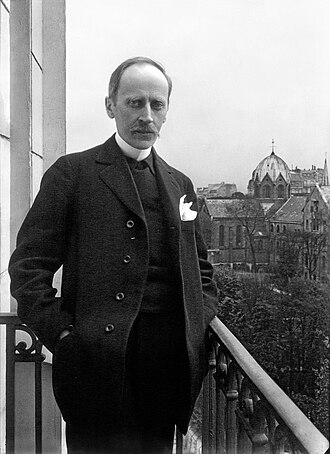 Romain Rolland
"[explaining to Ernie how April apologized to him] She just showed up at the factory, took off her coat, and begged me to take her. We made love in a way that Ive only ever seen in nature films."
 MouseHunt (film)
"Love is always love, come whence it may. A heart that beats at your approach, an eye that weeps when you go away are things so rare, so sweet, so precious that they must never be despised."
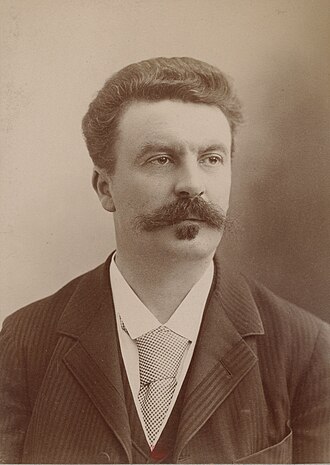 Guy de Maupassant
"He was obeyed, yet he inspired neither love nor fear, nor even respect. He inspired uneasiness. That was it! Uneasiness. Not a definite mistrust — just uneasiness — nothing more. You have no idea how effective such a... a... faculty can be. He had no genius for organizing, for initiative, or for order even. That was evident in such things as the deplorable state of the station. He had no learning, and no intelligence. His position had come to him — why? Perhaps because he was never ill . . . He had served three terms of three years out there . . . Because triumphant health in the general rout of constitutions is a kind of power in itself."