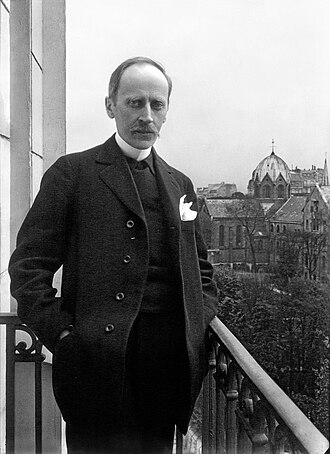
"As for my politics, you will have guessed that I am not a Fascist — Fascism does evil that evil may come. And I am not a Communist, though perhaps I might be one if I was a younger and braver man, for in Communism I see hope. It does many things which I think evil, but I know that it intends good. I am actually what my age and my upbringing have made me — a bourgeois who adheres to the British constitution, adheres to it rather than supports it, and the fact that this isnt dignified doesnt worry me. I do care about the past. I do care about the preservation and extension of freedom."
No government, no big organization, will pay for the truth. To take a — E. M. Forster
"No government, no big organization, will pay for the truth. To take a crude example: can you imagine the British Government commissioning E. M. Forster to write A Passage to India? He could only write it because he was not dependent on State aid."
Edward Morgan Forster was an English author. He is best known for his novels, particularly A Room with a View (1908), Howards End (1910) and A Passage to India (1924). He also wrote numerous short stories, essays, speeches and broadcasts, as well as biographies and pageant plays. His short story "The Machine Stops" (1909) is often viewed as the beginning of technological dystopian fiction. He also
View all quotes by E. M. ForsterMore by E. M. Forster
View all →"I enjoy French poetry as well as French prose, and I believe that this land must have some cultural connection with the European continent, and that she is best connected through her spiritual complement across the Straits of Dover."
"A wonderful physical tie binds the parents to the children; and — by some sad, strange irony — it does not bind us children to our parents. For if it did, if we could answer their love not with gratitude but with equal love, life would lose much of its pathos and much of its squalor, and we might be wonderfully happy."
"I never expect anything to happen now, and so I am never disappointed. You would be surprised to know what my great events are. Going to the theatre yesterday, talking to you now — I dont suppose I shall ever meet anything greater. I seem fated to pass through the world without colliding with it or moving it — and Im sure I cant tell you whether the fates good or evil. I dont die — I dont fall in love. And if other people die or fall in love they always do it when Im just not there. You are quite right; life to me is just a spectacle, which — thank God, and thank Italy, and thank you — is now more beautiful and heartening than it has ever been before."
"This woman was a goddess to the end. For her no love could be degrading: she stood outside all degradation. This episode, which she thought so sordid, and which was so tragic for him, remained supremely beautiful. To such a height was he lifted, that without regret he could now have told her that he was her worshipper too. But what was the use of telling her? For all the wonderful things had happened. "Thank you," was all that he permitted himself. "Thank you for everything.""
"He remembered his wifes even goodness during thirty years. Not anything in detail — not courtship or early raptures —but just the unvarying virtue, that seemed to him a womans noblest quality. So many women are capricious, breaking into odd flaws of passion or frivolity. Not so his wife. Year after year, summer and winter, as bride and mother, she had been the same, he had always trusted her. Her tenderness! Her innocence! The wonderful innocence that was hers by the gift of God. Ruth knew no more of worldly wickedness and wisdom than did the flowers in her garden, or the grass in her field. Her idea of business — "Henry, why do people who have enough money try to get more money?" Her idea of politics — "I am sure that if the mothers of various nations could meet, there would be no more wars," Her idea of religion — ah, this had been a cloud, but a cloud that passed. She came of Quaker stock, and he and his family, formerly Dissenters, were now members of the Church of England. The rectors sermons had at first repelled her, and she had expressed a desire for "a more inward light," adding, "not so much for myself as for baby" (Charles). Inward light must have been granted, for he heard no complaints in later years. They brought up their three children without dispute. They had never disputed. She lay under the earth now. She had gone, and as if to make her going the more bitter, had gone with a touch of mystery that was all unlike her."
More on Wisdom
View all →"In the life of the mass-order, the culture of the generality tends to conform to the demands of the average human being. Spirituality decays through being diffused among the masses when knowledge is impoverished in every possible way by rationalisation until it becomes accessible to the crude understanding of all."
"I did not go to join Kurtz there and then. I did not. I remained to dream the nightmare out to the end, and to show my loyalty to Kurtz once more. Destiny. My destiny! Droll thing life is — that mysterious arrangement of merciless logic for a futile purpose. The most you can hope from it is some knowledge of yourself — that comes too late — a crop of unextinguishable regrets. I have wrestled with death. It is the most unexciting contest you can imagine. It takes place in an impalpable grayness, with nothing underfoot, with nothing around, without spectators, without clamor, without glory, without the great desire of victory, without the great fear of defeat, in a sickly atmosphere of tepid skepticism, without much belief in your own right, and still less in that of your adversary. If such is the form of ultimate wisdom, then life is a greater riddle than some of us think it to be. I was within a hairs-breadth of the last opportunity for pronouncement, and I found with humiliation that probably I would have nothing to say. This is the reason why I affirm that Kurtz was a remarkable man. He had something to say. He said it. Since I had peeped over the edge myself, I understand better the meaning of his stare, that could not see the flame of the candle, but was wide enough to embrace the whole universe, piercing enough to penetrate all the hearts that beat in the darkness. He had summed up — he had judged. The horror! He was a remarkable man. After all, this was the expression of some sort of belief; it had candor, it had conviction, it had a vibrating note of revolt in its whisper, it had the appalling face of a glimpsed truth — the strange commingling of desire and hate."
"Ive been taking a closer look at these graduates. They are actually taller, stronger, smarter than we were, smart enough maybe to take our mistakes as their messages, to make our weaknesses their lessons, and to make our example — good and not so good — part of their education."
"All men suppose what is called Wisdom to deal with the first causes and the principles of things; so that, as has been said before, the man of experience is thought to be wiser than the possessors of any sense-perception whatever, the artist wiser than the men of experience, the masterworker than the mechanic, and the theoretical kinds of knowledge to be more of the nature of Wisdom than the productive."
"My specific... object has been to contain, within the prescribed limits, the whole of the students course, from the confines of elementary algebra and trigonometry, to the entrance of the highest works on mathematical physics. A learner who has a good knowledge of the subjects just named, and who can master the present treatise, taking up elementary works on conic sections, application of algebra to geometry, and the theory of equations, as he wants them, will, I am perfectly sure, find himself able to conquer the difficulties of anything he may meet with; and need not close any book of Laplace, Lagrange, Legendre, Poisson, Fourier, Cauchy, Gauss, Abel, Hindenburgh and his followers. or of any one of our English mathematicians, under the idea that it is too hard for him."
"Religious faith in the case of the Hindus has never been allowed to run counter to scientific laws, moreover the former is never made a condition for the knowledge they teach, but there are always scrupulously careful to take into consideration the possibility that by reason both the agnostic and atheist may attain truth in their own way. Such tolerance may be surprising to religious believers in the West, but it is an integral part of Vedantic belief."