Quote
"Suspicions and fears of others, from rival gangs to countries, can create perceptions of threats even where they might not exist, just as they do for our cousins the chimpanzees. During the Cold War the mutual mistrust of the West and the Soviet bloc meant that each tended to interpret words and actions by the other, even accidents, in the most unfavourable light. A bear trying to climb a fence around an American missile was mistaken for enemy intruders, flocks of birds appeared on American and Canadian radar to be planes or missiles, or the sun glinting off clouds looked like an incoming attack to Soviet technicians, and the Third World War, briefly, came much closer. Once an American technician put a training tape into a computer at the North American Air Defense Command by mistake and suddenly command centres got warnings that Soviet missiles were heading in. Bomber crews went to their planes and American missiles were put on heightened alert. Fortunately the mistake was discovered in time. In 1983, after it had accidentally shot down the Korean airliner KAL007, the Soviet Union wove together unrelated coincidences – NATO training exercises, for example, and an increase in encrypted communications between Prime Minister Margaret Thatcher and President Ronald Reagan – to construct a scenario of an imminent nuclear attack."
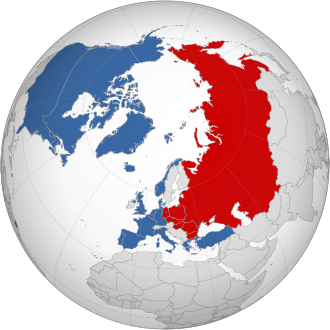 Cold War