Quote
"Style is the outcome of constraint."
A
André Maurois"Old age is far more than white hair, wrinkles, the feeling that it is too late and the game finished, that the stage belongs to the rising generations. The true evil is not the weakening of the body, but the indifference of the soul. Upon crossing the shadow line, it is more the desire to act than the power to do so that is lost. Is it possible, after fifty years of experiences and disappointments, to retain the ardent curiosity of youth, the desire to know and understand, the power to love wholeheartedly, the certainty that beauty, intelligence, and kindness unite naturally, and to preserve faith in the efficacy of reason? Beyond the shadow line lies the realm of even, tempered light where the eyes, not being dazzled any more by the blinding sun of desire, can see things and people as they are. How is it possible to believe in the moral perfection of pretty women if you have loved one of them? How is it possible to believe in progress when you have discovered throughout a long and difficult life that no violent change can triumph over human nature and that it is only the most ancient customs and ceremonies that can provide people with the flimsy shelter of civilization? "Whats the use?" says the old man to himself. This is perhaps the most dangerous phrase he can utter, for after having said: "Whats the use of struggling?" he will say one day: "Whats the use of going out?" then: "Whats the use of leaving my room?" then: "Whats the use of leaving my bed?" and at last comes "Whats the use of living?" which opens the portals of death."
André Maurois was a French author.
"Style is the outcome of constraint."
"To reason with poorly chosen words is like using a pair of scales with inaccurate weights."
"A man cannot free himself from the past more easily than he can from his own body."
"A married man is only half a man."
"All primitive people thought that a lunatic was possessed by a spirit. When his incoherent words more or less accord with the moral prejudices of the time, the spirit is a good one, and the man i s a saint. In the opposite case, the spirit is evil and the man must be suppressed. It is just according to the time and place and the doctors, whether a prophetess would be worshipped as a priestess or ducked as a witch. Innumerable violent lunatics have escaped the cells, thanks to the War, and their very violence has made heroes of them. And in every Parliament there are at least five or six undisputed idiots who got elected for their madness through the admiration of their constituents."
"It is wrongly held by many that to be happy one must have the admiration and respect of a great many people; but the esteem of ones own circle is essential. Stéphane Mallarmé, deeply beloved by a few disciples, was far happier than a celebrated man who knows that his reputation is questioned by those whom he admires. The monastery had brought peace to innumerable souls through its singleness of thought and purpose."
"At one point a heated discussion arose over the possible interpretation of Lolita as a grandiose metaphor of the classic Europeans hopeless love for young, seductive, barbaric America. In his afterword to the novel Nabokov himself mentions this as the naive theory of one of the publishers who turned the book down. And although there cant be the slightest doubt that Nabokov did not mean to limit Lolita to that interpretation, there is no reason to exclude it as one of the novels many dimensions. The point, I felt, became obvious when one drew the line between Lolita as a delightfully frivolous story on the verge of pornography and Lolita as a literary masterpiece, the only convincing love story of our century."
 Lolita
"Lovely food, for rabbits, that is."
"One makes mistakes; that is life. But it is never a mistake to have loved."
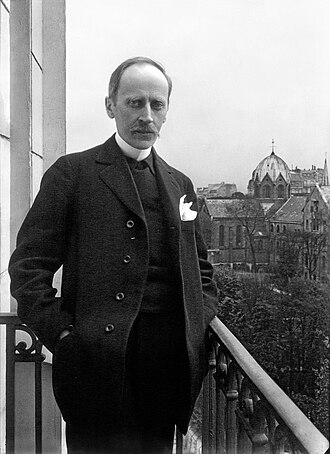 Romain Rolland
"[explaining to Ernie how April apologized to him] She just showed up at the factory, took off her coat, and begged me to take her. We made love in a way that Ive only ever seen in nature films."
 MouseHunt (film)
"Love is always love, come whence it may. A heart that beats at your approach, an eye that weeps when you go away are things so rare, so sweet, so precious that they must never be despised."
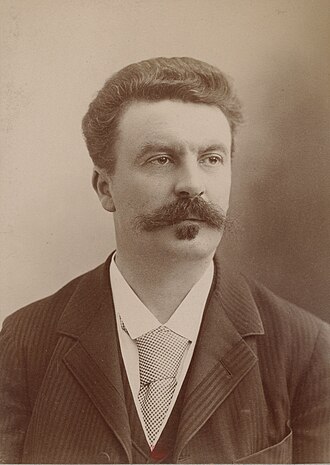 Guy de Maupassant
"He was obeyed, yet he inspired neither love nor fear, nor even respect. He inspired uneasiness. That was it! Uneasiness. Not a definite mistrust — just uneasiness — nothing more. You have no idea how effective such a... a... faculty can be. He had no genius for organizing, for initiative, or for order even. That was evident in such things as the deplorable state of the station. He had no learning, and no intelligence. His position had come to him — why? Perhaps because he was never ill . . . He had served three terms of three years out there . . . Because triumphant health in the general rout of constitutions is a kind of power in itself."