Quote
"Why is it so hard to do a thing Now, at the moment when one thinks of it."
Y
Yoshida Kenkō"One would like to leave behind a glorious reputation for surpassing wisdom and character, but careful reflection will show that what we mean by love of a glorious reputation is delight in the approbation of others. Neither those who praise nor those who abuse last for long, and the people who have heard their reports are like likely to depart the world as quickly. Before whom then should we feel ashamed? By whom should we wish to be appreciated? Fame, moreover inspires backbiting. It does no good whatsoever to have ones name survive. A craving after fame is next foolish."
Urabe Kenkō , also known as Yoshida Kenkō , or simply Kenkō , was a Japanese author and Buddhist monk. His most famous work is Tsurezuregusa, one of the most studied works of medieval Japanese literature. Kenko wrote during the early Muromachi and late Kamakura periods.
Urabe Kenkō , also known as Yoshida Kenkō , or simply Kenkō , was a Japanese author and Buddhist monk. His most famous work is Tsurezuregusa, one of the most studied works of medieval Japanese literature. Kenko wrote during the early Muromachi and late Kamakura periods.
View all quotes by Yoshida Kenkō"Why is it so hard to do a thing Now, at the moment when one thinks of it."
"All is unreality. Nothing is worth discussing, worth desiring."
"He is of low understanding who spends a whole life irked by common worldly matters."
"The truth is at the beginning of anything and its end are alike touching."
"Ambition never comes to an end."
"It is popular superstitions uncritically, but to dismiss them as being "most improbable" serves no purpose. In general, the best course is to treat such matters as if they were true, neither giving ones unqualified belief nor doubting or mocking them."
"At one point a heated discussion arose over the possible interpretation of Lolita as a grandiose metaphor of the classic Europeans hopeless love for young, seductive, barbaric America. In his afterword to the novel Nabokov himself mentions this as the naive theory of one of the publishers who turned the book down. And although there cant be the slightest doubt that Nabokov did not mean to limit Lolita to that interpretation, there is no reason to exclude it as one of the novels many dimensions. The point, I felt, became obvious when one drew the line between Lolita as a delightfully frivolous story on the verge of pornography and Lolita as a literary masterpiece, the only convincing love story of our century."
 Lolita
"Lovely food, for rabbits, that is."
"One makes mistakes; that is life. But it is never a mistake to have loved."
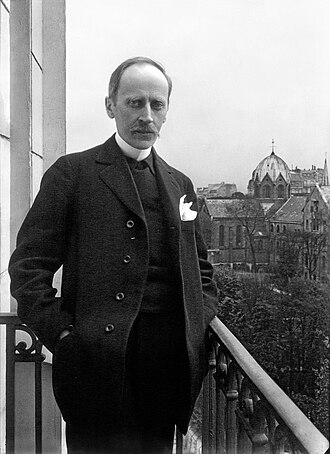 Romain Rolland
"[explaining to Ernie how April apologized to him] She just showed up at the factory, took off her coat, and begged me to take her. We made love in a way that Ive only ever seen in nature films."
 MouseHunt (film)
"Love is always love, come whence it may. A heart that beats at your approach, an eye that weeps when you go away are things so rare, so sweet, so precious that they must never be despised."
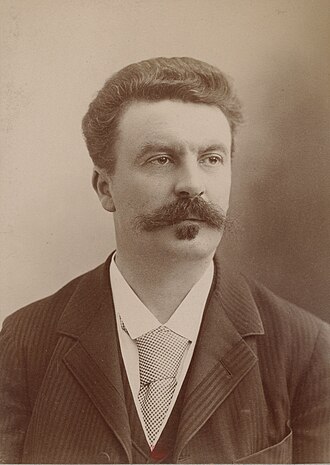 Guy de Maupassant
"He was obeyed, yet he inspired neither love nor fear, nor even respect. He inspired uneasiness. That was it! Uneasiness. Not a definite mistrust — just uneasiness — nothing more. You have no idea how effective such a... a... faculty can be. He had no genius for organizing, for initiative, or for order even. That was evident in such things as the deplorable state of the station. He had no learning, and no intelligence. His position had come to him — why? Perhaps because he was never ill . . . He had served three terms of three years out there . . . Because triumphant health in the general rout of constitutions is a kind of power in itself."