Quote
"The visual possibility of seeing the historical person (as opposed to the eternal Quranic man) on screen is arguably the single most important event allowing Iranians access to modernity."
H
Hamid Dabashi"Otherwise lacking internal support or external legitimacy, the US empire now banks on a pedigree of comprador intellectuals, homeless minds and guns for hire. All this to momentarily manufacture consent, to secure a selective memory, and to sustain a far more enduring collective amnesia that may perhaps serve immediate US imperial purposes well, but will ipso facto sustain its self-destructive force of building fictive sand castles near the factual waves of history. This empire will not last. No empire does. If empires lasted, the whole world would be speaking ancient Persian today. Native informers and the making of the American empire."
Hamid Dabashi is an Iranian-American academic who holds the Hagop Kevorkian Professorship of Iranian studies and Comparative literature at Columbia University in New York City. Since 2020, he has served as Director of Undergraduate Studies in Columbia's Department of Middle Eastern, South Asian, and African Studies (MESAAS).
"The visual possibility of seeing the historical person (as opposed to the eternal Quranic man) on screen is arguably the single most important event allowing Iranians access to modernity."
"Shiism is a religion of doing nothing. It can never succeed without doing nothing. When it succeeds, Shiism is still nothing. In the Islamic context at large, it partakes in the masculinism of its transcendental deity and in the Iranian context in particular it exacerbates itself by partaking in monarchical masculinity."
"The link between Betty Mahmoody’s “Not Without My Daughter” and Azar Nafisi’s [Reading Lolita in Tehran] is the link between two phases and modes of labor migration, the moral salvation that “the West” provides, and imperial hubris. What is paramount in all of these is the denigration of local cultures as the site of actual or potential resistance to imperial domination. There cannot be any politics of resistance, aesthetics of emancipation, or prose and poetry of agential autonomy in history for people around the world—nothing except a Starbucks Coffee version of the so-called “Western classics” to go and save them. Interview with Znet."
"While [European] national cultures were concocted to distinguish one economic unit of capital from another, civilizational thinking was invented to unify these cultures against their colonial consequences. Islamic, Indian, or African civilizations were invented contrapuntally by Orientalism…in order to match, balance and thus authenticate ‘Western Civilization’."
"Islam and globanalisation, or giving European and American space to Muslim names to denounce their own Islamic phantasms, is a new phase in the social manufacturing of domination -- using nominal Muslims against Islamic abstractions. This -- pitting lapsed Muslims against Islamic sensibilities -- is ultimately an exercise in futility. The fate of the globe, Europe included, is written elsewhere, somewhere between the lines of massive labour migration, on one side, and the global reconfiguration of the capital that systematically seeks to abuse it, on the other. The culture war this has occasioned in the meantime is a murderous nightmare for many, a lucrative pastime for some, a headache for others, and yet at the end an entirely negligible footnote to history."
"In the life of the mass-order, the culture of the generality tends to conform to the demands of the average human being. Spirituality decays through being diffused among the masses when knowledge is impoverished in every possible way by rationalisation until it becomes accessible to the crude understanding of all."
"I did not go to join Kurtz there and then. I did not. I remained to dream the nightmare out to the end, and to show my loyalty to Kurtz once more. Destiny. My destiny! Droll thing life is — that mysterious arrangement of merciless logic for a futile purpose. The most you can hope from it is some knowledge of yourself — that comes too late — a crop of unextinguishable regrets. I have wrestled with death. It is the most unexciting contest you can imagine. It takes place in an impalpable grayness, with nothing underfoot, with nothing around, without spectators, without clamor, without glory, without the great desire of victory, without the great fear of defeat, in a sickly atmosphere of tepid skepticism, without much belief in your own right, and still less in that of your adversary. If such is the form of ultimate wisdom, then life is a greater riddle than some of us think it to be. I was within a hairs-breadth of the last opportunity for pronouncement, and I found with humiliation that probably I would have nothing to say. This is the reason why I affirm that Kurtz was a remarkable man. He had something to say. He said it. Since I had peeped over the edge myself, I understand better the meaning of his stare, that could not see the flame of the candle, but was wide enough to embrace the whole universe, piercing enough to penetrate all the hearts that beat in the darkness. He had summed up — he had judged. The horror! He was a remarkable man. After all, this was the expression of some sort of belief; it had candor, it had conviction, it had a vibrating note of revolt in its whisper, it had the appalling face of a glimpsed truth — the strange commingling of desire and hate."
"Ive been taking a closer look at these graduates. They are actually taller, stronger, smarter than we were, smart enough maybe to take our mistakes as their messages, to make our weaknesses their lessons, and to make our example — good and not so good — part of their education."
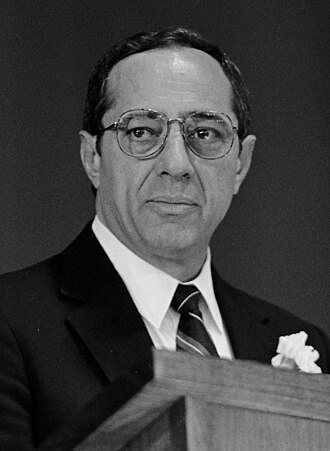 Mario Cuomo
"All men suppose what is called Wisdom to deal with the first causes and the principles of things; so that, as has been said before, the man of experience is thought to be wiser than the possessors of any sense-perception whatever, the artist wiser than the men of experience, the masterworker than the mechanic, and the theoretical kinds of knowledge to be more of the nature of Wisdom than the productive."
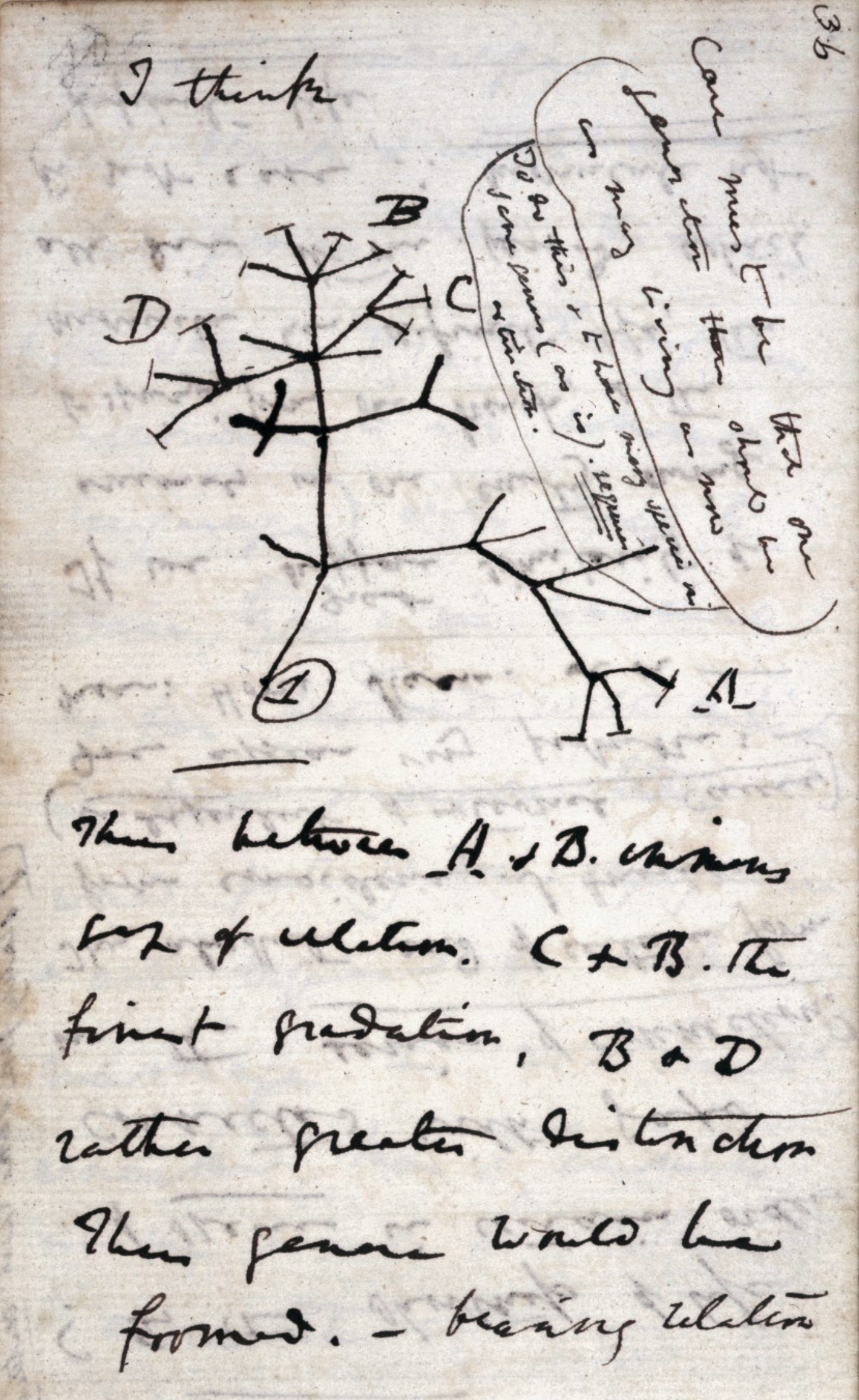 Theory
"My specific... object has been to contain, within the prescribed limits, the whole of the students course, from the confines of elementary algebra and trigonometry, to the entrance of the highest works on mathematical physics. A learner who has a good knowledge of the subjects just named, and who can master the present treatise, taking up elementary works on conic sections, application of algebra to geometry, and the theory of equations, as he wants them, will, I am perfectly sure, find himself able to conquer the difficulties of anything he may meet with; and need not close any book of Laplace, Lagrange, Legendre, Poisson, Fourier, Cauchy, Gauss, Abel, Hindenburgh and his followers. or of any one of our English mathematicians, under the idea that it is too hard for him."
"Religious faith in the case of the Hindus has never been allowed to run counter to scientific laws, moreover the former is never made a condition for the knowledge they teach, but there are always scrupulously careful to take into consideration the possibility that by reason both the agnostic and atheist may attain truth in their own way. Such tolerance may be surprising to religious believers in the West, but it is an integral part of Vedantic belief."
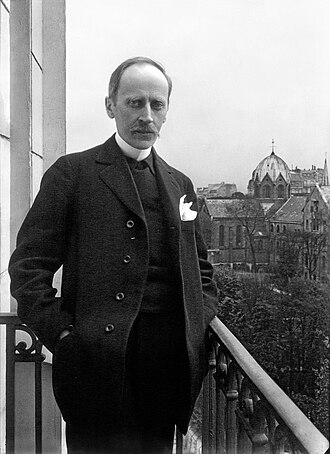 Romain Rolland