Quote
"So the whole We have a list and were not telling you should tell you something. Dont you think that if Microsoft actually had some really foolproof patent, theyd just tell us and go, nyaah, nyaah, nyaah!?"
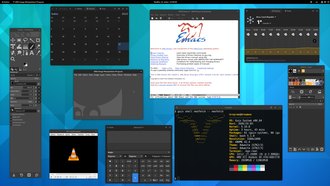 Free software
"Paying isnt wrong, and being paid isnt wrong. Trampling other peoples freedom and community is wrong, so the free software movement aims to put an end to it, at least in the area of software."
Free software, libre software, libreware sometimes known as freedom-respecting software is computer software distributed under terms that allow users to run the software for any purpose as well as to study, change, and distribute it and any adapted versions. Free software is a matter of liberty, not price; all users are legally free to do what they want with their copies of free software regardles
"So the whole We have a list and were not telling you should tell you something. Dont you think that if Microsoft actually had some really foolproof patent, theyd just tell us and go, nyaah, nyaah, nyaah!?"
Free software"Nobody should start to undertake a large project. You start with a small _trivial_ project, and you should never expect it to get large. If you do, youll just overdesign and generally think it is more important than it likely is at that stage. Or worse, you might be scared away by the sheer size of the work you envision. So start small, and think about the details. Dont think about some big picture and fancy design. If it doesnt solve some fairly immediate need, its almost certainly over-designed. And dont expect people to jump in and help you. Thats not how these things work. You need to get something half-way _useful_ first, and then others will say "hey, that _almost_ works for me", and theyll get involved in the project."
Free software"Recent case studies (the Internet) provide very dramatic evidence … that commercial quality can be achieved / exceeded by OSS projects."
Free software"My work on free software is motivated by an idealistic goal: spreading freedom and cooperation. I want to encourage free software to spread, replacing proprietary software that forbids cooperation, and thus make our society better."
Free software"Software manuals must be free, for the same reasons that software must be free, and because the manuals are in effect part of the software. The same arguments also make sense for other kinds of works of practical use — that is to say, works that embody useful knowledge, such as educational works and reference works. Wikipedia is the best-known example. Any kind of work can be free, and the definition of free software has been extended to a definition of free cultural works applicable to any kind of works."
Free software"I personally believe open source is most important is in the operating system and in file formats. As long as those two things remain open source you can never have a monopoly. No company can dominate by any means except a superior product, and that puts the choice back into the hands of the public."
Free software"I say this to you because we Spaniards are a forgetful people, because we are used to living for the moment, because we do not look back, because we do not know how to see the chain of heroes, because we do not contemplate the sum of sacrifices."
 Francisco Franco
"If it fulfills our hopes, this center will be, at once, a symbol and a reflection and a hope. It will symbolize our belief that the world of creation and thought are at the core of all civilization. Only recently in the White House we helped commemorate the 400th anniversary of Shakespeare. The political conflicts and ambitions of his England are known to the scholar and to the specialist. But his plays will forever move men in every corner of the world. The leaders that he wrote about live far more vividly in his words than in the almost forgotten facts of their own rule. Our civilization, too, will largely survive in the works of our creation. There is a quality in art which speaks across the gulf dividing man from man and nation from nation, and century from century. That quality confirms the faith that our common hopes may be more enduring than our conflicting hostilities. Even now men of affairs are struggling to catch up with the insights of great art. The stakes may well be the survival of civilization. The personal preferences of men in government are not important--except to themselves. However, it is important to know that the opportunity we give to the arts is a measure of the quality of our civilization. It is important to be aware that artistic activity can enrich the life of our people, which really is the central object of Government. It is important that our material prosperity liberate and not confine the creative spirit."
"There was a man and he had eight sons. Apart from that, he was nothing more than a comma on the page of History. Its sad, but thats all you can say about some people."
"Children must be free to think in all directions irrespective of the peculiar ideas of parents who often seal their childrens minds with preconceived prejudices and false concepts of past generations. Unless we are very careful, very careful indeed, and very conscientious, there is still great danger that our children may turn out to be the same kind of people we are."
"I hear people say I swing at bad pitches. What is a bad pitch? If I can hit it, its not a bad pitch."
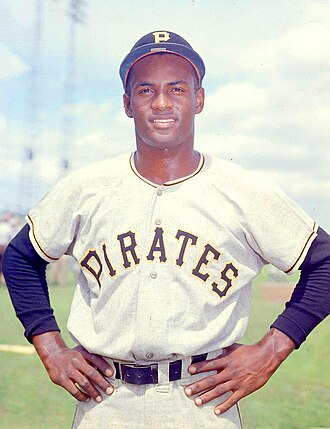 Roberto Clemente
"A free people will always refuse to put up with preventable poverty. If freedom is to be saved and enlarged, poverty must be ended. There is no other solution. The problem of how to prevent these three forces from coming into head-on collision is the principal study of the more politically conscious Conservative leaders. How can wealth persuade poverty to use its political freedom to keep wealth in power? Here lies the whole art of Conservative politics in the twentieth century."