SHAWORDS

Pessimistic philosophy will be for the historical period that is now b — Philipp Mainländer

"Pessimistic philosophy will be for the historical period that is now beginning, what the pessimistic religion of Christianity was for the one that has passed. The symbol of our flag is not the crucified redeemer but the angel of death with large, placid and clement eyes, supported by the dove of the idea of redemption; in essence, it is the same symbol."
Pessimistic philosophy will be for the historical period that is now beginning, what the pessimistic religion of Christi
Philipp Mainländer
Philipp Mainländer
Philipp Mainländer
author21 quotes

Philipp Mainländer was a German philosopher and poet. Born Philipp Batz, he later changed his name to "Mainländer" in homage to his hometown, Offenbach am Main.

About Philipp Mainländer

Philipp Mainländer was a German philosopher and poet. Born Philipp Batz, he later changed his name to "Mainländer" in homage to his hometown, Offenbach am Main.

View all quotes by Philipp Mainländer

More by Philipp Mainländer

View all →
Quote
"Why did God not immediately disappear into nothingness, if he wished to no longer be? One must ascribe omnipotence to God, for his power was unlimited; consequently, if he had willed to no longer be, he would have exterminated himself at once; instead, the universe of multiplicity arose, a universe of struggle, which is a manifest contradiction. How does one explain this? ... God existed alone, in absolute solitude and, consequently, it is correct to maintain that he was not limited by anything external; his power was, in this sense, omnipotent, since nothing outside of him limited it. However, his power was not omnipotent regarding himself, or in other words: his power could not destroy itself; the simple unity could not cease to exist by itself. God had the freedom to be as he willed; however, he was not free from his determinate essence."
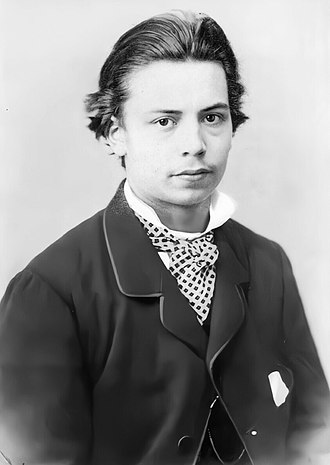
Philipp MainländerPhilipp Mainländer
Quote
"Metaphysics, he tells us, gives us a view of the world as a whole, so that all the partial perspectives of the earlier chapters of his book now appear as a single vision. That vision is, to put it mildly, macabre. We now enter the darkest recesses of Mainländer’s imagination, which fabricate for us a grim cosmology of death. What the metaphysician sees from his exalted standpoint of the whole of things, Mainländer attests, is that everything in nature and history strives for one thing: death. There is in all things in nature, and in all actions in history, “the deepest longing for absolute annihilation”. In his earlier chapters of his book, in the discussion of physics, ethics and politics, Mainländer wrote about the individual will to life as the very essence of everything, not only of every human being, but also of every thing that exists, whether inorganic or organic. Now in metaphysics, however, we see that this was only a limited perspective, because the striving for existence or life is really only a means for a deeper goal: death. We live only so that we die, because the deepest longing within all of us is for peace and tranquillity, which is granted to us only in death. In this longing of all things for death, we are only participating, unbeknownst to ourselves, in the deeper and broader cosmic process of the divine death. We long to die, and we are indeed dying, because God wanted to die and he is still dying within us."
Philipp MainländerPhilipp Mainländer
Quote
"The first movement and the origin of the universe are one and the same. The transformation of the simple unity into the world of multiplicity, the transition from the transcendent to the immanent realm, was precisely the first movement; all subsequent movements were only continuations of the first, that is, they could not have been anything else than a new disintegration or further fragmentation of ideas. This further disintegration could manifest itself in the early periods of the universe only through the actual division of simple matter and its connections. Each simple chemical force had the urge to expand its individuality, i.e., to change its motion; however, it clashed with all others possessing the same urge, and thus arose the most fearsome struggles of the ideas with each other, in states of maximum impetus and agitation. The result was always a chemical bond, i.e., the victory of the stronger force over a weaker one and the entry of the new idea into the endless struggle."
Philipp MainländerPhilipp Mainländer
Quote
"He who is not afraid of death, enters a house engulfed in flames; he who is not afraid of death, jumps without hesitation into a turbulent flood; he who is not afraid of death, charges into a dense hail of bullets; he who is not afraid of death, fights unarmed against thousands of armored titans; in summary, he who does not fear death is the only one who can do something for others, bleed for others, and has, at the same time, the only happiness, the only desirable good in this world: undisturbed peace of heart."
Philipp MainländerPhilipp Mainländer
Quote
"Mainländer has a worldview of his own about the origin of the universe: God, saturated with his own over-being, decides that non-existence is better than existence; accordingly, like the Big Bang at the beginning of time, he commits suicide, desirous of non-being. Thus, the universe has not arisen out of a divine desire for creation, but is the result of a depletion of divine will. The philosophy of the decomposition or disintegration of the universe means that everything, organic and inorganic, is subordinated to the law of the weakening of power, that is, that the human being is also in the universe to die and cease to be. The death of God has generated life, but the course of life is not different from the slow process of divine disintegration. It is a will that can be verified daily in cemeteries, and is part of a cosmological telos."
Philipp MainländerPhilipp Mainländer
Quote
"Every action of man, the highest as well as the lowest, is egoistic; for it flows from a certain individuality, a certain I, with a sufficient motive, and can in no way be omitted. To go into the reason of the difference of characters is not the place here; we have simply to accept it as a fact. Now it is just as impossible for the merciful man to let his neighbor starve as it is for the hard-hearted man to help the poor. Each of the two acts according to his character, his nature, his ego, his happiness, consequently egoistically; for if the merciful one did not dry the tears of others, would he be happy? And if the hard-hearted one relieved the suffering of others, would he be satisfied?"
Philipp MainländerPhilipp Mainländer