Quote
"The battles that count arent the ones for gold medals. The struggles within yourself — the invisible, inevitable battles inside all of us — thats where its at."
J
Jesse Owens"She was unusual because even though I knew her family was as poor as ours, nothing she said or did seemed touched by that. Or by prejudice. Or by anything the world said or did. It was as if she had something inside her that somehow made all that not count. I fell in love with her some the first time we ever talked, and a little bit more every time after that until I thought I couldnt love her more than I did. And when I felt that way, I asked her to marry me … and she said she would."
James Cleveland "Jesse" Owens was an American track and field athlete who made history at the 1936 Olympic Games by winning four gold medals, setting Olympic records in each event. He is widely regarded as one of the greatest athletes in track and field history.
James Cleveland "Jesse" Owens was an American track and field athlete who made history at the 1936 Olympic Games by winning four gold medals, setting Olympic records in each event. He is widely regarded as one of the greatest athletes in track and field history.
View all quotes by Jesse Owens"The battles that count arent the ones for gold medals. The struggles within yourself — the invisible, inevitable battles inside all of us — thats where its at."
"It took a lot of courage for him to befriend me in front of Hitler... You can melt down all the medals and cups I have and they wouldnt be a plating on the 24-karat friendship I felt for Lutz Long at that moment. Hitler must have gone crazy watching us embrace. The sad part of the story is I never saw Long again. He was killed in World War II."
"Joe Louis and I were the first modern national sports figures who were black... But neither of us could do national advertising because the South wouldnt buy it. That was the social stigma we lived under."
"People say that it was degrading for an Olympic champion to run against a horse, but what was I supposed to do? I had four gold medals, but you cant eat four gold medals. There was no television, no big advertising, no endorsements then. Not for a black man, anyway."
"I realized now that militancy in the best sense of the word was the only answer where the black man was concerned, that any black man who wasnt a militant in 1970 was either blind or a coward."
"The road to the Olympics, leads to no city, no country. It goes far beyond New York or Moscow, ancient Greece or Nazi Germany. The road to the Olympics leads — in the end — to the best within us."
"At one point a heated discussion arose over the possible interpretation of Lolita as a grandiose metaphor of the classic Europeans hopeless love for young, seductive, barbaric America. In his afterword to the novel Nabokov himself mentions this as the naive theory of one of the publishers who turned the book down. And although there cant be the slightest doubt that Nabokov did not mean to limit Lolita to that interpretation, there is no reason to exclude it as one of the novels many dimensions. The point, I felt, became obvious when one drew the line between Lolita as a delightfully frivolous story on the verge of pornography and Lolita as a literary masterpiece, the only convincing love story of our century."
 Lolita
"Lovely food, for rabbits, that is."
"One makes mistakes; that is life. But it is never a mistake to have loved."
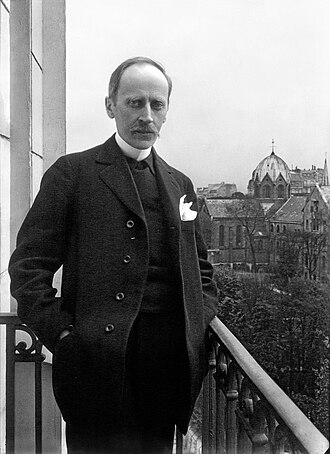 Romain Rolland
"[explaining to Ernie how April apologized to him] She just showed up at the factory, took off her coat, and begged me to take her. We made love in a way that Ive only ever seen in nature films."
 MouseHunt (film)
"Love is always love, come whence it may. A heart that beats at your approach, an eye that weeps when you go away are things so rare, so sweet, so precious that they must never be despised."
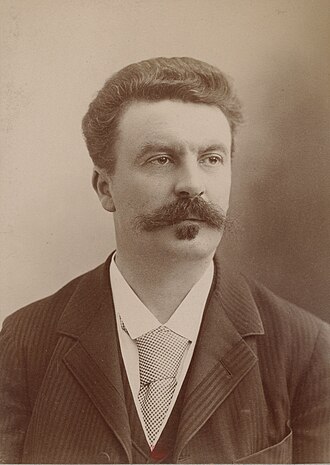 Guy de Maupassant
"He was obeyed, yet he inspired neither love nor fear, nor even respect. He inspired uneasiness. That was it! Uneasiness. Not a definite mistrust — just uneasiness — nothing more. You have no idea how effective such a... a... faculty can be. He had no genius for organizing, for initiative, or for order even. That was evident in such things as the deplorable state of the station. He had no learning, and no intelligence. His position had come to him — why? Perhaps because he was never ill . . . He had served three terms of three years out there . . . Because triumphant health in the general rout of constitutions is a kind of power in itself."