"Picasso and I said things to each other during those particular years [c. 1908 -1913] that nobody would any longer know how to say, that nobody would be able to understand any.. ..things that would be incomprehensible, and which gave us so much pleasure."
Take the birds which youll have noticed in so many of my recent painti — Georges Braque
"Take the birds which youll have noticed in so many of my recent paintings. I never thought them up, they just materialized of their own accord, they were born on the canvas; that is why it is absurd to read any sort of symbolic significance into them."
Georges Braque was a major 20th-century French painter, collagist, draughtsman, printmaker and sculptor. His most notable contributions were in his alliance with Fauvism from 1905, and the role he played in the development of Cubism. Braque's work between 1908 and 1912 is closely associated with that of his colleague Pablo Picasso. Their respective Cubist works were indistinguishable for many year
View all quotes by Georges BraqueMore by Georges Braque
View all →"I couldnt portray a women in all her natural loveliness.. ..I havent the skill. No one has. I must, therefore, create a new sort of beauty, the beauty that appears to me in terms of volume of line, of mass, of weight, and through that beauty interpret my subjective impression. Nature is mere a pretext for decorative composition, plus sentiment. It suggests emotion, and I translate that emotion into art. I want to express the absolute, not merely the factitious woman."
"Speaking purely for myself, I can say that it was my very acute feeling for the matière, for the substance of painting, which pushed me into thinking about the possibilities of the medium. I wanted to create a kind of substance by means of brush-work. But that is the kind of discovery which one makes gradually, though once a beginning had been made other discoveries follow. Thus it was that I subsequently began to introduce sand, sawdust and metal filings into my pictures. For I suddenly saw the extent to which colour is related to the substance.. .So my great delight was the material character which I could give to my pictures by introducing these extraneous elements. In short, they provided me with a means of getting further away from idealism in representing the things with which I was concerned."
"Art is polymorphic. A picture appears to each onlooker under a different guise."
"The painter thinks in terms of form and color. The goal is not to be concerned with the reconstitution of an anecdotal fact, but with constitution of a pictorial fact."
"It is the act of painting, not the finished painting."
More on Pain
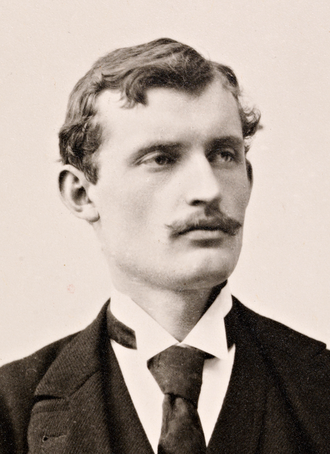
View all →"The only influences in [the painting The sick Child, Munch painted in his elderly home, remembering very accurate the last days of his dying little sister Sophie] The sick Child.. ..were the ones that come from my home.. ..my childhood and my home. Only someone who knew the conditions at home could possibly understand why there can be no conceivable chance of any other place having played a part – my home is to my art as a midwife is to her children.. ..few painters have ever experienced the full grief of their subject as I did in The sick child. It was not just I who was suffering; it was all my nearest and dearest as well."
"General Franco made it clear that Spain could enter the war only when England was about ready to collapse."
"The Spanish Republic did not find itself free of obligations. For the most part the leaders were Freemasons. Before their duty to their country came their obligations to the Grand Orient. In my opinion, Freemasonry, with all its international influence, is the organization principally responsible for the political ruin of Spain, as well as the murder of Calvo Sotelo, who was executed in accordance with orders from the Grand Secretary of Freemasonry in Geneva."
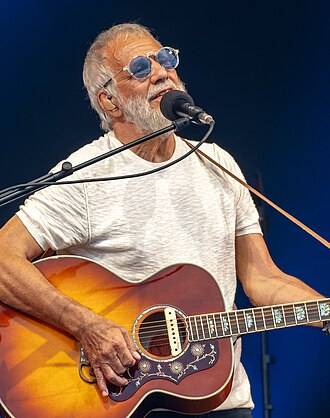
"Art was what I originally started out to do and music came second at first. I had a year at art college but I left because it was too much like school. I give all my paintings away to people I like."
"Lady Cannons gone to a matinée at the St. Jamess. We had tickets for the first night, but of course she wouldnt use them then. She preferred to go alone in the afternoon, because she detests the theatre, anyhow, and afternoon performances give her a headache. If she does a thing thats disagreeable to her, she likes to do it in the most painful possible way. She has a beautiful nature."
"At first when I saw The Sick Child [in his imagination] her pallid face and the vivid red hair against the pillow – I saw something that vanished when I tried to paint it. I ended up with a picture on the canvas which, although I was pleased with it, bore little relationship to what I had seen.. ..In the space of that year [1885 – 1886], scratching it out, just letting the paint flow, endlessly I tried to recapture what I had seen for the first time – the pale transparent skin against the linen sheets, the trembling lips, the shaking hands. I repainted the painting numerous times – scratched it out – let it become blurred in the medium – and tried again and again to catch the first impression – the transparent pale skin against the canvas – the trembling mouth – the trembling hands. I had done the chair [in which his sister Sophie had died] with the glass too often. It distracted me from doing the head. – When I saw the picture I could only make out the glass and the surroundings. – Should I remove it completely? – No, it had the effect of giving depth and emphasis to the head. – I scared off half the background and left everything in masses – one could now see past and across the head and the glass.. .I had achieved much of that first impression, the trembling mouth – the transparent skin – the tired eyes – but the picture was not finished in its colour – it was pale grey – the picture was then heavy as lead. [Munch showed the painting on the Autumn Exhibition 18 October 1886; it was criticized severely, even by his bohemian art-friend Jager]"