Quote
"The clearest way to see through a culture is to attend to its tools for conversation."
N
Neil Postman"Technological competition ignites total war, which means it is not possible to contain the effects of a new technology to a limited sphere of human activity... What we need to consider about the computer has nothing to do with its efficiency as a teaching tool. We need to know in what ways it is altering our conception of learning, and how, in conjunction with television, it undermines the old idea of school."
Neil Postman was an American author, educator, media theorist, and cultural critic who eschewed digital technology, including personal computers and mobile devices, and was critical of the use of personal computers in schools. He is best known for 20 books about technology and education, including Teaching as a Subversive Activity (1970), The Disappearance of Childhood (1982), Amusing Ourselves to
"The clearest way to see through a culture is to attend to its tools for conversation."
"Definitions, like questions and metaphors, are instruments for thinking. Their authority rests entirely on their usefulness, not their correctness. We use definitions in order to delineate problems we wish to investigate, or to further interests we wish to promote. In other words, we invent definitions and discard them as suits our purposes. And yet, one gets the impression that... God has provided us with definitions from which we depart at the risk of losing our immortal souls. This is the belief that I have elsewhere called "definition tyranny," which may be defined... as the process of accepting without criticism someone elses definition of a word or a problem or a situation. I can think of no better method of freeing students from this obstruction of the mind than to provide them with alternative definitions of every concept and term with which they must deal in a subject. Whether it be "molecule," "fact," "law," "art," "wealth," "gene," or whatever, it is essential that students understand that definitions are hypotheses, and that embedded in them is a particular philosophical, sociological, or epistemological point of view."
"Since most subjects studied in school consist largely of theories... language education must include not only the serious study of what truth and falsehood mean in the context of a subject, but also what is meant by a fact, an inference, an assumption, a judgment, a generalization... In this way students will be learning both the language of a subject and the methods of inquiry in that subject, since inquiry consists of nothing else but the generation of questions, the invention of definitions and metaphors, the separation of facts from inferences, the forming of generalizations..."
"It may come as a surprise to our technocrat philosophers, but people do not read, write, speak, or listen primarily for the purpose of achieving a test score. They use language in order to conduct their lives, and to control their lives, and to understand their lives. An improvement in ones language abilities is therefore ...observed in changes in ones purposes, perceptions, and evaluations. Language education... may achieve what George Bernard Shaw asserted is the function of art. "Art," he said in Quintessence of Ibsenismn, "should refine our sense of character and conduct, of justice and sympathy, greatly heightening our self knowledge, self-control, precision of action and considerateness, and making us intolerant of baseness, cruelty, injustice, and intellectual superficialty and vulgarity." …For my purposes, if you replace the word "art" with the phrase "language education," you will have a precise statement of what I have been trying to say."
"The BASIC FUNCTION of all education, even in the most traditional sense, is to increase the survival prospects of the group. If this function is fulfilled, the group survives. If not, it doesnt. There have been times when this function was not fulfilled, and groups (some of them we even call "civilizations") disappeared. Generally, this resulted from changes in the kind of threats the group faced. The threats changed, but the education did not, and so the group, in a way, "disappeared itself" (to use a phrase from Catch-22). The tendency seems to be for most "educational" systems, from patterns of training in "primitive" tribal societies to school systems in technological societies, to fall imperceptibly into a role devoted exclusively to the conservation of old ideas, concepts, attitudes, skills, and perceptions. This happens largely because of the unconsciously held belief that these old ways of thinking and doing are necessary to the survival of the group. …Survival in a stable environment depends almost entirely on remembering the strategies for survival that have been developed in the past, and so the conservation and transmission of these becomes the primary mission of education. But, a paradoxical situation develops when change becomes the primary characteristic of the environment. Then the task turns inside out — survival in a rapidly changing environment depends almost entirely upon being able to identify which of the old concepts are relevant to the demands imposed by the new threats to survival, and which are not. Then a new educational task becomes critical: getting the group to unlearn (to "forget") the irrelevant concepts as a prior condition of learning. What we are saying is that the "selective forgetting" is necessary for survival."
"Someone needs to mention what may be lost. Of course, one of the problems is that what I would judge to be a negative consequence, someone else might see as a positive consequence. For example, telephones in automobiles seem to me a very bad idea. So does spending a lot of hours "communicating" on the Internet when one could use that time reading Cervantes Don Quixote."
"The absolute requisites for the study of this work... are a knowledge of algebra to the binomial at least, plane and solid geometry, plane trigonometry, and the most simple part of the usual applications of algebra to geometry. ...A. De Morgan. London July 1, 1836"
"Captain Littlepage had overset his mind with too much reading."
"Ive been taking a closer look at these graduates. They are actually taller, stronger, smarter than we were, smart enough maybe to take our mistakes as their messages, to make our weaknesses their lessons, and to make our example — good and not so good — part of their education."
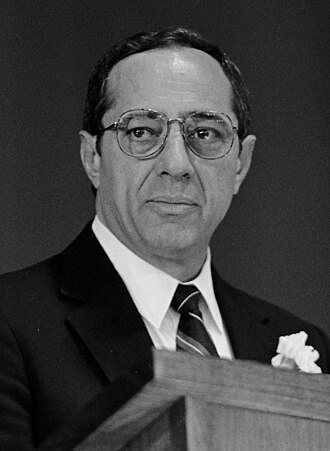 Mario Cuomo
"In short, it is not merely that Johnny cant read, or even that Johnny cant think. Johnny doesnt know what thinking is, because thinking is so often confused with feeling in many public schools. [emphasis in the original]"
"Bigotry is the disease of ignorance, of morbid minds; enthusiasm of the free and buoyant. Education & free discussion are the antidotes of both."
 Thomas Jefferson
"Im very sad that this seems to be the No. 1 question people want to discuss. I had nothing to do with the issue other than what the media created. I was innocently drawn into the whole controversy. So, after many years, Im glad at least now that I have been given the opportunity to explain to the public and fans my side of the story in my own words. At a lecture, back in 1989, I was asked a question about blasphemy according to Islamic Law, I simply repeated the legal view according to my limited knowledge of the Scriptural texts, based directly on historical commentaries of the Quran. The next day the newspaper headlines read, "Cat Says, Kill Rushdie." I was abhorred, but what could I do? I was a new Muslim. If you ask a Bible student to quote the legal punishment of a person who commits blasphemy in the Bible, he would be dishonest if he didnt mention Leviticus 24:16."
 Cat Stevens