Quote
"Since after extinction no one will be present to take responsibility, we have to take full responsibility now."
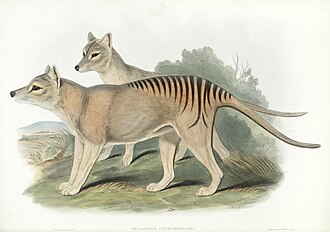 Extinction
"The Brontosaurus had a brain no bigger than a crisp. The Dodo had a stammer, and the Mammoth had a lisp. The Auk was just too awkward. Now theyre none of them alive; Each one, like Man, had shown himself unfitted to survive. Their story points a moral; now its we who wear the pants. The extinction of these species holds a lesson for us ants."
Extinction is the termination of a species via the death of its last member. A taxon may become functionally extinct before the death of its last member if it loses the capacity to reproduce and recover. As a species' potential range may be very large, determining this moment is difficult, and is usually done retrospectively. This difficulty leads to phenomena such as Lazarus taxa, where a species
"Since after extinction no one will be present to take responsibility, we have to take full responsibility now."
Extinction"The human race currently consumes some 40% of the earth’s photosynthetic capacity. This monopoly on the earth’s resources is having a devastating effect. We are seeing the extinction of some 140 species every day, some thousands of times higher than the normal background rate. Today, right now, we are seeing extinction rates unparalleled in the history of the earth. We are undeniably in the midst of the seventh mass extinction event in the history of the earth — the Holocene Extinction. Unlikely previous extinction events, however, this one is driven by a single species. This is the true danger of overpopulation, not our inability to feed a growing population. As much as we would deny it, we depend on the earth to live. Dwindling biodiversity threatens the very survival of our species. We are literally cutting the ground out from under our feet. Increasing food production only increases the population; our current attitudes about food security has locked us into what Daniel Quinn called a “Food Race,” by comparison to the Arms Race of the Cold War."
Extinction"Nature cannot be destroyed. Sixty-five million years ago, an asteroid wiped out the dinosaurs, but in so doing opened the way forward for mammals. Today, humankind is driving many [if not all] species into extinction and might even annihilate itself. But other organisms are doing quite well. Rats and cockroaches, for example, are in their heyday. These tenacious creatures would probably creep out from beneath the smoking rubble of a nuclear Armageddon, ready and able to spread their DNA. Perhaps 65 million years from now, intelligent rats will look back gratefully on the decimation wrought by humankind, just as we today can thank that dinosaur-busting asteroid."
Extinction"…because of megafauna extinctions, being the only species to use fire, and the fact that an ability for symbolic representation and complex speech might be the recipe for a runaway species capable of rapid cultural evolution and technology development out of step with the rest of the community of life, and therefore maladapted to long-term co-existence in ecological relationship. If it looks like we’re winning the “battle against nature” right now, that’s actually what losing looks like."
Extinction"Lets not be too quick to blame the human race for everything. We must remember that a great many species of animals became extinct before man ever appeared on earth. At the same time it is probably true that when two husky representatives of Homo sapiens, with clubs, corner the last two birds of a species, no matter how far they have or have not evolved, both the phylogeny and the ontogeny of those birds are, to all intents and purposes, over."
Extinction"[We] cannot bring back species from extinction… We are still driving 150 species to oblivion daily… Collapse will not change anything in our attitudes. As long as humans remain genetically identical to who they are today, I’m afraid they will collapse again, and again, after this coming collapse, and probably risk complete extinction. This is not speculation, but simply looking at historical evidence: over thousands of years we have collapsed pretty much constantly—anthropologists have documented the collapse of more than 82 (!!!) civilisations. We are now at the stage of a systemic, global collapse because we are one, united global economic machine that has used up everything on the planet. Our species is wired for growth, and we are designed to go through boom-and-bust cycles. What comes after the next bust will be a significantly smaller civilisation… There will be another, smaller boom, then collapse again. With each collapse many… “species” risk disappearance."
Extinction"At one point a heated discussion arose over the possible interpretation of Lolita as a grandiose metaphor of the classic Europeans hopeless love for young, seductive, barbaric America. In his afterword to the novel Nabokov himself mentions this as the naive theory of one of the publishers who turned the book down. And although there cant be the slightest doubt that Nabokov did not mean to limit Lolita to that interpretation, there is no reason to exclude it as one of the novels many dimensions. The point, I felt, became obvious when one drew the line between Lolita as a delightfully frivolous story on the verge of pornography and Lolita as a literary masterpiece, the only convincing love story of our century."
 Lolita
"I did not go to join Kurtz there and then. I did not. I remained to dream the nightmare out to the end, and to show my loyalty to Kurtz once more. Destiny. My destiny! Droll thing life is — that mysterious arrangement of merciless logic for a futile purpose. The most you can hope from it is some knowledge of yourself — that comes too late — a crop of unextinguishable regrets. I have wrestled with death. It is the most unexciting contest you can imagine. It takes place in an impalpable grayness, with nothing underfoot, with nothing around, without spectators, without clamor, without glory, without the great desire of victory, without the great fear of defeat, in a sickly atmosphere of tepid skepticism, without much belief in your own right, and still less in that of your adversary. If such is the form of ultimate wisdom, then life is a greater riddle than some of us think it to be. I was within a hairs-breadth of the last opportunity for pronouncement, and I found with humiliation that probably I would have nothing to say. This is the reason why I affirm that Kurtz was a remarkable man. He had something to say. He said it. Since I had peeped over the edge myself, I understand better the meaning of his stare, that could not see the flame of the candle, but was wide enough to embrace the whole universe, piercing enough to penetrate all the hearts that beat in the darkness. He had summed up — he had judged. The horror! He was a remarkable man. After all, this was the expression of some sort of belief; it had candor, it had conviction, it had a vibrating note of revolt in its whisper, it had the appalling face of a glimpsed truth — the strange commingling of desire and hate."
"The Spanish Republic did not find itself free of obligations. For the most part the leaders were Freemasons. Before their duty to their country came their obligations to the Grand Orient. In my opinion, Freemasonry, with all its international influence, is the organization principally responsible for the political ruin of Spain, as well as the murder of Calvo Sotelo, who was executed in accordance with orders from the Grand Secretary of Freemasonry in Geneva."
 Francisco Franco
"There can be no Good Will. Will is always Evil; it is persecution to others or selfishness."
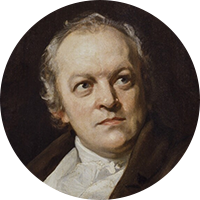 William Blake
"He was obeyed, yet he inspired neither love nor fear, nor even respect. He inspired uneasiness. That was it! Uneasiness. Not a definite mistrust — just uneasiness — nothing more. You have no idea how effective such a... a... faculty can be. He had no genius for organizing, for initiative, or for order even. That was evident in such things as the deplorable state of the station. He had no learning, and no intelligence. His position had come to him — why? Perhaps because he was never ill . . . He had served three terms of three years out there . . . Because triumphant health in the general rout of constitutions is a kind of power in itself."
"Well buy a lot of clothes, but we dont really need em Things we buy to cover up whats inside Cause they made us hate ourself and love their wealth."