SHAWORDS

The Chinese are emphatically not a religious people, though they are v — China

HomeChinaQuote
"The Chinese are emphatically not a religious people, though they are very superstitious. Belief in a God has come down from the remotest ages, but the old simple creed has been so overlaid by Buddhism as not to be discernible at the present day. Buddhism is now the dominant religion of China. It is closely bound up with the lives of the people, and is a never-failing refuge in sickness or worldly trouble. It is no longer the subtle doctrine which was originally presented to the people of India, but something much more clearly defined and appreciable by the plainest intellect. Buddha is the saviour of the people through righteousness alone, and Buddhist saints are popularly supposed to possess intercessory powers. Yet reverence is always wanting; and crowds will laugh and talk, and buy and sell sweetmeats, in a Buddhist temple, before the very eyes of the most sacred images. So long as divine intervention is not required, an ordinary Chinaman is content to neglect his divinities; but no sooner does sickness or financial trouble come upon the family, than he will hurry off to propitiate the gods. He accomplishes this through the aid of the priests, who receive his offerings of money, and light candles or incense at the shrine of the deity to be invoked. Buddhist priests are not popular with the Chinese, who make fun of their shaven heads, and doubt the sincerity of their convictions as well as the purity of their lives. "No meat nor wine may enter here" is a legend inscribed at the gate of most Buddhist temples, the ordinary diet as served in the refectory being strictly vegetarian. A tipsy priest, however, is not an altogether unheard-of combination, and has provided more than one eminent artist with a subject of an interesting picture."
China
China
China
author42 quotes

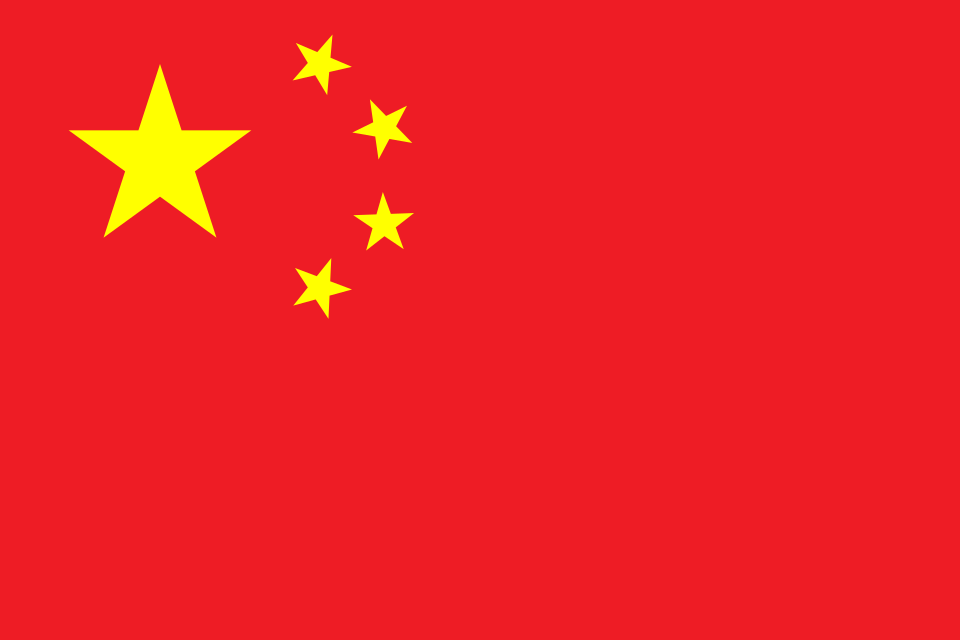
China, officially the People's Republic of China (PRC), is a country in East Asia. It is the second-most populous country after India, with a population exceeding 1.4 billion, representing 17% of the world's population. China borders fourteen countries by land across an area of 9.6 million square kilometers (3,700,000 sq mi), making it the third-largest country by area. The country is divided into

More by China

View all →
Quote
"In 2012, the Chinese sociologist Sun Lìpíng (b 1955) suggested the PRC [Peoples Republic of China] faced four possible paths One was return to Mao-style egalitarian populism, reducing inequality and corruption but risking the violence and irrationality of the Mao era Another was to deepen the reforms – further privatizing the economy regardless of increased inequality The third was to maintain the status quo The fourth was to pursue reform while applying notions of fairness, justice, and universal values"
ChinaChina
Quote
"The problem for China is political. China is held together by money, not ideology. When there is an economic downturn and the money stops rolling in, not only will the banking system spasm, but the entire fabric of Chinese society will shudder. Loyalty in China is either bought or coerced. Without available money, only coercion remains. Business slowdowns can generally lead to instability because they lead to business failure and unemployment. In a country where poverty is endemic and unemployment widespread, the added pressure of an economic downturn will result in political instability."
ChinaChina
Quote
"There is a hush over all Europe, nay, over all the world, broken only by the dull thud of Japanese bombs falling on Chinese cities, on Chinese Universities or near British and American ships. But then, China is a long way off, so why worry? The Chinese are fighting for what the founders of the American Constitution in their stately language called: “Life, liberty and the pursuit of happiness.” And they seem to be fighting very well. Many good judges think they are going to win. Anyhow, let’s wish them luck! Let’s give them a wave of encouragement – as your President did last week, when he gave notice about ending the commercial treaty. After all, the suffering Chinese are fighting our battle, the battle of democracy. They are defending the soil, the good earth, that has been theirs since the dawn of time against cruel and unprovoked aggression. Give them a cheer across the ocean – no one knows whose turn it may be next. If this habit of military dictatorships’ breaking into other people’s lands with bomb and shell and bullet, stealing the property and killing the proprietors, spreads too widely, we may none of us be able to think of summer holidays for quite a while."
ChinaChina
Quote
"Most people with mental disorders in China never receive treatment. There is often a stigma attached to such ailments. Some think that people with psychiatric conditions are possessed by evil spirits. Many see mental disorders as a sign of weakness, and regard them as socially contagious: a relative of someone with a serious disorder may find it hard to marry. Families sometimes have their kin treated far away to hide the “shame” of their condition, or keep them hidden at home. Even many medical students worry that those working with psychiatric patients risk catching their disease, says Xu Ni of “It Gets Brighter”, a mental-health NGO in Beijing."
ChinaChina
Quote
"Contemporaneous with the age of Greek culture, while Rome was yet an infant city and the rest of Europe in a condition of barbarism, the Chinese were a civilised race. Many years before the Christian era they had evolved under the name of Taoism, a set of principles and a mystic teaching based on the writings of Laotzu, which formed a not altogether despicable substitute for a religion, while in Confucianism they enjoyed a sound philosophy. Under these influences the arts of peace gradually achieved the first place among the national ideas. The application of principles of reason to the relationships of daily life, the adjustment of differences by discussion, and the cultivation of respect for age and learning, became cardinal principles."
ChinaChina

More on Time

View all →
Quote
"Most mathematicians prove what they can, von Neumann proves what he wants." Once in a discussion about the rapid growth of mathematics in modern times, von Neumann was heard to remark that whereas thirty years ago a mathematician could grasp all of mathematics, that is impossible today. Someone asked him: "What percentage of all mathematics might a person aspire to understand today?" Von Neumann went into one of his five-second thinking trances, and said: "About 28 percent."
John von NeumannJohn von Neumann