Quote
"Christianity is a revolutionary religion or it is nothing."
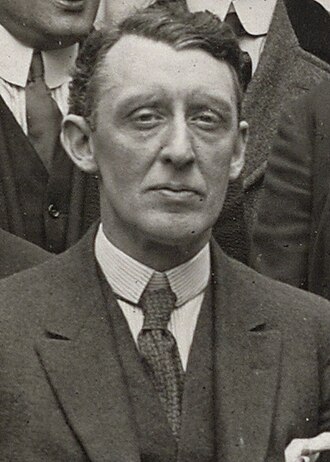 Sidney Dark
"... The had its . The had its . ... He drank prodigiously, even for the seventeenth century. He was subject to violent bursts of passion, and he had absolutely no self-control. He was the supreme bully. His greatest joy in life was to denounce, to jeer, and to hurt. And nature had eminently fitted him for the rôle that he had chosen. Jeffreyss one passion was a genuine hatred of and ..."
Sidney Ernest Dark was an English journalist, author and critic who was editor of the Church Times, among other publications. Dark wrote more than 30 books on subjects ranging from the church to literature and theatre, as well as biographies and novels.
"Christianity is a revolutionary religion or it is nothing."
Sidney Dark"Lawyers have never been popular. It will be remembered that although there is at least one lawyer in most of the Dickens novels, few of them are drawn as attractive personalities."
Sidney Dark"There is nothing in this wide world more romantic than a great river on the banks of which stands a great city, and of all the cities in Europe, London is luckiest in its river. The Seine at Paris, the Tiber at Rome, are insignificant compared to the wide sweep of the Thames at London."
Sidney Dark"... Dickens is to me a writer apart. I have been reading and re-reading his novels since I was six. I know his characters as I hardly know any of the men and women I have met in the flesh. Dickens is the novelist of the lettered and of the unlettered. The man at the street corner who has hardly heard of Thackeray knows all about and ."
Sidney Dark"Great literature is the creation of its age and its nation. It is inconceivable that Shakespeares plays could have been written anywhere but in England and at any time but the later Renaissance. ... But while great literature is the child of one age it is the father of the next. As a nation reads, so it becomes. Let me decide what the people shall read, and you may make their laws. In saying this I am not merely referring to social and political and philosophic treatises. I am thinking of the whole gamut of a library, and particularly of works of the imagination."
Sidney Dark"was with at at the time of the in 1813. She went back to at the request of the , who assured her that the position of herself and her children was perfectly safe. The allied kings and statesmen waited on her. She was treated with the utmost deference, but it was she who grieved for in far more than , and before the began, Josephine, shriven and with her children kneeling by her side, died with the name of Bonaparte on her lips. Twenty thousand persons passed the catafalque where the Empress lay in state. Royal honours were hers at her funeral."
Sidney Dark