"ECONOMICS COCKTAILS. Ingredients: Austrian, Behaviouralist, Classical, Developmentalist, Institutionalist, Keynesian, Marxist, Neoclassical and Schumpeterian. [...] Health warning: On no account drink only one ingredient – liable to lead to tunnel vision, arrogance and possibly brain death."
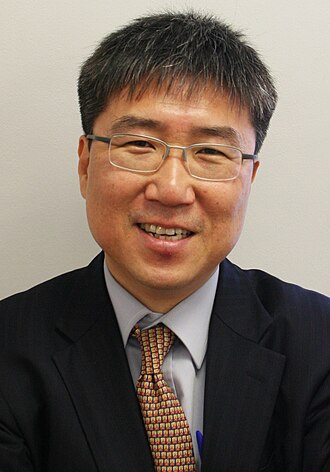
The has been so totally re-written that many people in the rich world — Ha-Joon Chang
"The has been so totally re-written that many people in the rich world do not perceive the historical s involved in recommending free trade and free market to developing countries."

Ha-Joon Chang is a South Korean economist and academic. Chang specialises in institutional economics and development, and lectured in economics at the University of Cambridge from 1990–2021 before becoming professor of economics at the School of Oriental and African Studies (SOAS) in 2022. Chang is the author of several bestselling books on economics and development policy, most notably Kicking Aw
View all quotes by Ha-Joon ChangMore by Ha-Joon Chang
View all →"[W]e are talking about a huge crisis... Its been all encompassing because in other crises usually theres one bit of the economy that goes wrong... Oil prices go up, collapses and so on, but this time... its everything. Its about demand... production... the financial market... global supply chain... [A]s a result... the changes that we had to make... the kind of policies that governments have introduced to deal with this have been very very different and comprehensive compared to previous comparable crises."
"[T]he few changes that this crisis has brought about... their consequences, and what countries do in order to deal with them will depend on how long this crisis continues, and how effective the solution[s]... are likely to be. These are things that I dont have the expertise to predict: ...When is the vaccine coming out ...if there will be an effective cure..? [I]s there going to be a similar outbreak? ...Im just ...assuming that this crisis will probably last another two, three, maybe five years... [A] lot of society will try to go back to the pre-pandemic way as much as possible, but... if we are going to be—even if we wanted—able to go back to the old ways... it will take a few years."
"Thirdly and probably... a bit even more importantly, this crisis has made us think "What is really important?" ...[I[n the neoliberal system of thinking... that question doesnt even exist... because... in that system... somethings value is... determined by the market. ...[T]his has been one of the key themes of the market economy where they have argued that there is no ethical system that can tell you what is more important and what is less important... [A]ll of these ideas about the that the Classical and Marxist economists have struggled with... are... nonsenses. If someone is that valuable, the market will make... sure... that person gets paid better... [W]hen progressive economists try to argue that there are some services that are essential, that are part of human rights... market economists... poo poo the idea. But now... the UK government is talking about key workers... the American government is talking about essential employees, and most of them are people who, in the market paradigm, were not very valuable... because these were people like—medical doctors are exceptions here—but... nurses... care home workers, people working in supermarkets, delivery people... people who have worked at very low wages, and therefore according to logical market economics... are not very valuable for society. But now we realize that without these people the society cannot be the same. We have also realized more broadly the importance of , unpaid care work and child care, household management, mostly done by women. These have been literally valued at zero because its not marketed. Now we realize that without this care economy... product sector.., society cannot even exist..."
"This means that... there is a general fall in demand, so the level of activities in every sector is lower, but this means that in relative terms, sectors that produce multiple goods are likely to expand, partly because its easier to maintain the level of production in those sectors, but also because when people do not spend money on these face-to-face services, they will spend money on other things... Theres already a sign that the demand for goods... is rising, so... there will be a shift from services to manufacturing and agriculture in the coming years."
"[E]very responsible citizen needs to learn some economics... such... that one becomes aware of the different types of... arguments... and... judge which... makes most sense in a given... circumstance... in light of... moral values and political goals..."