Quote
"Let them make their war. Whence come night and day? Whence will the eagle become gray? Whence is it that night is dark? Whence is it that the linnet is green? The ebullition of the sea, How is it not seen?"
 Taliesin
"The love-diffusing [Lord] will separate us. The land of worldly weather, A wind will melt the trees: There will pass away every tranquillity When the mountains are burnt. There will be again inhabitants With horns before kings; The mighty One will send them, Sea, and land, and lake. There will be again a trembling terror, And a moving of the earth, And above every field, And ashes the rocks will be; With violent exertion, concealment, And burning of lake."
Taliesin was an early Brittonic poet of Sub-Roman Britain whose work has possibly survived in a Middle Welsh manuscript, the Book of Taliesin. Taliesin was a renowned bard who is believed to have sung at the courts of at least three kings. Taliesin means "shining brow" in Welsh.
"Let them make their war. Whence come night and day? Whence will the eagle become gray? Whence is it that night is dark? Whence is it that the linnet is green? The ebullition of the sea, How is it not seen?"
Taliesin"Do not thy passions counteract What thy lips utter? Thy going in thy course into valleys, Dark without lights. And mine were his words. And mine were his languages."
Taliesin"There are three fountains In the mountain of roses, There is a Caer of defence Under the ocean’s wave. Illusive greeter, What is the porter’s name?"
Taliesin"Who was confessor To the gracious Son of Mary? What was the most beneficial measure Which Adam accomplished?"
Taliesin"Which was first, is it darkness, is it light? Or Adam, when he existed, on what day was he created? Or under the earth’s surface, what the foundation? He who is a legionary will receive no instruction."
Taliesin"And entreating his exalted weight, Under the stars, saints he planted."
Taliesin"At one point a heated discussion arose over the possible interpretation of Lolita as a grandiose metaphor of the classic Europeans hopeless love for young, seductive, barbaric America. In his afterword to the novel Nabokov himself mentions this as the naive theory of one of the publishers who turned the book down. And although there cant be the slightest doubt that Nabokov did not mean to limit Lolita to that interpretation, there is no reason to exclude it as one of the novels many dimensions. The point, I felt, became obvious when one drew the line between Lolita as a delightfully frivolous story on the verge of pornography and Lolita as a literary masterpiece, the only convincing love story of our century."
 Lolita
"Lovely food, for rabbits, that is."
"One makes mistakes; that is life. But it is never a mistake to have loved."
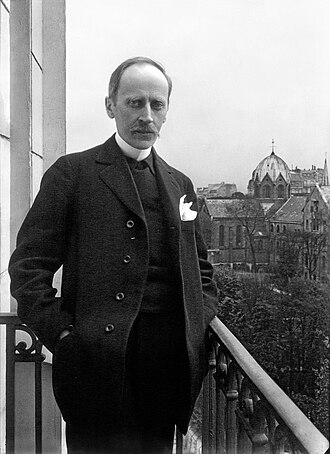 Romain Rolland
"[explaining to Ernie how April apologized to him] She just showed up at the factory, took off her coat, and begged me to take her. We made love in a way that Ive only ever seen in nature films."
 MouseHunt (film)
"Love is always love, come whence it may. A heart that beats at your approach, an eye that weeps when you go away are things so rare, so sweet, so precious that they must never be despised."
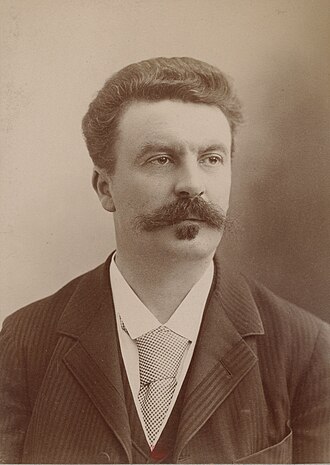 Guy de Maupassant
"He was obeyed, yet he inspired neither love nor fear, nor even respect. He inspired uneasiness. That was it! Uneasiness. Not a definite mistrust — just uneasiness — nothing more. You have no idea how effective such a... a... faculty can be. He had no genius for organizing, for initiative, or for order even. That was evident in such things as the deplorable state of the station. He had no learning, and no intelligence. His position had come to him — why? Perhaps because he was never ill . . . He had served three terms of three years out there . . . Because triumphant health in the general rout of constitutions is a kind of power in itself."